Emperor Hirohito of Japan
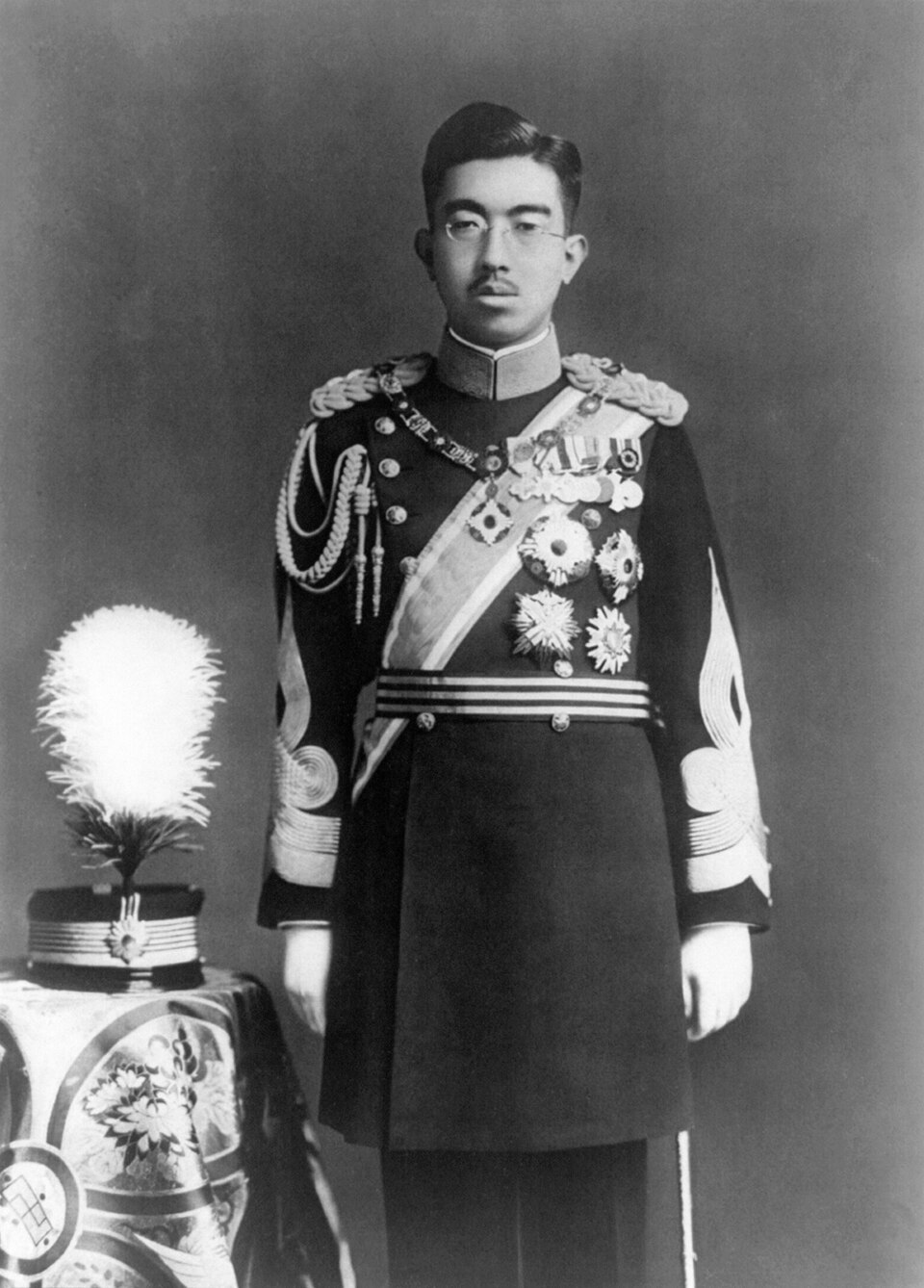

Quote
“To strive for the common prosperity and happiness of all nations as well as the security and well-being of our subjects is the solemn obligation which has been handed down by our imperial ancestors and which we lay close to the heart.” – Emperor Hirohito, accepting terms of surrender
Quick Facts
- Born: 29 April 1901
- Died: 7 January 1989
- Leader of: Japan.
Before the war
Hirohito became the Japanese Emperor on Christmas Day 1926. Before the war there was a lot of fighting in Japan and it seemed to many people that the soldiers in the army were ruling the country. In 1931, with Hirohito’s support, Japan invaded parts of China, continuing to fight with them right through until 1945. During this fighting the Emperor allowed his soldiers to use poison gas, which had been banned since World War I. He was engaged to Princess Nagako on February 4th 1918.
During the war
During World War II with Hirohito’s backing, Japan formed an alliance with Germany and Italy, called the “Axis Powers”. The emperor also chose the tough General Hideki Tōjō as his Prime Minister to run the war.
Towards the end of the war, the Emperor began to have meetings with his government to see if they should surrender, but nobody wanted to except a former Prime Minister, Fumimaro Konoe. He said surrender was Japan’s only hope but Hirohito wanted to win a great victory first. But no “great victory” happened, so the Japanese decided instead to “fight to the last man”, as they had in Okinawa and other battles.
But on 9 August 1945, the US dropped the first of two atomic bombs on Japan and the Soviet Union declared war on them. This made the Emperor decide that he needed to surrender. The Emperor announced the surrender on the radio. It was the first time most people had ever heard his voice, and some people didn’t even believe that he was the Emperor.
After the war
Many people wanted the Emperor to be tried for war crimes, and other people in his family tried to make him step down as Emperor. But the US General MacArthur, who had been in charge of Japan since the surrender, said that he should stay on as long as told his people that he wasn’t a god.
Hirohito continued to rule Japan until his death from cancer on January 7, 1989.
Written for younger readers
Emperor Hirohito of Japan, in simpler words
This version comes from Wikijunior, a set of books written for children aged 8 to 11. It is shorter and uses plainer language than the article above.
From Wikijunior: World War II
“To strive for the common prosperity and happiness of all nations as well as the security and well-being of our subjects is the solemn obligation which has been handed down by our imperial ancestors and which we lay close to the heart.” – Emperor Hirohito, accepting terms of surrender
- Born: 29 April 1901
- Died: 7 January 1989
- Leader of: Japan.
Hirohito became the Japanese Emperor on Christmas Day 1926. Before the war there was a lot of fighting in Japan and it seemed to many people that the soldiers in the army were ruling the country. In 1931, with Hirohito’s support, Japan invaded parts of China, continuing to fight with them right through until 1945. During this fighting the Emperor allowed his soldiers to use poison gas, which had been banned since World War I. He was engaged to Princess Nagako on February 4th 1918.
During World War II with Hirohito’s backing, Japan formed an alliance with Germany and Italy, called the “Axis Powers”. The emperor also chose the tough General Hideki Tōjō as his Prime Minister to run the war.
Towards the end of the war, the Emperor began to have meetings with his government to see if they should surrender, but nobody wanted to except a former Prime Minister, Fumimaro Konoe. He said surrender was Japan’s only hope but Hirohito wanted to win a great victory first. But no “great victory” happened, so the Japanese decided instead to “fight to the last man”, as they had in Okinawa and other battles.
But on 9 August 1945, the US dropped the first of two atomic bombs on Japan and the Soviet Union declared war on them. This made the Emperor decide that he needed to surrender. The Emperor announced the surrender on the radio. It was the first time most people had ever heard his voice, and some people didn’t even believe that he was the Emperor.
Many people wanted the Emperor to be tried for war crimes, and other people in his family tried to make him step down as Emperor. But the US General MacArthur, who had been in charge of Japan since the surrender, said that he should stay on as long as told his people that he wasn’t a god.
Hirohito continued to rule Japan until his death from cancer on January 7, 1989.
Where this page comes from
The article above is adapted from “Emperor Hirohito of Japan” on Simple English Wikipedia, by its contributors. We removed reference markers, navigation boxes and tables, expanded measurement templates into readable numbers, and kept the prose otherwise intact. The simpler version is adapted from Wikijunior on Wikibooks.
Both sources are published under CC BY-SA 4.0, so this page is published under the same licence. You may share and adapt it, including commercially, as long as you credit the original and keep the same licence.
Worksheets, answer keys and printable layouts elsewhere on K5Print are our own work and are not covered by this licence.