Germanic peoples

The Germanic peoples are a linguistic and ethnic branch of Indo-European peoples that came from Northern Europe and are identified by their use of the Germanic languages. During the migration period, the Germanic peoples spread throughout Europe and mixed with existing local populations (like the Celts, Slavs/Vends, and Romans). They eventually formed the basis of many nations, which are connected by similar languages, common history, and culture.
The Latin word Germani was first used by Julius Caesar.
The Germanic tribes did not have a name for themselves that described all Germanic-speaking people. In English, German is first attested in 1520, replacing earlier use of Almain or Dutch. Today, in English, “Dutch” means the language or people of the Netherlands.
In the 1st century CE, Roman authors like Caesar and Tacitus wrote that Germanic-speaking peoples had divided into tribal groupings. The different tribes lived in different areas:
- The East Germanic tribes lived around the Oder and Vistula Rivers in what is now Poland.
- The Istvaeones lived around the lower Rhine River.
- The Irminones lived around the Elbe River in what is now Germany.
- The Ingvaeones lived in Jutland and other islands in what is now Denmark.
The Irminones, Ingvaeones, and Sons of Mannus Istvaeones are called West Germanic tribes. The Germanic people who remained in Scandinavia called North Germanic. The groups all developed separate dialects, which eventually developed into different Germanic languages.
The Germanic peoples did not call themselves West Germanic, East Germanic, or North Germanic. Those categories were created in modern times.
Each Germanic tribe was politically independent under a hereditary king. Each tribe had a myth about who first created the tribe. For example, myths stated:
- Angul created the Angles
- Aurvandil created the Vandals (though historians are not certain this actually happened)
- Burgundus created the Burgundians
- Cibidus created the Cibidi
- Dan created the Danes
- Nór created the Norwegians
- Gothus created the Goths
- Ingve created the Ynglings
- Irmin created the Irminones
- Longobardus created the Lombards
- Saxneat created the Saxons
- Valagothus created the Valagoths
- Suiones created the Swedes (Svear)
Some Germanic kings claimed that they should have power because they were related to their tribe’s mythical founders.
Origin
The early Germanic tribes spoke different dialects but could understand each other. They shared a common culture and mythology (see Germanic mythology). Beowulf and the Völsunga saga make that clear.
At this time, the Romans forced the different peoples of Italy to be part of one large empire. Unlike Italy, no large empire forced Germanic people to unite. That caused the various tribes to remain free and to be led by their own hereditary or chosen leaders.
Written for younger readers
Germanic peoples, in simpler words
This version comes from Wikijunior, a set of books written for children aged 8 to 11. It is shorter and uses plainer language than the article above.
From Wikijunior: Ancient Civilizations
The Germanic peoples were a diverse group of migratory tribes. They are believed to originally come from southern Scandinavia. They were an important force in much of Europe during the Iron Age. In Europe, they lived on the great rivers—the Danube, the Rhine, and the Vistula. The rivers made a border between the tribes and the Roman Empire.
There were many battles between Germanic tribes and Roman troops protecting the Empire’s border. In the eighth century, a famous, important battle took place at Teutoburg Forest. Roman legions were vanquished by the fierce Germanic warriors. This decisive battle caused the Romans to withdraw from a large part of Europe called Magna Germania.
Battles between Germanic tribes and Romans continued for hundreds of years. Defending the border caused the Roman Empire to become weaker and lose strength. Finally in the fifth century, a Germanic tribe called the Visigoths broke through and destroyed the city of Rome. Without Rome to protect the border, the Germanic peoples crossed the Danube and Rhine and moved into new lands. The course of European history was changed forever.
The tribes differed from each other in some ways, such as religion, houses, and laws. They were alike in other ways, such as common language, military strength, and loyalty to the tribal leader. To the Romans they were all “germans” or “barbarians.” Roman scribes labeled them Germanic.
After the border broke down, the Germanic peoples migrated to modern-day regions of Italy, France, Spain, and Britain. Some moved into North Africa. They made permanent settlements and chose strong, military leaders. The Germanic warriors were fiercely loyal to their leaders. Tribes often fought with each other, but would join together to fight a common enemy. Eventually, Odoacer became the first Germanic leader of Rome. Theodoric the Great became the second.
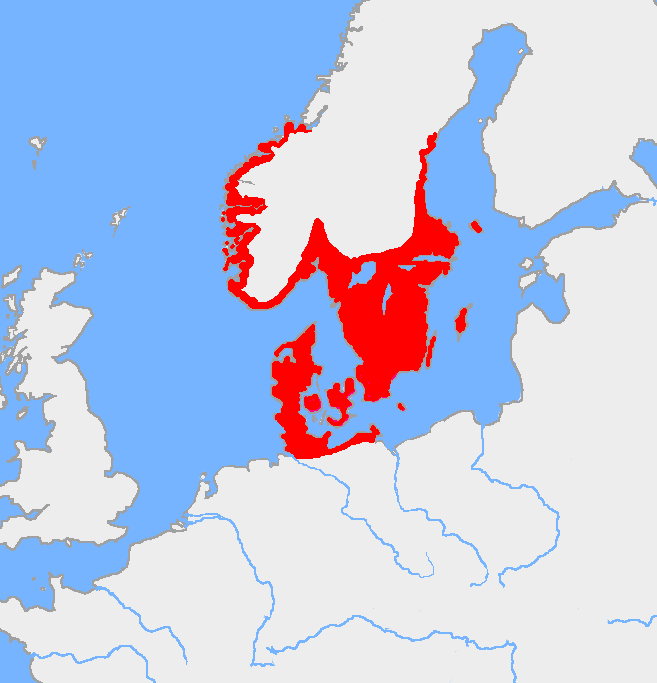
Many Germanic tribes invaded the former Roman Empire. The Western tribes were Alamanni, Angles, Saxons, Jutes, Franks, Marcomanni, and Visigoths. The Eastern tribes were Vandals, Gepids, and Ostrogoths. Other tribes included the Burgundians and the Lombards. The Goths of Scandinavia were sometimes called Geats. They lived in Gotaland in southern Sweden. Another early people were the Svear, who lived in Svealand, “land of the Swedes.” Sweden was named for them. Before coming to Scandinavia, Germanic peoples may have lived in lands to the east beyond the Baltic Sea.
The Germanic peoples lived outside the Roman Empire. They wanted to move south for warmer climate and better soil. The Danube River, Rhine River, and fortified walls (Limes Germanicus) kept them from entering. Remains of the walls can still be seen today. The strong boundary had shown that Rome was not threatened by outsiders. The Great Migration changed everything.
The Great Migration of Germanic tribes into Roman territory occurred roughly 300 to 700 AD. It was also called “The Wandering of Nations” or “swarm of tribes”. Years of war had made the Roman Empire weak. They were unable to protect the boundary any longer. The tribes were able to invade easily. Rome fell to the Visigoths in 410 AD and to the Vandals in 455 AD. Many scholars believe the Roman Empire officially fell in 476 AD when the Germanic king Odoacer took control.
The tribes migrated to various regions in Europe. Some moved near the Black Sea and the north shore of the Mediterranean Sea. Many settled in what are now the modern-day European countries. The Vandals migrated to North Africa.
Western Tribes
The Alamanni tribe migrated to north-eastern France. The Angles are thought to have settled in eastern England. Saxons moved into southern England, but not Scotland, Wales, or Cornwall. Jutes went to the Isle of Wight off the south coast of England. The Franks went to modern-day France, western Germany, Italy, and parts of Belgium. The Marcomanni settled in regions of what is now the Czech Republic. The Visigoths moved to France, Portugal, and Spain.
Eastern Tribes
The Gepids settled in regions of modern-day Romania, Hungary, and Serbia, near the middle Danube. The Ostrogoths (Eastern Goths) settled in Italy, western Hungary, Austria and the Balkan states. Some Ostrogoths stayed on the Crimean Penninsula through the Middle Ages. The Vandals settled in the modern African countries of Algeria, Tunisia, and islands of Sardinia and Corsica.
Other Tribes
The Burgundians settled in the western Alps; the Lombards in central Europe then Italy.
Germanic governments led by a king were called monarchies. A king was elected from members of important families. Other governments were led by a chieftain (graf) elected from the freemen of the tribe. These were called republics. Chieftains were chosen based on experience and valor on the battlefield. Both kinds of leaders had similar duties. They held assemblies with tribe members. They led their warriors into battle. If a leader lost a battle, he was replaced. Under the leader, the best warriors and their families ran the tribe.
The leader gathered with the tribe at least once a year to discuss important matters. Everyone had a right to speak to the group. In time of war, leadership fell to men with highest social rank (dukes). Dukes became temporary military leaders of the people. Germanic tribes often warred among themselves. But, they joined forces against a common enemy.
Tribes were organized into “clans” of about 50 families. The leader was responsible for maintaining peace among the clans. He kept his followers and warriors close. Warriors were expected to prove their worth in battle. The leader was always surrounded by his most loyal warriors and companions. They protected him and fought his enemies. For this, he made them part of his household, and gave them food, weapons, and spoils from battles.
As time went on, the Germanic peoples devised various kinds of government, made laws, and sometimes collected taxes. The Frankish people were governed by a king and his elders (advisors). The laws of the Franks were kept in memory by the elders. Without written laws, governing was difficult. Leaders and officials had trouble making decisions. King Clovis wrote a civil code for the Franks in the sixth century. It was called Salian law.
The leader of the Visigoths was an elected monarch or ruler. He collected taxes from the people to fund the government. They had a written code called The Laws of the Visigoths. Lombard territories were called “duchies”. These were controlled by a duke who reported to the king. King Rothari made a proclamation (edict) that Lombard law would be written down so their government could run smoothly.
In the fifth century, Odoacder, became the first Germanic king to rule Italy. This event is believed to have finally brought an end to the Western Roman Empire. When Odoacder died, Theodoric the Great became the second Germanic king of Italy.
Germanic houses were built in different shapes and sizes. Some were rectangular with wooden walls and an entrance on the side. Others were round with wood posts to support the roof. They all had an opening in the roof for smoke to escape. Inside, most houses were divided into 3 parts. People lived in the center space. Cattle lived in stalls on each side.
Dug-out shelters served as work rooms or storage places. They had dung-covered roofs. Sometimes poor people lived in these.
The round houses of the Marcomanni had thatched roofs of grass and straw. Wooden posts supported the roof and were set close together. Woven twigs, small branches, and clay filled spaces between the posts.
On the west coast of Britain, in Tintagel, are remnants of stone buildings. In ancient times, there was a tin mine nearby. From the fifth to seventh centuries, the town was wealthy. The people traded with Byzantium, France, and parts of Europe. So, their buildings were strong and sturdy with thick walls and slate roofs.
Most settlements had a large multi-purpose building called a mead hall. It was used for special gatherings. It was usually a rectangle about 90 feet long. The roof had steep sides. Vertical boards were placed tightly together to make walls. Inside, was a large room with 2 high seats—one for the chieftain or king and one for his guest. There were long tables along the sides.
Germanic peoples built large buildings such as barns, and mills for grinding grain. Granaries were for storing grain and animal feed. They were built above ground to keep the grain safe from floods and animals.
Early Germanic people wore clothing made from animal skin, fur, and crude cloth. Men wore overcoats, long-sleeved woolen tunics, and sleeveless shirts. Their leggings were tied with bands of animal hide. Women wore long skirts. Children wore short, loose-fitting tunics. Leather shoes had soles and laces.
Angles and Saxons used natural materials, such as flax, wool, and hemp to make clothing. Flax was used to make linen cloth. The Germanic word for flax was flacks. The stalks of flax plants were soaked in water, then spread out to dry. The stalks were hit with a stick to break them and to soften the fibers. The fine, softened fibers were brushed to prepare for thread-making and weaving. Hemp was also used to make cloth. The word hemp came from the Germanic word haenif. Clothing for the poor was made from hemp.
Shears were used to remove a sheep’s wool. The outer coat of wool is coarse hair. The inner coat is soft, fine wool fibers. Before shearing, sheep were either washed in a nearby river, or scoured with water. Washing removed oil and grease from the wool. Wool from sheep could be made into thick cloth called “felt”. Heat and moisture were applied to the wool. Then, it was rubbed so fibers interlocked to make it strong. Few tools were needed to make felt. Woolen thread was made from the wool, then either knitted or woven to make warm fabrics. The bulkiness of woolen clothing kept warm air in and cold air out.
Fabric was sometimes dyed with woad. It came from leaves of a yellow-flowered plant of the mustard family. The color ranged from light blue to deep blue.
Frankish men wore rough linen shirts and loose garments. Their legs were wrapped in strips of cloth. They wore heavy shoes. Clothing of wealthy people was made of silk, linen, or fur. Some garments were decorated with embroidery. Women wore a loose, sleeveless cloak (mantle) over a knee-length slip-on garment. They wore jewelry on belts and headdresses. They wore rings, necklaces, and bracelets.
When the Germanic peoples settled in Roman territory, they came into contact with more formal styles. Some adopted Roman-style clothing. Many chose to keep their rougher, early-style garments.
Warriors wore heavy fur coats and thick leggings. They sometimes had metal body armor and a face shield. Many did not have helmets. Swords and knives were covered with a scabbard made of fabric or leather. An over-the-shoulder belt with holes and a buckle kept the scabbard in place. Warriors carried shields made of wooden boards. Some shields had colorful designs. Tall helmets were decorated with feathers or carved figures.
Early Germanic peoples depended on agriculture and livestock farming. Fields and meadows surrounded their villages. The tribes were self-sufficient. They hunted, fished, and grew crops. They kept domesticated animals for meat, wool, milk, and cheese. They raised cows, horses, sheep, goats and pigs.
They harvested barley, wheat, buckwheat, oats, and spelt (an ancient cereal grain.) They grew field peas and lentils. They ate carrots and turnips (root vegetables) that have the edible root underground. Porridge was made from oats and other grains. Barley and wheat were used to brew beer and make flat bread. Cooking oil was made from the flax plant.
Germanic families often ate “pottage”. It was a thick soup or stew of vegetables, grains, and sometimes meat or fish. Vegetables were called “potherbs”. Pottage was cooked in a large metal pot (cauldron). Pottage was eaten routinely and was a staple in the diet. It could keep for several days without going bad.
Beer was made with grains, water, and yeast. Spices, nuts, blackberries, and elderberries were often used for flavor. Honey was used as sweetener.
Bread was made from different grains. Each loaf needed a “leavener” or starter, to make the dough rise. A piece of dough from the previous day could be used. Or, flour, water, and wild yeast could be mixed together. Gauls and Iberians skimmed foam from beer to use as a starter for bread dough.
Pit ovens for baking may have been dug into the ground. Above ground ovens may have been made of stone or clay. A variety of breads could be baked: griddle cakes, honey-and-oil bread, and poppy seed loaves. Meals were sometimes served on a flat piece of stale bread called a “trencher”. When the meal was finished, trenchers were sometimes given to the poor or fed to the dogs.
The earliest alphabet used by Germanic peoples was Runic. It was also called “Germanic futhark.” Runes were not used for everyday writing. They were magical signs and charms. The word rune means “secret”, “mystery” or “whisper”. Early runic inscriptions were written from right to left. The oldest runes were the Elder Runes. The Younger Runes and the Anglo-Saxon Runes came later.
Runic inscriptions have been found on ancient stones in northern Europe, Britain, Scandinavia, and Iceland. Ancient rune stones were used as memorials and signposts. Small objects with runic carvings may have been used for healing or good luck. The technique of writing runes is to carve on a hard surface. This makes the shapes angular with straight lines and sharp corners.
It is believed that the Gothic alphabet was invented by Bishop Wulfilas around the middle of the fourth century. He was the religious leader of the Visigoths (West Goths). He had converted his people to Christianity and wanted them to be able to read the Bible in their own language.
Bishop Wulfilas had translated at least part of the Bible into Gothic. His missionary work influenced many Germanic tribes to become Christian. His work is valuable to present-day scholars because very few examples of Gothic writing were preserved.
The Latin alphabet had begun to spread as Germanic tribes became Christians. It was adjusted to fit the Germanic language sounds. There were different sizes and shapes of Latin writing (script). There were capital letters (Majuscule) and small letters (Miniscule). The Germanic tribes used small letters in their writing.
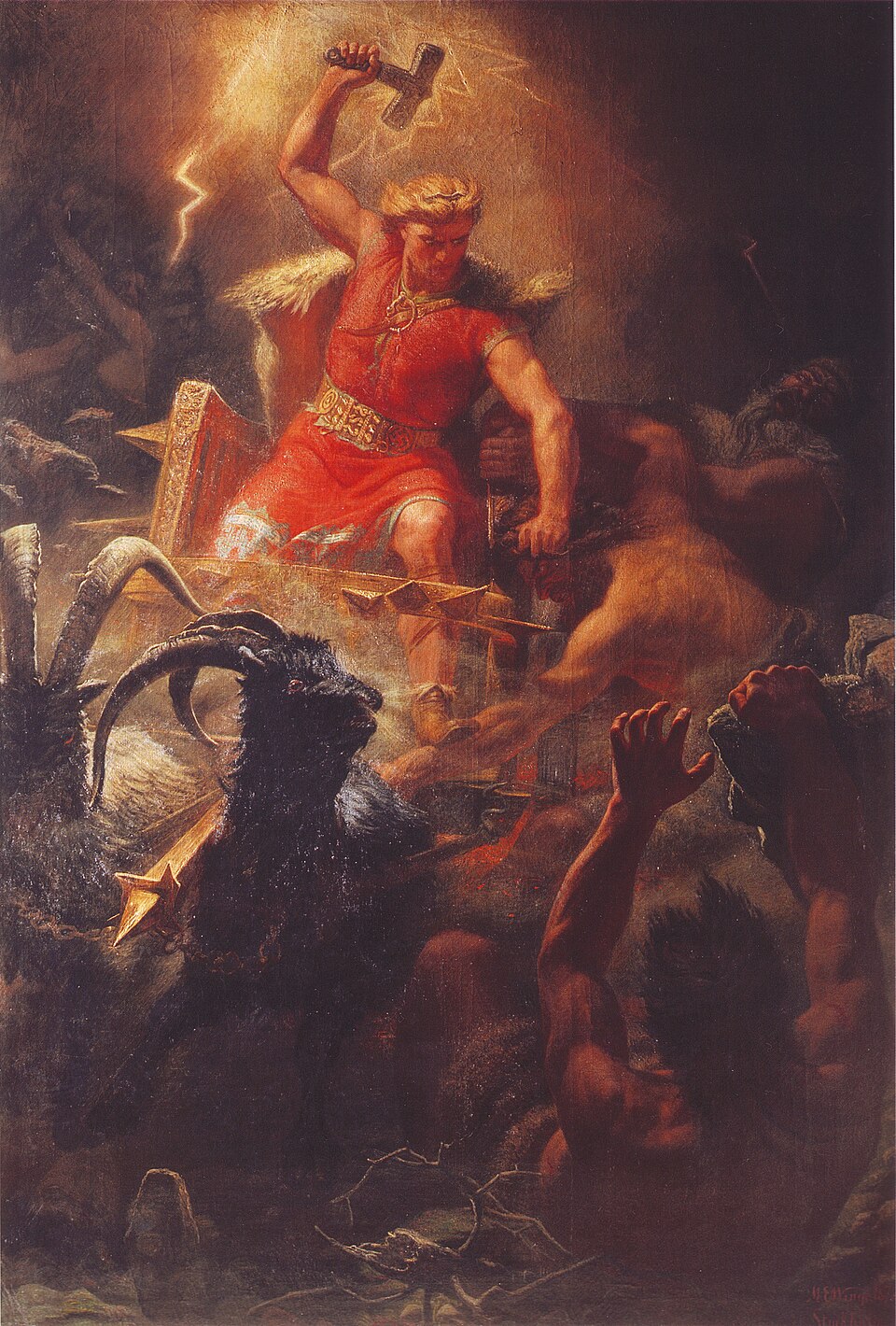
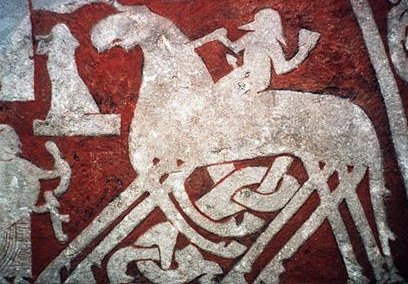
The early Germanic peoples were pagans and believed in many gods. Their most important god was Woden, god of war. All noble families claimed to be descended from him. Thor, the Thunderer, was god of storms and air. His weapon was a hammer called Mjolnir. It would always return to the thrower like a boomerang. Thor’s chief enemy was the evil serpent Jormungand. A final battle marking the end of the world would be Ragnarok—the Twilight of the Gods.
Other gods of the Germanic people were Frey, Freya, Tyr, Hel, Nerthus, Loki, and Heimdall.
Frey, the Golden One, controlled the sun and rain. He was god of the harvest, to be cut down at harvest time so people could have food to live. He was keeper of plants and animals who were killed to give people food.
Freya was the goddess of joy, love, and fruitfulness. Tyr was bringer of justice and order.
Hel ruled over the underworld where many of the dead dwelt. Nerthus was goddess of peace and fertility.
Loki was the trickster god. The word “loki” comes from the Germanic word for knot or tangle. Loki’s schemes were like webs that ensnared people. He caused trouble, but sometimes used his trickery for good.
Heimdall was the watchman of the gods and keeper of the rainbow bridge. Called Bifrost, the bridge linked the world of humans with the kingdom of the gods.
Names of the Germanic gods still live on in the days of the week. Sunday is sun’s day and Monday is moon’s day. Tuesday is named for the god Tyr. Wednesday is Woden’s day. Thor’s day is Thursday and Freya’s day is Friday. Saturday comes from the god Saetere.
When the Germanic peoples turned to Christianity, they began to believe in only one god. They accepted the idea that Jesus of Nazareth was send by God to save the world. People hoped that, like Jesus, they too would have everlasting life after death.
Christian beliefs from the Bible were first translated into Latin by St. Jerome. Then Bishop Wulfilas made his translation from Latin into the Gothic language. The pagan Goths were then able to read the Bible in their own language. They were first Germanic peoples to reject paganism and accept Christianity.
The Marcomanni tribes became Christians in the mid-fourth century. Queen, Fritigil, was responsible for their conversion to Christianity. As pagans, Vandals had once worshipped woodland creatures. After they turned away from paganism, they turned to Christianity. They followed the Gothic Scripture of Bishop Wulfilas. The Lombards adopted Roman Catholic practices. They had their children baptized and chose Roman names for their children.
Many famous German musicians, inventors, and storytellers may have had ancient Germanic ancestors.
Bach, Beethoven, and Mozart were famous German musicians. Their music is still well known today. Johannes Brahms wrote Wiegenlied—the beautiful Brahms Lullaby.
People once wrote manuscripts by hand. Johannes Gutenberg who invented the printing press, made the first printed version of the Bible.
Jacob and Wilhelm Grimm are famous brothers who saved German fairy tales. They lived in Hesse-Kassel in the Holy Roman Empire. They were called “folklorists.” They believed fairy tales were important as a record of German culture, language, and history. The stories had always been kept in memory and passed down through generations. The brothers traveled all over Germany to interview storytellers. Their book, Grimms’ Fairy Tales, told children about Cinderella, Little Red Riding Hood, and many others.
Many famous Italian explorers, artists, and inventors may have descended from ancient Germanic peoples.
Christopher Columbus was an Italian explorer and navigator. He was born in the Repulic of Genoa in 1451. He crossed the Atlantic Ocean four times and paved the way for settling the American colonies.
Marco Polo was born in Italy before it was united as a country. He was a merchant and explorer. He traveled through much of Asia before Europeans went there.
Michelangelo was a famous Italian Renaissance artist, sculptor, poet, architect, and inventor. He was born in the Republic of Florence in 1475, before Italy was a modern nation. His work greatly influenced Western Art. Leonardo daVinci was born in 1452, in Tuscany. He painted the Mona Lisa, and was among the most influential artists in history.
Alfred Nobel, a Swedish scientist and inventor, made the Nobel Prize famous around the world. The Nobel Prize is an award for special people whose work greatly benefits the world.
Alfred the Great was a famous Anglo Saxon king who ruled England for about 300 years. He is thought to be the only English king to be called “Great”. By the end of Alfred’s reign his coins referred to him as “King of the English.”
Charlemagne, King of the Franks, is well known today. He once ruled much of Western Europe. Other famous Franks were Saint Hubert, patron saint of hunters, and Saint Clotilde, wife of king Clovis I. She is said to have descended from a Gothic king.
Western Tribes
Germanic peoples have left their mark on modern-day regions of Europe. Germanic traces appear in language, religious practices, and churches. Germanic manuscripts, jewelry, armor, and weapons are on display in modern museums. They built churches and monasteries such as the Basilica of St Martin, Cluny Abbey, and St. Apollinaris of Ravenna.
Alamanni words are used in modern-day Switzerland, Austria, France, and other parts of Europe. The word for Germany came from the Old French word Aleman. The modern French word for Germany is Allemagne.
Ancient Angles are thought to have migrated to Ængle (England). Names for many places in England come from Saxons who settled there. For instance, Wessex came from West-Saxons, Essex from East-Saxons, and Sussex from South-Saxons. Middlesex also refers to a place where Saxons settled.
France is named for the Franks. The Franks left beautiful “illuminated” manuscripts decorated with silver and gold. They are on display in museums around the world.
Visigoths left some Spanish words related to warfare: guerra (war), yelmo (helmet), tregua (truce). These words are used in modern times. Visigoth jewelry is saved in museums, but there are no written documents or literary works from their time.
Eastern Tribes
Ostrogoth descendants may live in places where their ancestors settled centuries ago: Italy, western Hungary, Austria, and the Balkans.
A fourteenth American colony was proposed in 1775. Colonists wanted to name it Vandalia”. Today there are several towns in America named Vandalia. People wonder if the names might refer to the ancient Vandals of Germania.
Other Tribes
Today, descendants of the Burgundians might live in modern-day France and Central Europe. Lombard descendants might be found in modern-day Hungary, northwest Germany, northern Italy, and Austria.
Where this page comes from
The article above is adapted from “Germanic peoples” on Simple English Wikipedia, by its contributors. We removed reference markers, navigation boxes and tables, expanded measurement templates into readable numbers, and kept the prose otherwise intact. The simpler version is adapted from Wikijunior on Wikibooks.
Both sources are published under CC BY-SA 4.0, so this page is published under the same licence. You may share and adapt it, including commercially, as long as you credit the original and keep the same licence.
Worksheets, answer keys and printable layouts elsewhere on K5Print are our own work and are not covered by this licence.