Incas
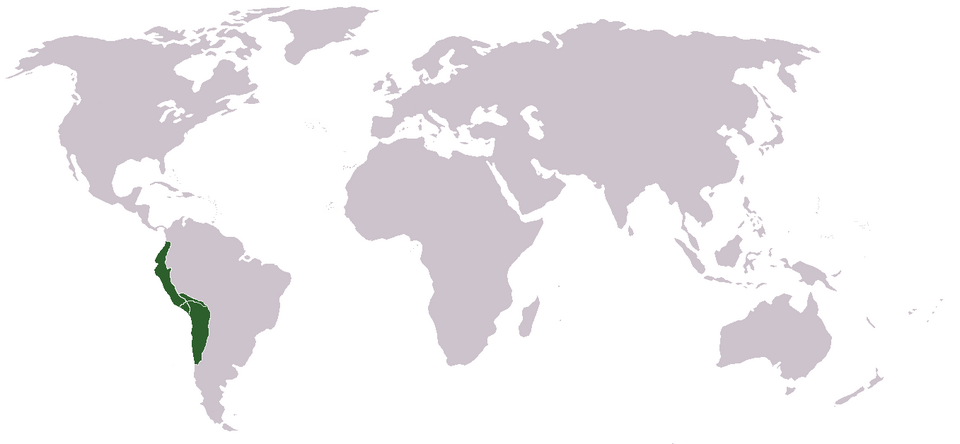

Fast facts
- Conservation status
- Empire
- Capital
- Cusco
- Official language
- Quechua
The Inca were a pre-Columbian country and empire in the Andes of South America. The word ‘Inca’ can also mean the emperor or king of the Inca people. The Inca Empire was called Tawantinsuyo in Quechua, which means “four regions”.
It was the largest empire in the Americas, and was large even by world standards. It existed shortly before Christopher Columbus arrived in the Americas. It lasted for 100 years, until it was conquered by Spanish soldiers in 1532 AD.
Overview
The Inca were ruled by an Emperor known as the Sapa Inca. Their main language was Quechua, but since there were many different groups in the Empire, there were probably many different languages as well.
The Empire was supported by an economy based on the collective ownership of the land.
Location
The Inca ruled along the western coast of South America for a little over 100 years, until the Spanish invasion in the 16th century.
The empire was centered around the city of Cuzco, or Qosqo, in what is now southern Peru. This was the administrative, political and military center of the empire. In later years, it became centered around Quito.
Growth
The Inca Empire began around Lake Titicaca in about 1197. From 1438 to 1533, the Incas used conquest and non-violent assimilation to gain a large portion of western South America. Their empire centered on the Andean mountain ranges. It included large parts of what is now Ecuador, Peru, Bolivia, Argentina and Chile.
Road network
Throughout their empire, they built a network of roads and rope bridges to make travel between their communities easy.
Beginning of Spanish rule
In 1533, Atahualpa, the last sovereign emperor, was executed by the conquistador Francisco Pizarro. That marked the beginning of Spanish rule in South America.
Also see
- Inca road system
- Inca rope bridge
- Inca Civil War
Written for younger readers
Incas, in simpler words
This version comes from Wikijunior, a set of books written for children aged 8 to 11. It is shorter and uses plainer language than the article above.
From Wikijunior: Ancient Civilizations
The Inca lived in the Andes Mountains in South America. Their range stretched from southern Chile through Argentina, Bolivia, Peru, and Ecuador and into southern Colombia.
The Inca were very warlike and often attacked their neighbors to take their land. In this way, the Inca Empire, which started out small, grew to be very large. In fact, the Inca Empire was the largest empire ever in South America, and one of the largest in the world.
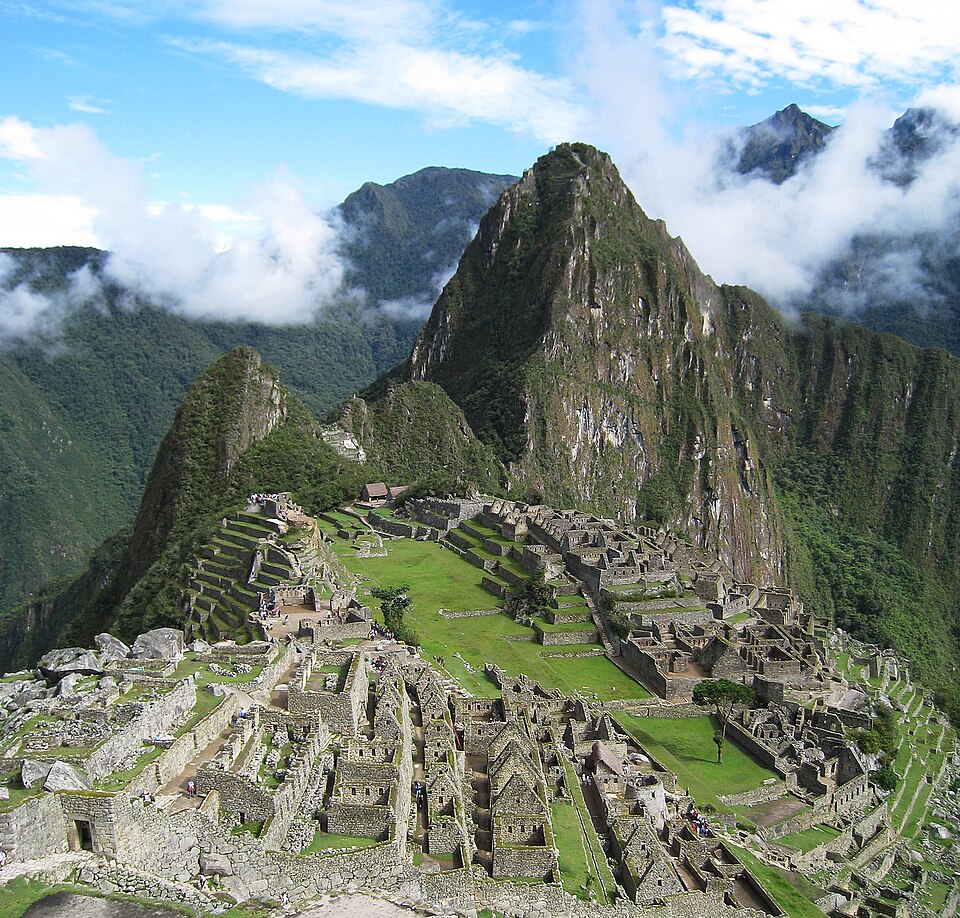
The Inca lived in stone houses varying in size. They were all built in the Andes on flat plateaus. Their temples, however, were built on circular mounds made by the Inca, sort of like slanted cylinders. At the top, there was a plateau. On this plateau, the main buildings were built.
A strange thing about the Inca was that they didn’t use iron tools to help them cut and shape the stone for their houses. Instead, they used round balls of stone to pound out stone blocks for their buildings. The blocks of stone were not usually rectangles but were very strange-looking shapes that fit together much like the pieces of a puzzle. Many of the stone walls the Inca built are still so strong and well made that it is impossible to slide the blade of a knife between the stones.
The Inca ate potatoes and corn. They drank llama milk and water and ate llamas and alpaca for their daily protein because they didn’t have pigs, cows, sheep or turkeys. The Inca Empire had crops including maize, cocoa, beans, grains, potatoes, sweet potatoes, ulluco, oca, mashwa, pepper, tomatoes, peanuts, cashews, squash, cucumber, quinoa, gourd, cotton, talwi, carob, chirimoya, lúcuma, guayaba, and avocado.
Typical Inca clothing would consist of a lightweight finely made poncho covered by a heavier, blanket-like poncho. They wore sandals and hats, some with fuzzy chin bands. Many rich Inca men wore large golden earrings as a symbol of how rich they were. Women and men wore the same clothing.
The central god of the Inca religion was the sun-god Inti, the only god that had temples built for him. The sun-god was the father of the royal family. There were many gods among the Inca, but the sun-god outshone them all. The Inca also believed that there was a heaven, a hell, and a resurrection of the body after death. The Inca worshiped the dead, their ancestors, their king whom they regarded as divine, and nature and it’s cycles.
The Inca did not have a system of writing with letters or symbols. Instead, they used a special system called quipu (pronounced KEE-poo), tying knots in ropes of different colors. The ropes were kept on special belts that the quipu writers would always wear. The different colored ropes could show deaths, weddings, trade, and other things. Being a quipu writer took many years of schooling, and because very few learned, quipu readers were very important.
Yma Sumac is a singer who performed Inca and South American folk songs beginning in the 1940s. She is claimed to be an Inca princess directly descended from Atahualpa.
The Inca are famous for their abandoned cities in the Andes Mountains. Some major cities like Cuzco and Machu Picchu, located in Peru, are major tourist attractions. Although many cities have been found, there are still many hidden in the jungles and under the desert floor. Archaeologists hope to one day know more about these people through their amazing artifacts so that you can have the opportunity to learn more about the Inca!
Where this page comes from
The article above is adapted from “Incas” on Simple English Wikipedia, by its contributors. We removed reference markers, navigation boxes and tables, expanded measurement templates into readable numbers, and kept the prose otherwise intact. The simpler version is adapted from Wikijunior on Wikibooks.
Both sources are published under CC BY-SA 4.0, so this page is published under the same licence. You may share and adapt it, including commercially, as long as you credit the original and keep the same licence.
Worksheets, answer keys and printable layouts elsewhere on K5Print are our own work and are not covered by this licence.