Iwo Jima and Okinawa

Iwo Jima
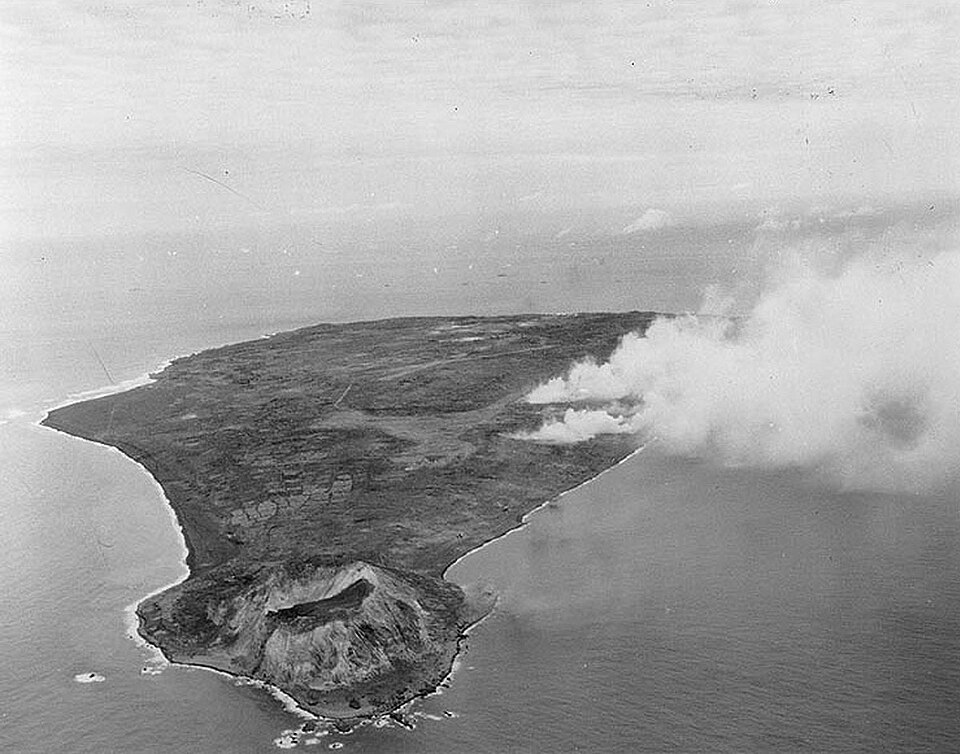
The Battle of Iwo Jima was fought between the Japanese army and the United States Marine Corps (USMC). The battle, known to the USMC as “Operation Detachment”, started on February 19, 1945 and lasted until March 26, 1945 when the last Japanese soldiers were captured or killed. This was the first battle of the war fought on the Japanese “home islands” and the fighting was very fierce.
The Japanese had built deep bunkers to protect themselves, with tunnels so that they could move safely between the bunkers. There were many large hidden guns protecting the island.
The battle
The battle started when US ships began to fire their guns at the island. Then nearly 100 aircraft attacked, dropping their bombs on the Japanese positions. Then the ships fired again and again. These attacks did not hurt the Japanese much as they were hidden safely in their bunkers. When the ships had stopped firing, the Marines began landing on the beaches. The Japanese waited until many men were on the beach before beginning to fire machine guns at them.
Slowly the Marines moved forward, but they had trouble getting the Japanese out of the bunkers. Each time they thought a bunker was empty, more Japanese would run along the tunnels into the bunker and start shooting again.
The fighting was very fierce and the Marines moved slowly. The Japanese bunkers were too strong for the Marines’ guns, so they had to use flamethrowers and grenades instead. They also had eight tanks with flamethrowers that were used against tough bunkers.
The US Navy had aircraft carriers nearby. Fighter aircraft from these carriers supported the Marines by shooting up the Japanese whenever they could and by dropping bombs.
As the battle continued, the Japanese began to run out of water and food. They became desperate and began to launch crazy attacks at night. In the end they were all either killed or wounded.
Raising the flag
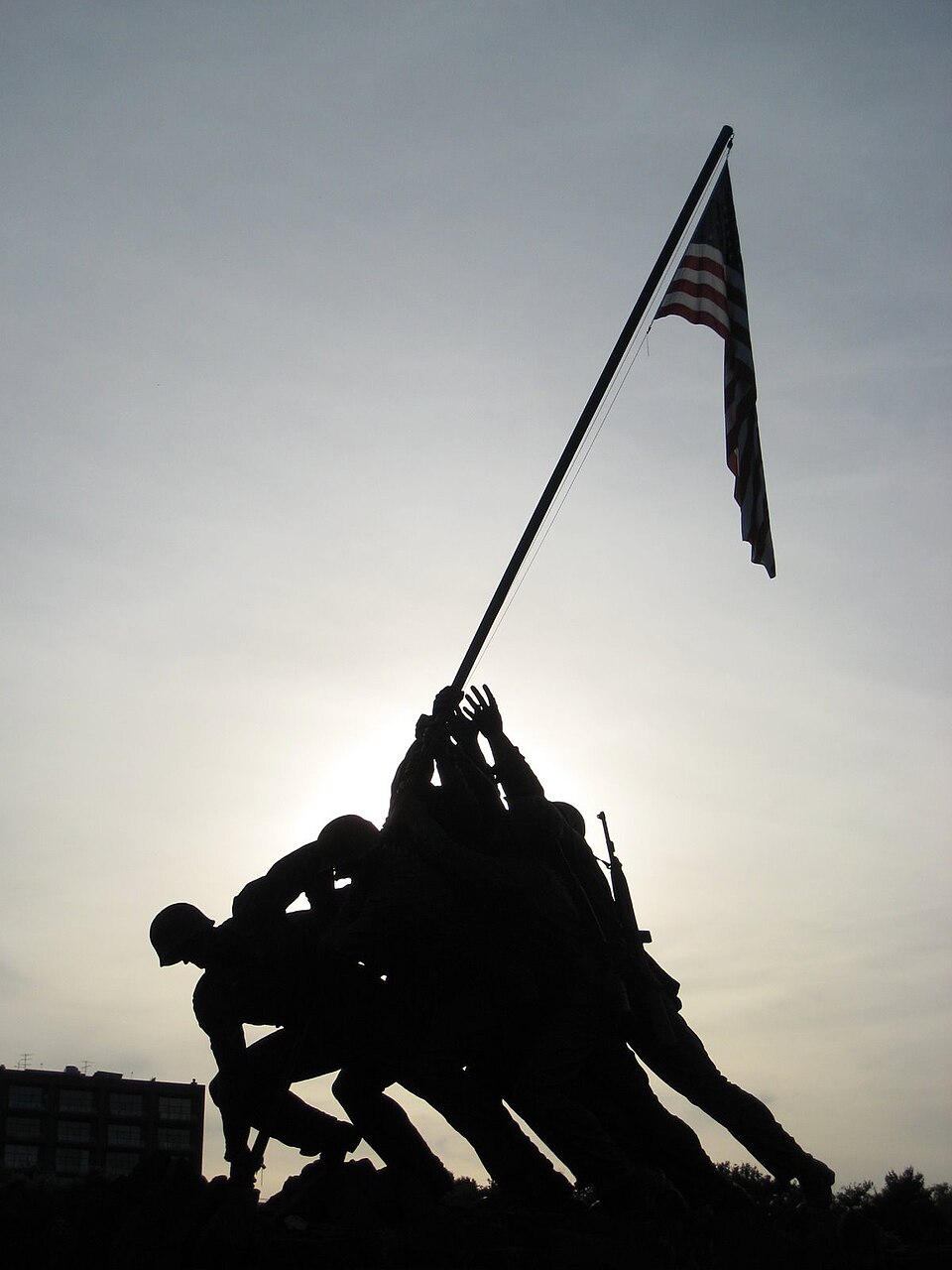
At the end of the battle, the Marines raised the US flag, or Stars and Stripes, on the island. A famous photograph of the flag raising was taken. This photograph was used to design a monument at the US national cemetery where US soldiers are buried.
Aftermath
Of the 22,000 Japanese Soldiers defending the island only 216 of them survived, most of them badly hurt. As was normal in the war, hardly any Japanese soldiers surrendered - most fought to the death.
Of the 70,000 American Marines there were 27,909 casualties, with 6,825 killed.
Okinawa
The Battle of Okinawa was fought between the United States, Britain, their allies and the Japanese. It was also known as Operation Iceberg. It started in April 1945 and ended on June 21, 1945. This battle was a large and fierce fight.
Before the battle
The aim of the battle was to capture a large island close to Japan. After many earlier island battles, the US and its allies were getting nearer to Japan. The plan was to use Okinawa once it was captured as a base to attack Japan itself.
The battle
It was one of the most bloody battles in all of World War 2.
Aftermath
More than 100,000 Japanese soldiers and 17,000 Americans Marines and sailors were killed as well as many thousands of people living on the islands. In fact nearly a quarter of the population died.
Most of the buildings on the island were completely destroyed.
The island was very useful to the allies and it was used by warships to anchor. Many airfields were also built so that airplanes could attack Japan at any given moment.
Written for younger readers
Iwo Jima and Okinawa, in simpler words
This version comes from Wikijunior, a set of books written for children aged 8 to 11. It is shorter and uses plainer language than the article above.
From Wikijunior: World War II
The Battle of Iwo Jima was fought between the Japanese army and the United States Marine Corps (USMC). The battle, known to the USMC as “Operation Detachment”, started on February 19, 1945 and lasted until March 26, 1945 when the last Japanese soldiers were captured or killed. This was the first battle of the war fought on the Japanese “home islands” and the fighting was very fierce.
The Japanese had built deep bunkers to protect themselves, with tunnels so that they could move safely between the bunkers. There were many large hidden guns protecting the island.
The battle started when US ships began to fire their guns at the island. Then nearly 100 aircraft attacked, dropping their bombs on the Japanese positions. Then the ships fired again and again. These attacks did not hurt the Japanese much as they were hidden safely in their bunkers. When the ships had stopped firing, the Marines began landing on the beaches. The Japanese waited until many men were on the beach before beginning to fire machine guns at them.
Slowly the Marines moved forward, but they had trouble getting the Japanese out of the bunkers. Each time they thought a bunker was empty, more Japanese would run along the tunnels into the bunker and start shooting again.
The fighting was very fierce and the Marines moved slowly. The Japanese bunkers were too strong for the Marines’ guns, so they had to use flamethrowers and grenades instead. They also had eight tanks with flamethrowers that were used against tough bunkers.
The US Navy had aircraft carriers nearby. Fighter aircraft from these carriers supported the Marines by shooting up the Japanese whenever they could and by dropping bombs.
As the battle continued, the Japanese began to run out of water and food. They became desperate and began to launch crazy attacks at night. In the end they were all either killed or wounded.
At the end of the battle, the Marines raised the US flag, or Stars and Stripes, on the island. A famous photograph of the flag raising was taken. This photograph was used to design a monument at the US national cemetery where US soldiers are buried.
Of the 22,000 Japanese Soldiers defending the island only 216 of them survived, most of them badly hurt. As was normal in the war, hardly any Japanese soldiers surrendered - most fought to the death.
Of the 70,000 American Marines there were 27,909 casualties, with 6,825 killed.
The Battle of Okinawa was fought between the United States, Britain, their allies and the Japanese. It was also known as Operation Iceberg. It started in April 1945 and ended on June 21, 1945. This battle was a large and fierce fight.
The aim of the battle was to capture a large island close to Japan. After many earlier island battles, the US and its allies were getting nearer to Japan. The plan was to use Okinawa once it was captured as a base to attack Japan itself.
It was one of the most bloody battles in all of World War 2.
More than 100,000 Japanese soldiers and 17,000 Americans Marines and sailors were killed as well as many thousands of people living on the islands. In fact nearly a quarter of the population died.
Most of the buildings on the island were completely destroyed.
The island was very useful to the allies and it was used by warships to anchor. Many airfields were also built so that airplanes could attack Japan at any given moment.
Where this page comes from
The article above is adapted from “Iwo Jima and Okinawa” on Simple English Wikipedia, by its contributors. We removed reference markers, navigation boxes and tables, expanded measurement templates into readable numbers, and kept the prose otherwise intact. The simpler version is adapted from Wikijunior on Wikibooks.
Both sources are published under CC BY-SA 4.0, so this page is published under the same licence. You may share and adapt it, including commercially, as long as you credit the original and keep the same licence.
Worksheets, answer keys and printable layouts elsewhere on K5Print are our own work and are not covered by this licence.