Neolithic
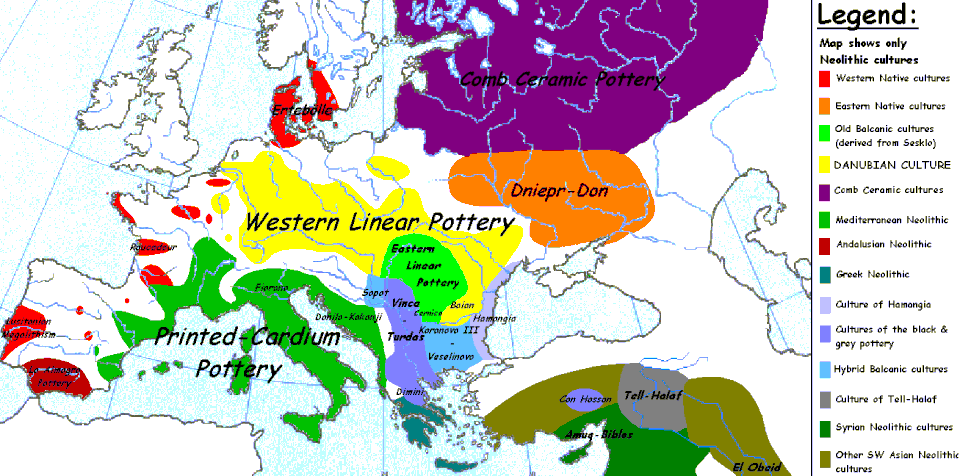

The Neolithic period is the last part of the Stone Age. The word “Neolithic” means “new Stone Age.” It comes from two words in Greek meaning “new” and “lithic” (“stone”). It started when humans began farming, and ended when they began using copper.
Timeline
The Neolithic period started at different times in different places, since not everyone started farming at the same time. The earliest Neolithic period started around 10,000 BC in the Middle East.
The Stone Age ended when humans began to use copper to make tools. This began the Copper Age.
Neolithic Revolution
See the main page: Neolithic Revolution
In the Neolithic period, people invented farming and started caring for animals, such as cows, sheep and pigs. Scientists call this the Neolithic Revolution. It was a gradual change from nomadic hunting and gathering communities to agriculture and settlement.
Farming & domestication
See the main pages: History of agriculture and Domestication of animals
By around 9500 BC, humans were cultivating eight key crops in the Levant. These eight Neolithic founder crops were emmer wheat, einkorn wheat, hulled barley, peas, lentils, bitter vetch, chickpeas, and flax.
The first evidence we have of rice cultivation is from 5700 BC. By 6200 BC, humans had domesticated rice in China. After that, they domesticated mung, soy and azuki beans.
Pigs were domesticated in Mesopotamia around 11,000 years ago, followed by sheep. These provided food and wool for warm clothing. Cattle were domesticated from the wild aurochs in the areas of modern Turkey and India around 8500 BC.
Culture
Neolithic people were not simple cavemen. They made pottery and invented jade carving. They buried their dead in tombs and left jewelry and pottery inside, suggesting that they had a concept of the afterlife.
In Turkey, archaeologists found a pillar with a three-dimensional face carved into it. This carving, which was created around 8000-9000 BC, suggests that Neolithic people understood symbolism.
Where this page comes from
The article above is adapted from “Neolithic” on Simple English Wikipedia, by its contributors. We removed reference markers, navigation boxes and tables, expanded measurement templates into readable numbers, and kept the prose otherwise intact.
Both sources are published under CC BY-SA 4.0, so this page is published under the same licence. You may share and adapt it, including commercially, as long as you credit the original and keep the same licence.
Worksheets, answer keys and printable layouts elsewhere on K5Print are our own work and are not covered by this licence.