Ontology
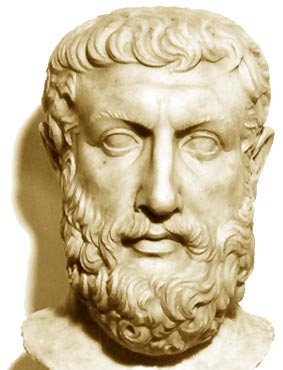

Ontology is the philosophical study of the nature of being, becoming, existence, or reality. It is part of the major branch of philosophy known as metaphysics.
Ontology deals with questions about what things exist or can be said to exist, and how such entities can be grouped according to similarities and differences.
Etymology
The word ontology (‘study of being’) comes from
Overview
Ontology asks whether “categories of being” are fundamental.
Some philosophers, of the Platonic school, say that all nouns (including abstract nouns) refer to actual entities. Other philosophers contend that nouns do not always name entities. They think some are a kind of shorthand for a collection of either objects or events.
In this view, mind, instead of referring to an entity, refers to a collection of mental events experienced by a person. Society refers to a collection of persons with some shared characteristics, and geometry refers to a collection of a specific kind of intellectual activity.
Between these poles, called realism and nominalism, are other positions. Any ontology must give an account of which words refer to entities, which do not, why, and what categories result.
Where this page comes from
The article above is adapted from “Ontology” on Simple English Wikipedia, by its contributors. We removed reference markers, navigation boxes and tables, expanded measurement templates into readable numbers, and kept the prose otherwise intact.
Both sources are published under CC BY-SA 4.0, so this page is published under the same licence. You may share and adapt it, including commercially, as long as you credit the original and keep the same licence.
Worksheets, answer keys and printable layouts elsewhere on K5Print are our own work and are not covered by this licence.