Pre-History

Prehistory (or better known as Pre-history) is the time before people began to write. It lasted from around 4.5 billion BC 3000 BC, during the Stone Age.
Name
The word comes from the Ancient Greek words προ (pre = “before”) and ιστορία (historia = “history”).
Paul Tournal first used the French word Préhistorique. He found things made by humans more than ten thousand years ago in some caves in France. The word was first used in France around 1830 to talk about the time before writing. Daniel Wilson used it in English in 1851.
Meaning
The term “pre-history” is mostly used for the period from 4.5 billion BC 3000 BC, roughly speaking, the Neolithic. Sometimes the term “prehistoric” is used for much older periods, but scientists have more accurate terms for those more ancient times.
Pre-history ends when people began to write. This happened at different times in different places, depending on when people began to write and whether their records were kept safe so they could be found later on. In places like Mesopotamia, China, and Ancient Egypt, people recorded things from very early times (around 3200 BC in Ancient Egypt), and these records can be looked at and studied. In New Guinea, the end of prehistory came much later, around 1900 BC.
Studying pre-history
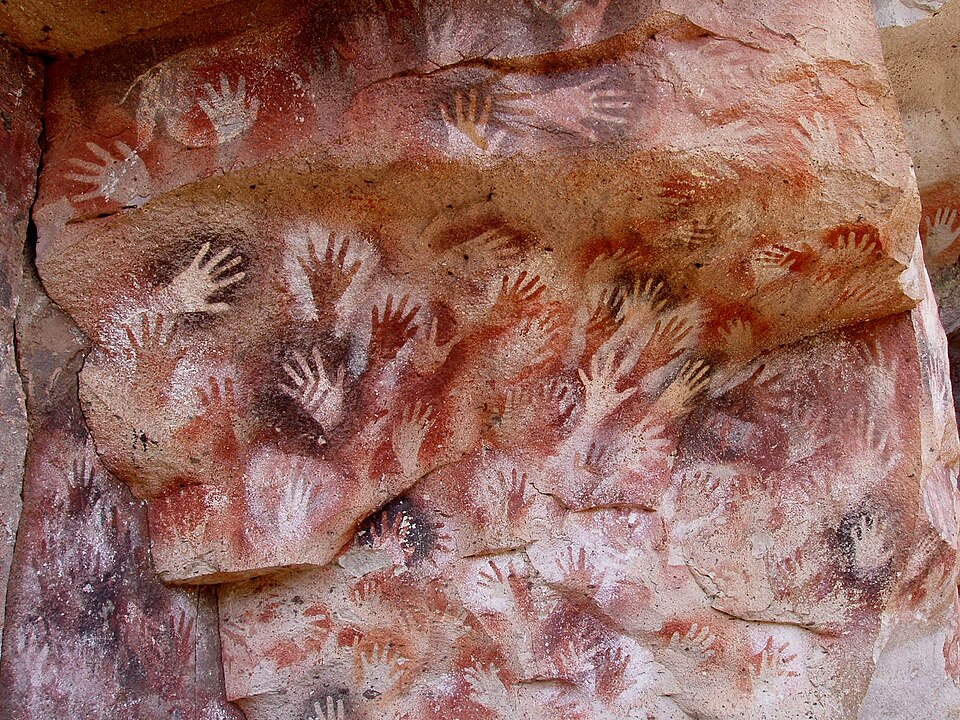
Less is known about prehistoric people because there are no written records for us to study. Archaeologists study things like tools, bones, buildings and cave drawings to learn about pre-history. Palaeontology, astronomy, biology, geology, anthropology, and archaeology also provide information about pre-history. For example, anthropologists study the traces of human behavior to learn what people were doing and why.
After people started to record events, first by drawing symbols (called pictographs) and then by writing, it became much easier to tell what happened, and history started. These records can tell us the names of leaders (such as Kings and Queens), important events like floods and wars, and the things people did in their daily lives.
Life
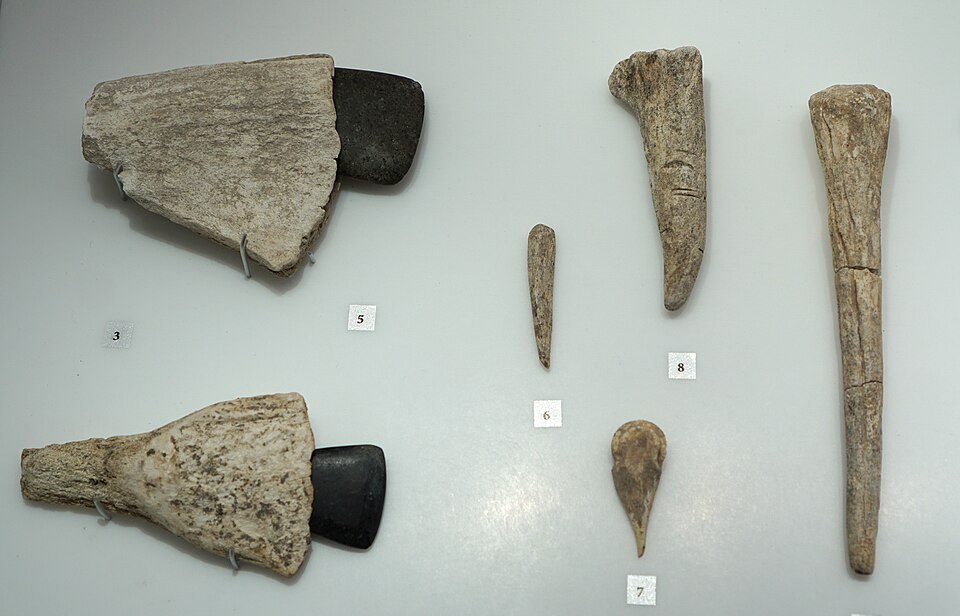
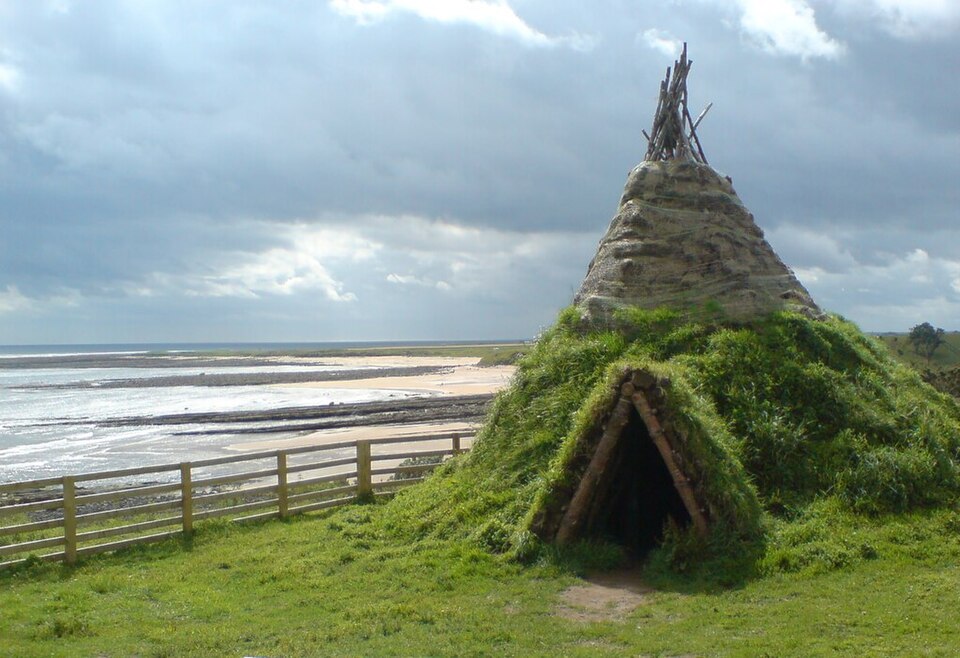
In the more ancient Stone Age pre-history, people gathered in tribes and lived in caves or tents made from animal skin. They had simple tools made from wood and bones, and cutting tools from stone such as flint, which they used to hunt and to make simple things. They made fire and used it for cooking and to stay warm. They made clothing out of animal skins, and later by weaving.
Society started when people began doing specialized jobs. This is called the division of labour. The division of labor made people depend on one another and led to more complex civilizations.
Timeline of Earth
- 4.5 billion years ago – Earth forms out of smaller rocks flying around the Sun
- 3,500 million years ago – The first very simple and tiny forms of life appear in the seas
- 600 million years ago – The first animals (also in the seas)
- 500 million years ago – The first plants and animals on land
- 230 million years ago – The first dinosaurs
- 65 million years ago – Dinosaurs disappear; mammals take their place as the dominant animals
- 30 million years ago – The first apes
- 2.5 million years ago – The first humans
Timeline of people
- 2.5 million years ago – Start of Lower Palaeolithic age, during which a type of early pre-human called Australopithecus lived. These people made tools out of bones and stones and made shelters out of branches.
- 1 million years ago – A type of early human called Homo erectus lived. People made hand axes and wooden spears.
- 250,000 years ago – First Homo sapiens (modern people). People make fire, use bolas, and hunt elephants.
- 100,000 years ago – Middle Palaeolithic age. Neanderthal people live during this period. People live in caves and make cave drawings. People begin to bury the dead.
- 40,000 years ago – Upper Palaeolithic age. Cro-Magnon people exist. People make spears from antlers and houses from hides (animal skins). People paint cave drawings and make things out of clay. People make needles out of antlers and make jewelry.
- 10,000 years ago – The last Ice age ends.
- 10,000 BC – 4000 BC – Mesolithic age. In North-west Europe people make bows and arrows. People use dogs to hunt and to carry things.
- 9,000 BC – Neolithic age. People in the Near East start to change from hunting and gathering food to growing crops and using farm animals.
- 7,000 BC – People in South-west Europe begin using copper to make tools.
- 6,000 BC – British Isles move away from Europe.
- 2,580 BC – The Egyptians build the Great Pyramids in Giza. People in the Middle East use iron and make plows.
- 2,400 BC – People make Stonehenge in England.
- 3,300 BC – 1,200 BC – Bronze Age (in Britain). People make tools out of bronze.
- 1,200 BC – 400 AD – Iron Age (in Britain). People make tools out of iron. Roman Empire rises and falls.
Written for younger readers
Pre-History, in simpler words
This version comes from Wikijunior, a set of books written for children aged 8 to 11. It is shorter and uses plainer language than the article above.
From Wikijunior: Ancient Civilizations
Prehistory means “before recorded history”. History is what we know about the past as it has been recorded. Just like we do today, people used to tell stories about the most interesting and challenging events in their people’s lives, even turning them into songs or family stories that were passed down from generation to generation. Later, stones and giant rock ledges and caves were scraped, chiseled, and even painted with drawings called petroglyphs. Petroglyphs could have been left for several reasons. It is possible that hunting parties or explorers left some to help lead their people to safety, or to ward off intruders by giving an impression that the land here is off limits and protected by many gods, or simply marking this valley a very successful hunting grounds. These became very artistic in some regions and cultures.
Finally, about 6000 years ago people started to make marks on clay tablets to help them remember, and so writing was invented. Songs and sagas likely were changed as they were learned by each new generation of minstrels and story-tellers. Painting and art usually only captures a moment in time, but writing can be used to describe everything in detail in past, present, and even what people expect for the future, like written laws, wills, and recorded deeds of land ownership. However, even though writing was a huge achievement for mankind, it took a very long time before it was used by everyone. At first not many people learned how to write, so history - our written record - really only emerged about 5000 years ago, in what we call The Bronze Age. That is why Historians (people who study history) don’t know very much about what prehistoric people did.
The information we have about prehistoric people is mainly gathered from archeology - the art of finding and interpreting things that are buried in the ground. Sometimes we find ancient burial sites, which contain human remains and sometimes ‘grave goods’ which we can now date fairly accurately by measuring the decay of an isotope called Carbon 14. Other such artifacts include weapons, jewellery, pottery, painting, even preserved post-holes and earth-works that allow us imagine how their buildings may looked and how they used to live.
Human activity really started when people picked up sticks and stones, bound them together, and made themselves simple hammers, spears and other tools. Curiously, it seems that, because making and using tools is difficult to learn, language evolved to compliment simple grunts and gestures. This earliest period of truly human activity is known as the “Stone Age” which was followed by the “Bronze” and “Iron” Ages. . These are sometimes called the three ancient ages of man Historians have further divided the Stone Age into three parts. They are:
- The Old Stone Age (Palaeolithic)
According to ancient writings (scripture) mankind suddenly appeared fully human. According to the theories of Darwin, we seem to evolved alongside forest primates (monkeys and apes) that lived in Central Africa. Exactly why our ancestors abandoned their ancestral homes and started to migrate all across the world is not clear, but there is archaeological evidence to suggest that a huge wave of primitive people did just that about 70,000 years ago.
People had started to make stone implements long before this first great migration. Now they moved around the land hunting animals and gathering plants, and are often called “Hunter-Gatherers”. It seems they mostly ate a vegetarian diet and sometimes were able to eat the meat off dead animals killed by predators or small game they were able to skillfully snare, trap, or even kill with weapons like spears or by throwing rocks at their prey. Many people stayed in caves for shelter in the winter and developed a nomadic lifestyle, living in tents and following the herds of wild animals that they hunted.
We have traces of where people moved through bits of specially sharpened flint from spears, stone axes and even sometimes (although it is rare) animal bones and ash from ancient meals and seeds from things that they ate. By looking carefully at the soil around these buried artifacts we can guess the period when they were discarded and what the weather was like in those days.
- The Middle Stone Age (Mesolithic)
Meat was very important because it is nutritionally much richer than food derived from vegetation, and probably eating fish and animals allowed our ancestors to spend less time hunting and gathering and more time developing language, clothes and other things which made their lives much better.
During this period people start to construct small tents to sleep in, and have learned how to control fire. We think they may have invented the bow and arrow by this time. More advanced tools are found, showing that people of this period were getting cleverer. By this time, humans are mostly hunting and killing animals, instead of mainly scavenging. The remains of baked clay pots are sometimes found but they are rare, probably because these people were still moving around a lot, pots are rather fragile and not really essential to their survival.
- The New Stone Age (Neolithic)
During this period, people have become much cleverer. In the Levant (which Europeans call “The Middle East”), people started to herd animals and grow plants in special places that became farms. Now needing to travel less and stay longer near their cultivation, they started to and build more durable homes of wood and clay. Soon the first wooden villages, clay towns and later, stone cities appeared.
However, in less climatically favored places like Northern Europe, and North America, so far, there hasn’t yet been any evidence of farming or early towns from this period unearthed, but we never know what surprises are in store with so many fascinating archeological sites being discovered. We have found in Northern Europe that there were people there who marked the sacred places and build stone burial chambers called “barrows” and leave with the dead grave goods perhaps intended to help them survive during their ‘after-life’. The Ancients also created monumental temples that were sometimes filled with expensive sacrificial artifacts that may have had religious significance.
These archaeological remains have been mostly quite well preserved and can still be seen today. A prime example is Stonehenge in Britain, which started as a wooden structure around 10,000 years ago, and was rebuilt in stone about 5,000 years later. Much of Stonehenge still stands today. There are many other such sites all around the world.
All over the world, people developed their own cultures which eventually grew into the great civilizations that this book is about. Many prehistoric habits and customs became significant features of the later civilization..
The cradle of civilization seems to have been inland from the eastern coast of the Mediterranean, an area generally known by its Arabic name, The Levant. It stretches approximately from Egypt in the south to Syria in the north and Persia in the East.
Groups of people lived in different parts of the Levant, each with their own culture. This is known as the Pre-Dynastic Period, a part of the Old Stone Age. Historians say that as the desert got hotter, forcing people to move northwards towards the rivers Nile and Jordan and onwards to the fertile crescent between the rivers Euphrates Tigris (Mesopotamia -approximately modern day Iraq and Iran). People now ate more fish that previously. Seafood, which is rich in the chemicals needed to develop brains seems to have played an important role in Human history. Some even suggest our ancestors may have lost their fur and become naked during a period when they were living near, perhaps even mostly in the water!
During this early or pre-dynastic period, we mainly find stone axes and other small tools. We know that the Egyptians began mining a stone called “chert”, because the remains of a mine was discovered that seems to be about 35,000 years old! Chert is a rock that can be chipped to make sharp stone tools for stabbing and cutting. Unfortunately, we do not have other much evidence about this early period of Egyptian history, probably because the rivers and streams have washed it away. Archaeologists have found some prehistoric hunting camps, mainly in what is now desert.
As time went by, people started farming and making pots, and we have a lot more evidence because of the things they left behind. We have found bracelets, beads, hairpins, arrows, pots and even skeletons. A whole graveyard was found, with about 50 people in it. This culture of the Neolithic in Egypt has been named the “Badarian” culture, after the place where many things were found.
Gradually, powerful hunters gathered together sizable tribes, because that made life easier and more survivable. Tribes sometimes traded and sometimes fought each other for scarce resources. Rules had to be made and enforced, so rulers and soldiers developed the earlier skills of hunters and warriors in order to enforce laws.
Civilization comes from the same word as ‘city’. and like cities, civilization probably started quite modestly, perhaps as a large family farm managed by a patriarch (father-figure), which grew and joined nearby families either by agreement or more probably by force of arms.
Armies were led by noble warriors, who became princes and kings, able to assemble for themselves vast fortunes and so control huge armies which in turn could subdue neighbors and rivals.
Because chieftains tended to hand power to their sons, dynasties were formed. Dynasty means that members of a ruling or royal family are able to accumulate power that can be inherited.
Thus ’the naked ape’ became truly ’the killer ape’ and those murderous tendencies had to be carefully managed. The primary purpose of religion in early times seems to have been to define who must be defended - primarily kings and nobles, followed by farmers and herdsmen who produced their food - and, just as vitally, who may or must be killed including enemies slaughtered in war and law-breakers to be executed during times of peace. Later, enemies, weaker tribes, and law-breakers were sometimes enslaved - forced to work hard labor, usually building city walls, temples, or huge palaces.
Where this page comes from
The article above is adapted from “Pre-History” on Simple English Wikipedia, by its contributors. We removed reference markers, navigation boxes and tables, expanded measurement templates into readable numbers, and kept the prose otherwise intact. The simpler version is adapted from Wikijunior on Wikibooks.
Both sources are published under CC BY-SA 4.0, so this page is published under the same licence. You may share and adapt it, including commercially, as long as you credit the original and keep the same licence.
Worksheets, answer keys and printable layouts elsewhere on K5Print are our own work and are not covered by this licence.