Tanks
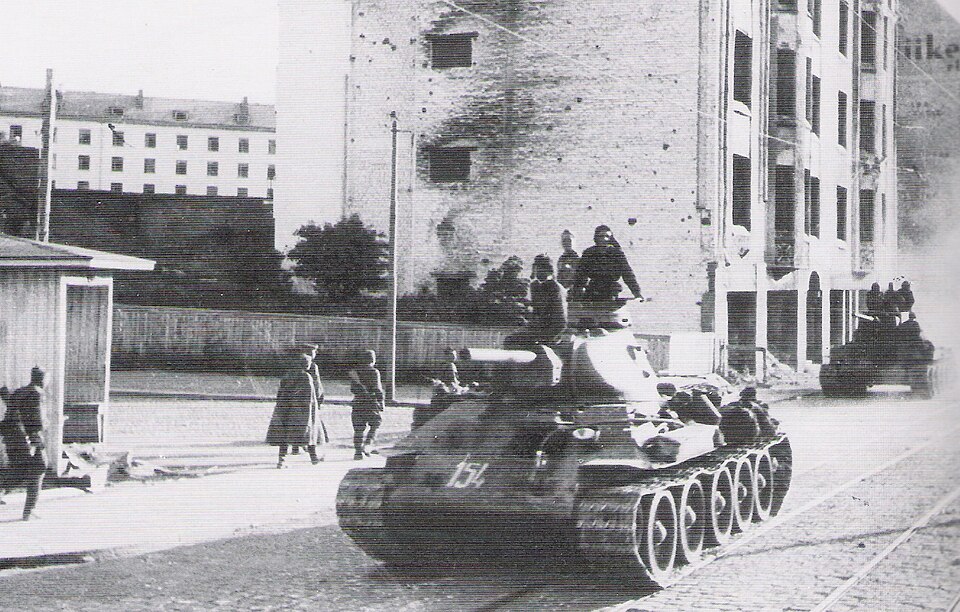

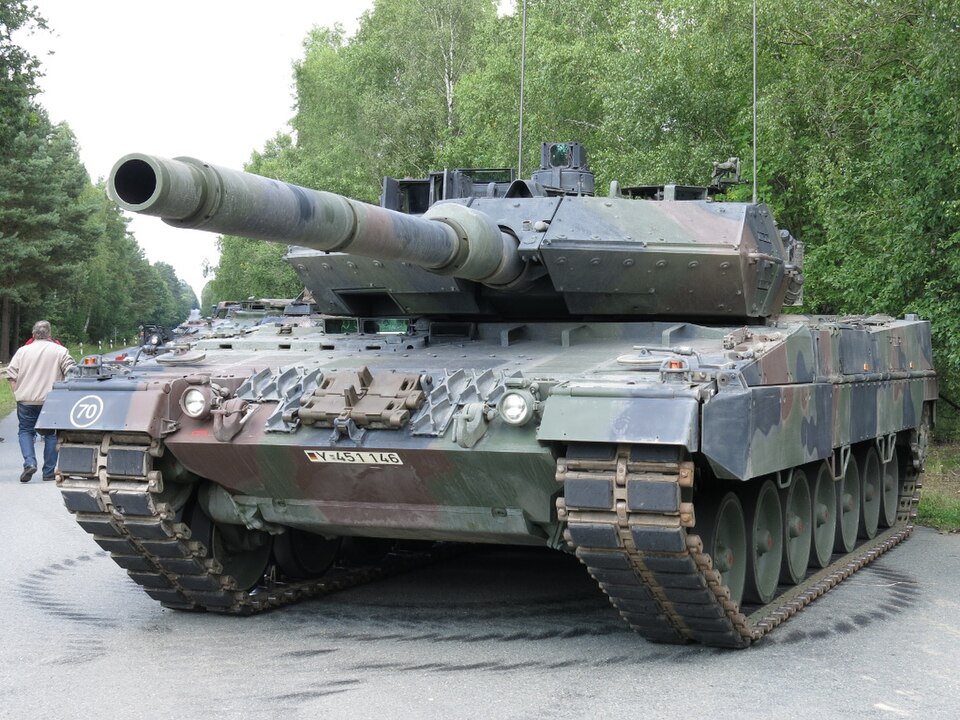
A tank is an armored fighting vehicle, typically armed with a gun mounted on a gun turret and a few machine guns.
A tank is covered in thick armour to protect it from enemy weapons. Tanks have tracks that wrap around its wheels to spread out its weight and let it cross rough terrain. Most tanks have a powerful gun and one or more machine guns.
A tank normally has 3-5 crew members with at least a driver, commander and gunner. There may also be a loader, who handles the ammunition for the main gun (so the gunner does not have to take eyes off the target). Some WWII tanks also had a separate soldier responsible for the radio. Since then, tank crews have evolved to have each person do one of these things, but in their early stages, the commander was often the loader and radio operator, and in a few tanks was also the driver.
Using
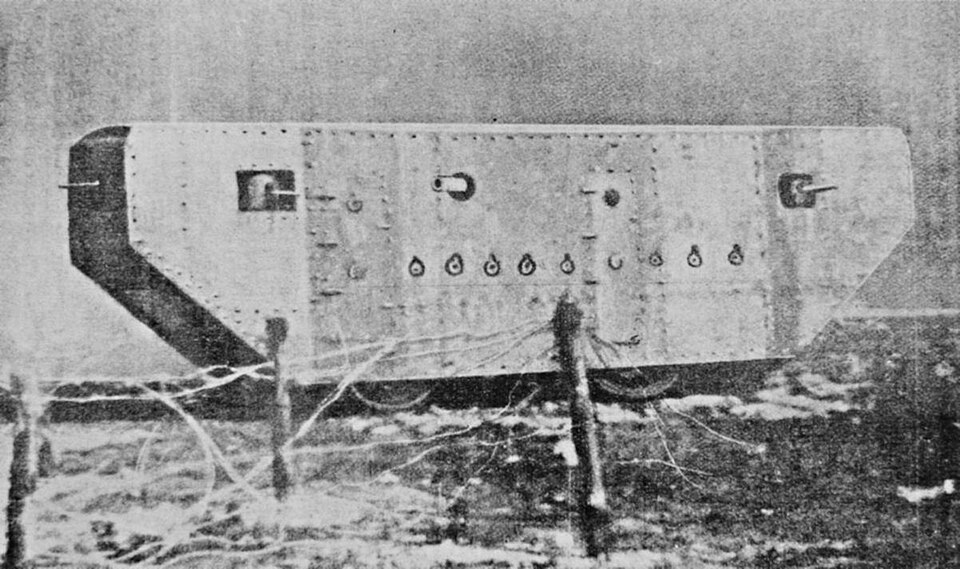
The first tanks were made by the British Royal Navy and French car manufacturers during World War I as a way of attacking enemy trenches. They were called tanks to trick the Germans into thinking they were water carriers for the Middle Eastern theatre of World War I. Their use in a surprise attack in the Battle of the Somme caused fear among the German soldiers but their small numbers and poor reliability prevented them from making much difference.
Tanks became a main weapon during World War II, when the German Army introduced a way of using them called Blitzkrieg. Battles between great numbers of tanks were fought, especially between the Germans and the Soviet Union. The Battle of Kursk was the biggest. Well-known World War II tanks were the German Panzer IV, Panther and Tiger I, Soviet T-34 (made in the largest numbers of any tank of the war and second most ever), the British Matilda, Churchill and Cromwell, and the American M4 sherman (second most produced tank of the war) and Stuart tanks. There were plans for much larger and more heavily armoured tanks such as the Maus but they were determined to be of little use. Their huge weight would have made moving them very difficult, and their huge size would have made them easy targets for heavy artillery.
Old tanks are often modified for other uses like carrying soldiers or equipment. Combat engineers use special tank-based vehicles, for example minesweeper tanks or bridge-layer tanks.
The tank is a major part of all large armies today. Tanks have replaced the cavalry everywhere and do the things that soldiers on horseback did in the past. Most modern tanks are of the heavy or Main Battle Tank type, able to fight other tanks. Compared to older types MBTs are very heavy (Russian MBTS being about 40 tons and Western around 60 tons) with a 120 mm (Western) and 125 mm (Russian) calibre cannon and 2-3 machine guns. Marines and other specialized forces also use some light tanks.
Anti-tank warfare
Armies have invented many ways to fight against enemy tanks and to defend their own tanks. Artillery was found to be effective when tanks were first introduced, and special anti-tank gun s were made. Elephant guns, large versions of ordinary rifles, were tried. They worked against the earliest tanks but later tanks have tougher armor. Obstacles such as tank traps and anti-tank trenches can catch tanks so artillery can hit them. Anti-tank land mine s can also catch or even destroy them.
The main weapons infantry uses for fighting against tanks are anti tank missiles and rocket propelled grenades. Often a tank force has its own infantry troops for protection against those weapons. Tanks are much used to fight tanks, and some tanks are specially made to be good at destroying other tanks. Heavy artillery and bombs can destroy tanks with a blast wave. Starting in the early 21st century, combat drones have sometimes destroyed tanks. Ground attack aircraft can destroy them with guns, bombs, and guided missiles.
Written for younger readers
Tanks, in simpler words
This version comes from Wikijunior, a set of books written for children aged 8 to 11. It is shorter and uses plainer language than the article above.
From Wikijunior: World War II
Tanks are large, heavily armoured vehicles used for fighting. Tanks move on ’treads’ which allow them to travel on almost any surface (except for water) and most tanks have a large cannon which are used to attack other vehicles, buildings and large groups of men. Most tanks also have a smaller machine gun for fighting against troops.
Tanks were first used by the British in World War I by the British, then later in the war by the Germans, French, and the Americans. However, tanks didn’t play a big role in combat until World War II.
Tanks were able to cross trench lines quickly, without taking much damage, as usually they were bulletproof. This was very useful as it allowed armies to move forward much more quickly. During the war however anti-tank traps were put in place to make tanks less effective.
During the beginning of the war, tanks would accompany troops, being used solely as weapons to aid the ground troops.
Towards the end of the war, many tanks were being fitted with radios, allowing them to communicate with one-another and be able to go off on their own or in groups, without the ground troops to guide them. This allowed tanks to move much faster for they were no longer forced to move at the same speed as the walking troops while at war.
Tanks were adapted to perform a variety of different jobs, from clearing minefields to fortifying/destroying roads and bridges.
World War II firmly cemented the tank in the military, proving that troops alone could no longer win wars.
Most of the large nations involved in the war had tanks. The Germans used several different types of panzers (the German name for a tank) including the Tiger and Panther. The Soviets generally used T-34s. The British, American, French and Polish forces, along with other nations, also used tanks in combat.
Panzer I (also known as Panzerkampfwagen I) was developed as a training tank in the 1930s by Germany but was used as the main tank for Germany’s army in the early stages of World War 2. The Panzer I was only equipped with two machine guns so couldn’t fight other tanks.
Panzer III (also known as Panzerkampfwagen III) was developed in the 1930s by Germany. Production of the Panzer III ended in 1943. Until 1942, the Panzer III was the first German tank armed with a weapon that could penetrate the armor of the main British and Soviet tanks.
The Panzer IV (also known as the Panzerkampfwagen IV) was a tank developed by Germany in the late 1930s. Having a 75 mm Lwk gun, it could penetrate the best soviet tanks fairly easily.
The Panther was the best known German tank in the war. It was first produced in 1942. Classified medium tank by the Germans, its weight allowed it to be a heavy tank. Had 76 mm gun. Even though smaller gun it had more pressure in the barrel therefore more speed then tiger. It had constant breakdowns, but later models resolved this issue partway. Angled armor made this tank impenetrable only through turret ring. Later models, like Panther G, had a chin mantlet which resolved this issue.
Tiger I is the common name of a German heavy tank which was developed in 1942. The official German designation was Panzerkampfwagen Tiger Ausf. E. It was very powerful and could take a hit. Looking on paper, the amount of armor this tank has (mostly non sloped) is very good. When its angled, however, this tank was nearly impenetrable.
The Tiger II was a beast of a tank, with upgraded 88mm gun, also with immense amount of armor. Very slow and had breakdowns. No allied tank during the war could destroy this machine in a frontal engagement.The only time a tank of this sort was taken from combat was when it was captured or tracked.
The Maus (meaning mouse in German) was quite the opposite. This vehicle was massive, and was designed to be a mobile bunker. Two prototypes were built in the later part of the war, one was fitted with a turret and the other was just the chassis. This vehicle never saw combat other than being shot at by the Germans. A completed tank would have weighed 188 tonnes.
Its iconic 152 mm gun and turret allowed it to completely destroy almost any tank with a single shot.
The T-34 was a Soviet tank produced from 1940 to 1958 at the KhPZ factory in Kharkov. Sloped armor helped its survivability but later German tanks outclassed it by far.
Where this page comes from
The article above is adapted from “Tanks” on Simple English Wikipedia, by its contributors. We removed reference markers, navigation boxes and tables, expanded measurement templates into readable numbers, and kept the prose otherwise intact. The simpler version is adapted from Wikijunior on Wikibooks.
Both sources are published under CC BY-SA 4.0, so this page is published under the same licence. You may share and adapt it, including commercially, as long as you credit the original and keep the same licence.
Worksheets, answer keys and printable layouts elsewhere on K5Print are our own work and are not covered by this licence.