Troy
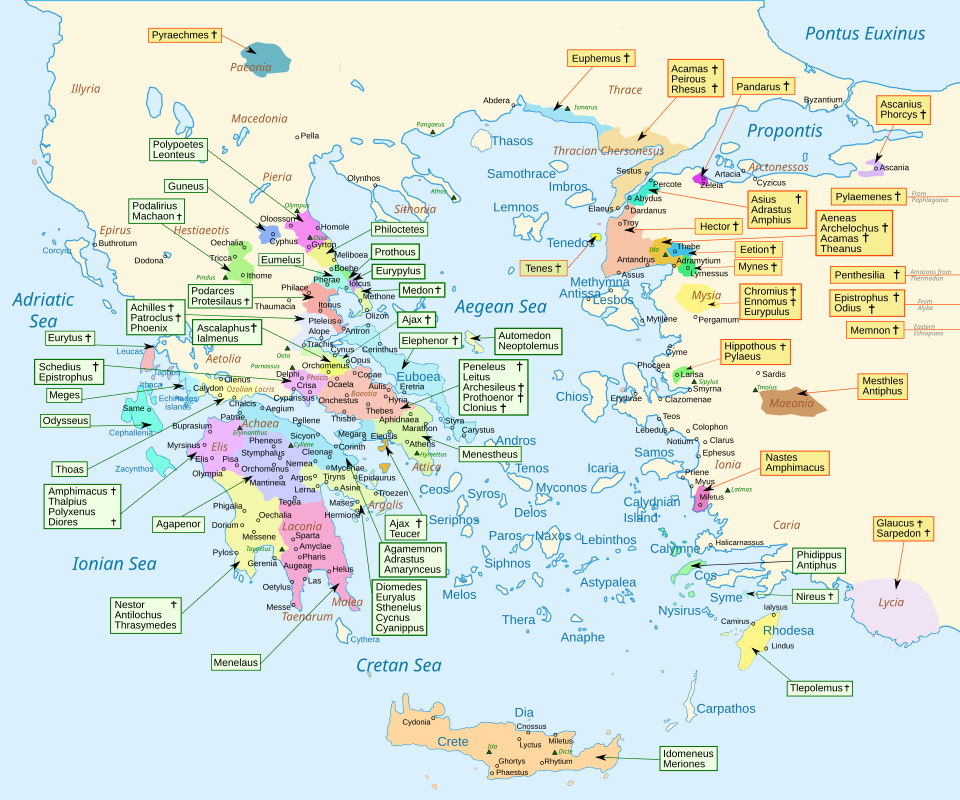

Troy was a city in north-west Asia Minor. It was the centre of the Trojan War, as told in eight long epic poems, six from the Epic Cycle, and two written by Homer, the Iliad and the Odyssey.
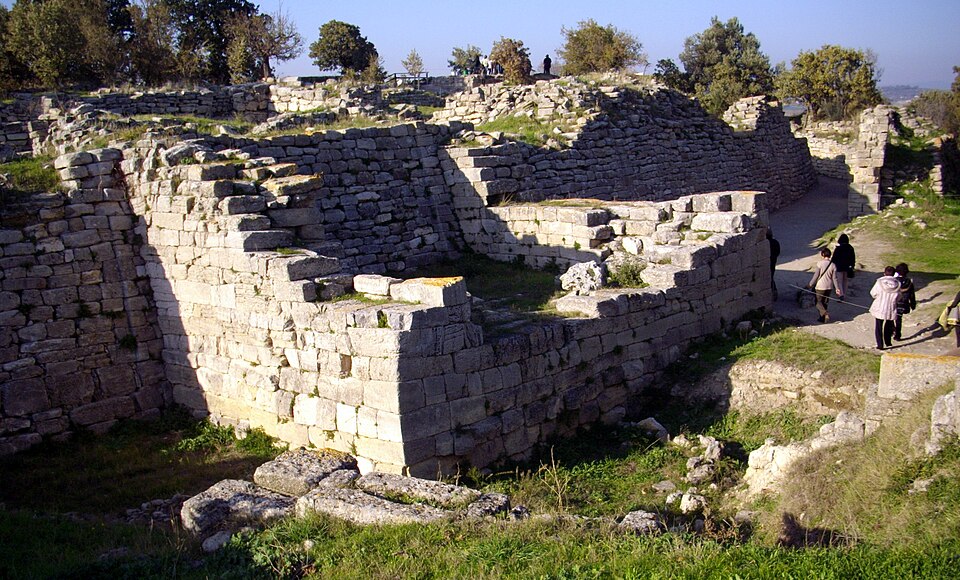
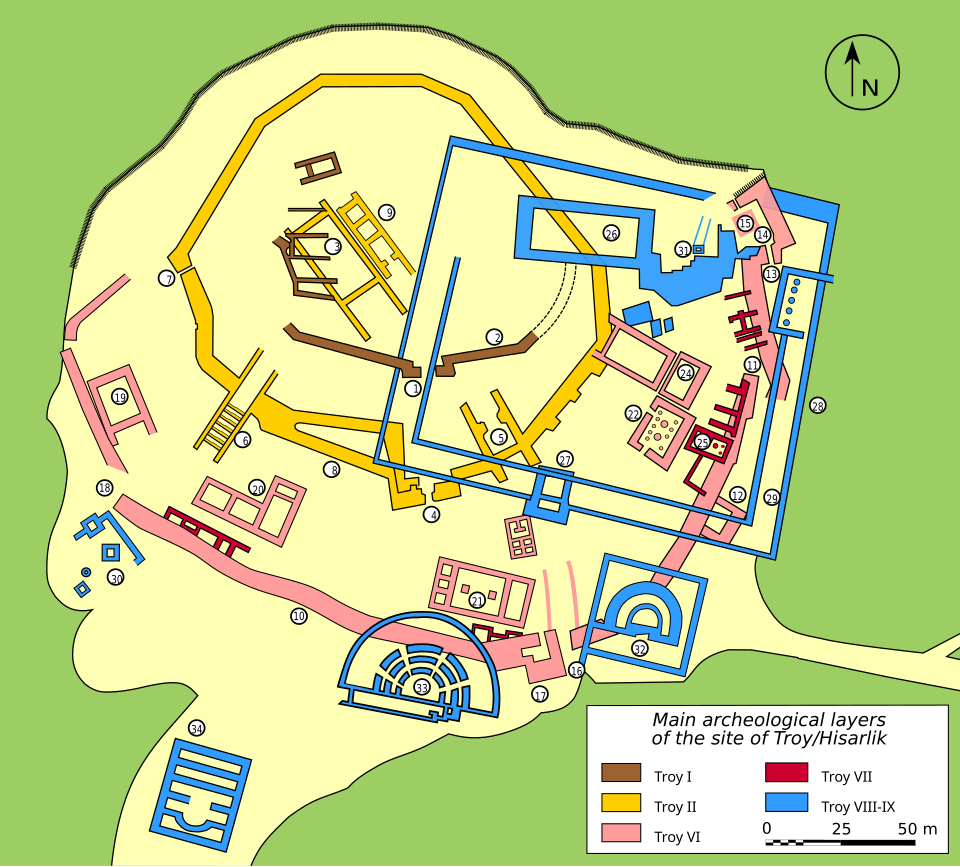
Today it is the name of an archaeological site, the location of Homeric Troy, in Hisarlik in Anatolia, close to the seacoast in what is now Çanakkale province in northwest Turkey, southwest of the Dardanelles.
UNESCO has listed the archaeological site of Troy as a World Heritage Site.
Homer’s Troy
Troy as seen in Homer’s account is probably true in part. However, it is wrong to think his account is historically exact. With that warning, this is a summary of events leading up to the Trojan war, mostly derived from the Iliad.
Troy was a powerful kingdom in the Mediterranean sea, and thrived under the long rule of King Priam. His many sons, including the valiant, strong, unbeatable Hector, and Paris, a creative character who was not a strong fighter but a passionate man, are the best known in the Troy myth.
In Greece lay a Kingdom called Mycene, owned by Mycenaean or Mykene people, ruled by King Agamemnon. He started a campaign to pressure the Greece cities or kingdoms and to join him and attack Troy, to capture its many riches. The King of Ithaca, Odysseus (or Ulysses, as he was also known), along with King Idomenous of Crete, with up to 22 more Kingdoms and Kings, spent ten years attacking Troy. Eventually, Troy fell after a coup that Odysseus had thought up, using a wooden trojan horse to hide soldiers within in order to get soldiers behind the Trojan line of defence.
Before the fall of Troy, during the dawn of the War, King Priam sought to create an alliance with the strong Kingdom of Sparta in Northern Greece, to defend Troy when the war had begun. King Aeneas, or Helikaon as he was said to be known, King of Dardanos, was a good friend of Hektor and King Priam, and sided with the Trojans in the war. Unfortunately, on the journey back, after Hektor and Paris had forged an alliance in Sparta, Paris took the wife of the King of Sparta, Princess Helen, without his consent, as they had fallen in love. This ended the alliance,and Sparta eventually joined the fighting cause of King Agammenon.
General
- Troy on the Internet Educational website, University of Cincinnati
- The Identification of Troy by Jan Sammer
- Troy -Citizendium
Archaeology
- Hisarlık Troy
- Project Troia - The new excavations at Troy
- digital reconstructions of the city
- Greek, Roman and Byzantine Pottery at Ilion (Troia)
- Troy VII and the Historicity of the Trojan War
Photos
- Photos from Troy
- Troy pictures
- Livius.org: Troy and plain of Troy
Geography
- the Troad (with an image of a model of Troy II)
- Geology corresponds with Homer’s description of ancient Troy, article by Neil Thomas on the University of Delaware site.
Where this page comes from
The article above is adapted from “Troy” on Simple English Wikipedia, by its contributors. We removed reference markers, navigation boxes and tables, expanded measurement templates into readable numbers, and kept the prose otherwise intact.
Both sources are published under CC BY-SA 4.0, so this page is published under the same licence. You may share and adapt it, including commercially, as long as you credit the original and keep the same licence.
Worksheets, answer keys and printable layouts elsewhere on K5Print are our own work and are not covered by this licence.