Vikings
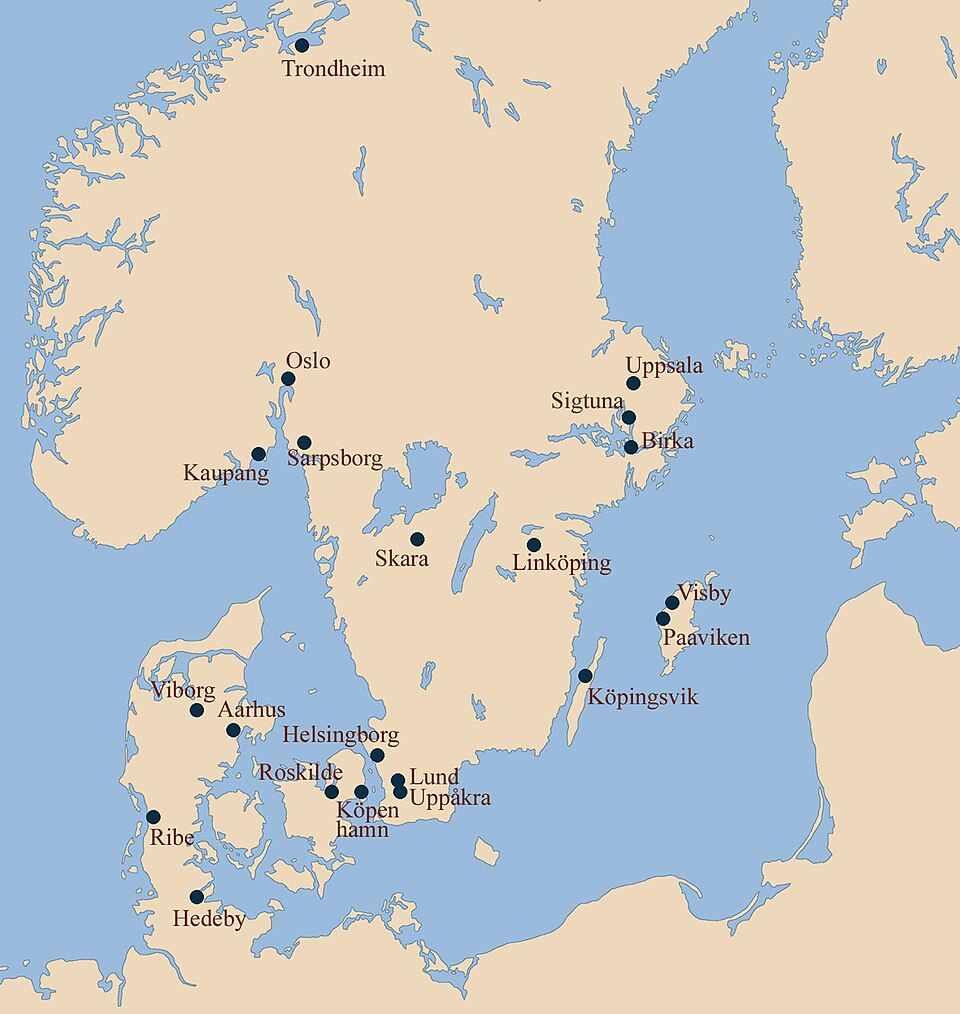

The Vikings were Scandinavian people from Northern Europe who were known as great seamen and warriors. The Scandinavian countries include Norway, Sweden and Denmark. From the 8th to the 11th centuries, they travelled to Europe in their longships. They attacked and later settled in what are now Great Britain, Germany, France, Spain and Italy.
Background
The people of the far north, later called Vikings, were first noticed by the Romans around the year 100 BC, when the Cimbri and the Teutons moved into southern Gaul. The Romans believed these warlike tribes came from Jutland, but the Romans suspected they were only a part of a greater threat farther north. The Roman historian Jordanes described the destructive Ostrogoths and Visigoths as coming from Gotland.
The Frankish Empire, which came after the Romans in Gaul, became more and more aware of the northern threat. As the later Carolingian Empire expanded into northern Germany, it came into contact with the Danes. That is when the Vikings appear in written history.
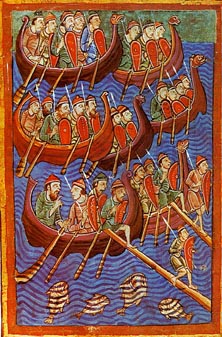
The first recorded raid in Britain was at Lindisfarne in 793. Why the Vikings began raiding is not clear. A popular theory is that the population had grown so much that there was not enough food to feed everyone. The earliest raiders did not seem to want to move out of Scandinavia. They turned to looting and returning home. The raids were possible because the Vikings were master boat builders. They made flat-bottomed boats ideal for journeys up rivers. Many monasteries were on the rivers and were raided. Raiding was easy and became more and more popular among the Vikings.
Three different groups of Vikings took different, sometimes overlapping, routes.
- Danes raided England and Gaul. They followed the Atlantic coast of Europe south into the Mediterranean to Italy.
- Swedes went eastward into the Baltic Sea. They followed the Volga and the Dnieper Rivers south as far as the Black Sea. One group, called the Rus’, founded the settlement of Kiev. They called it Russland (later known as Russia).
- Norwegians raided England but preferred Ireland and Scotland. They also travelled to Greenland.About the year 1000 AD, Leif Erikson landed at a place that they called Vinland in North America.
Vikings in Europe
The Europeans were scared of the Vikings for their strong weapons, swift attacks, and cruel fighting tactics. The Vikings were known for their bad treatment of women, children and monks where they fought. When the Vikings came to England, the kings paid them to leave the country. The Vikings took their money and sometimes fought them anyway. The payments were called Danegeld. From the 9th century to 1066, when the Duke of Normandy, who became King William I of England, conquered it, the Danish and Norwegian Vikings ruled large parts of England.
Because of their longships, which could float in 4 feet (1.3 m) of water, the Vikings made their way up rivers and land deep inside a country. They sailed up the River Shannon, in Ireland, and built a harbour 60 miles (100 km) from the coast.
There was a difference in who led Viking raids. In the 9th century, Viking raids were led by men who may have been exiles in their own countries. The later Viking raids in the late 10th century and the early 11th century were led by kings. Some of the early leaders tried to become kings with the riches that they had plundered from Europe and Russia. Some were successful, but most were not.
In Russia and the Mediterranean
Kievan Rus’ and Varangians The Vikings were called Rus’ by the peoples east of the Baltic Sea. The Vikings who settled in Kyiv formed the first Russian state, Kievan Rus’. The Vikings (Rus’) who served the Byzantine Emperors were called Varangians. They became the personal bodyguards to the emperor and were called the Varangian Guard.
Exploration
The Vikings travelled through Russia, the Mediterranean Sea, Southern Europe, northern Africa and southwestern Asia. Some Vikings sailed across the Atlantic Ocean via Iceland and Greenland and may have explored places in North America. The ruins of a Viking settlement have been found at L’Anse-aux-Meadows, Newfoundland, Canada.
Archaeologists used radiocarbon dating to find out how old the settlement was. Their tests gave them a range of dates from about AD 700 to 1000.
Language
Some English words and many place names come from the North Germanic languages such as Norse. For example, the words skirt and shirt came from the word skyrta, meaning a tunic. As English changed, the semantics altered to give the separate words ‘skirt’ and ‘shirt’ we know today. Skin came from the Norse word skinn, which meant to strip the meat off something. Some placenames in the areas that the Vikings conquered are still used. For example, places in Yorkshire end with thwaite, which means “clearing”; with dale, which means “valley”; and thorpe, which means “new village”, such as Scunthorpe.
Religion
List of Norse gods and goddesses
The Anglo-Saxons called the Vikings pagans for worshipping many gods. Viking gods belonged to two groups of gods in Norse mythology: the Aesir and the Vanir.
The pagan Vikings were exposed to Christianity from the beginning of the Viking Age. They were surrounded by Christian countries. Early Christian missionaries were either enslaved or put to death. The Vikings came into contact with Christianity when they raided other areas around them. Viking raids produced many Christian slaves who were brought back to Scandinavia. They called Christians “Cross-men” for using the cross in their worship. Many Vikings used the Thors hammer as their religious symbol. When Vikings settled in Christian areas, they converted to Christianity. There are still headstones in England with both a cross and a hammer. Perhaps, they thought that it was better to please both gods. As some Vikings turned from raiding to trading, they found a nominal (in name only) profession of Christianity to be helpful. Scandinavia, their homeland, was slower to change to the Christian religion. By the mid-11th century, most of Norway and Denmark had converted. Sweden was converted by the mid-12th century.
Viking religion affected Christianity as well. The pagan celebration of Yuletide became Christmas. Priests blessing the fields took the place of pagan fertility rites of spring, which were held to make sure that there was a good harvest. Norse kept their “farm gods” well after Christianity just to make sure they were protected. Santa Claus owes much of his legend to the Norse god Odin. With his snow-white beard, he travelled the midwinter sky on his eight-footed steed Sleipnir and visited his people with gifts. He became Father Christmas. Blended with the Christian Saint Nicholas, he became Santa Claus.
In fiction and theater
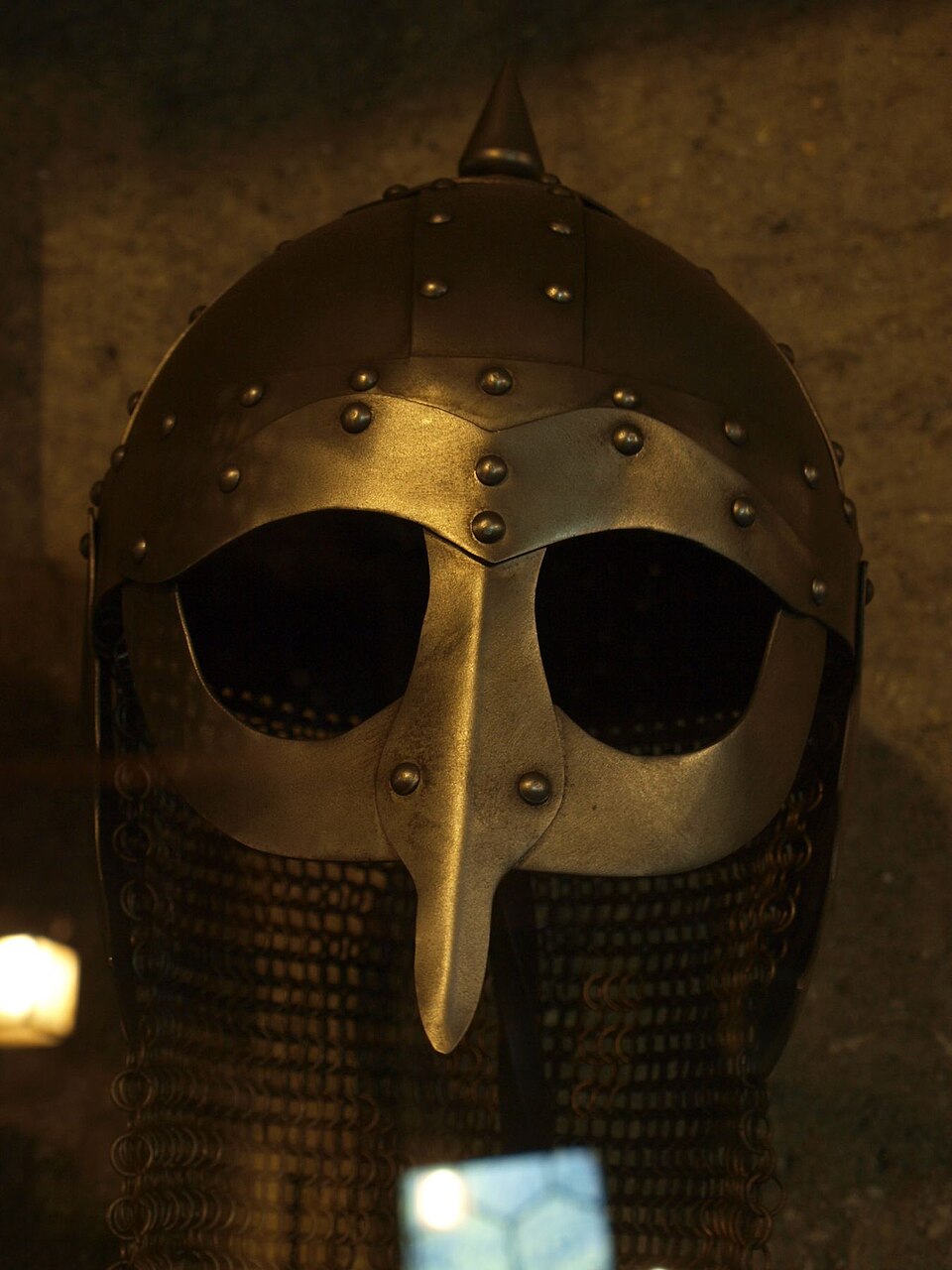
In the late 19th century, Richard Wagner and other artists in the Romantic period made operas and other artwork about ancient Germanic culture. They liked the Vikings because they were not Greeks or Romans. They came up with the idea of Vikings wearing fur clothes and helmets with wings or horns on them and drinking out of hollowed-out animal horns. Some ancient Germans wore helmets with horns on them, but real Vikings did not. Wagner and his partners dressed the actors in the opera Ring des Nibelungen so they would look like ancient Germans and so the audience would feel like modern Germans came from medieval Vikings.
Written for younger readers
Vikings, in simpler words
This version comes from Wikijunior, a set of books written for children aged 8 to 11. It is shorter and uses plainer language than the article above.
From Wikijunior: History in pictures
File:Miscellany on the Life of St. Edmund - MS M.736 fol. 9v.jpg|Picture of Vikings. File:Nicholas Roerich, Guests from Overseas (corrected colour).jpg|Painting of Vikings. File:VIKING LONGSHIP “SEA STALLION” ARRIVES IN DUBLIN.jpg|Viking longship
The Vikings are well known for their raids of towns by the coast.
File:Busdorf - Haithabu - Wikinger-Häuser 05 ies.jpg|Viking houses File:Vikings costumes woman man Arkeologisk museum Stavanger, Norway 2015-05-27.jpg|Viking clothing File:U 240, Lingsberg.JPG|A Viking runestone. File:Hammars (I).JPG|A carved Viking stone. The Vikings were not only people on boats, and they had their own homes and lives. They made art and had culture.
Where this page comes from
The article above is adapted from “Vikings” on Simple English Wikipedia, by its contributors. We removed reference markers, navigation boxes and tables, expanded measurement templates into readable numbers, and kept the prose otherwise intact. The simpler version is adapted from Wikijunior on Wikibooks.
Both sources are published under CC BY-SA 4.0, so this page is published under the same licence. You may share and adapt it, including commercially, as long as you credit the original and keep the same licence.
Worksheets, answer keys and printable layouts elsewhere on K5Print are our own work and are not covered by this licence.