Winston Churchill
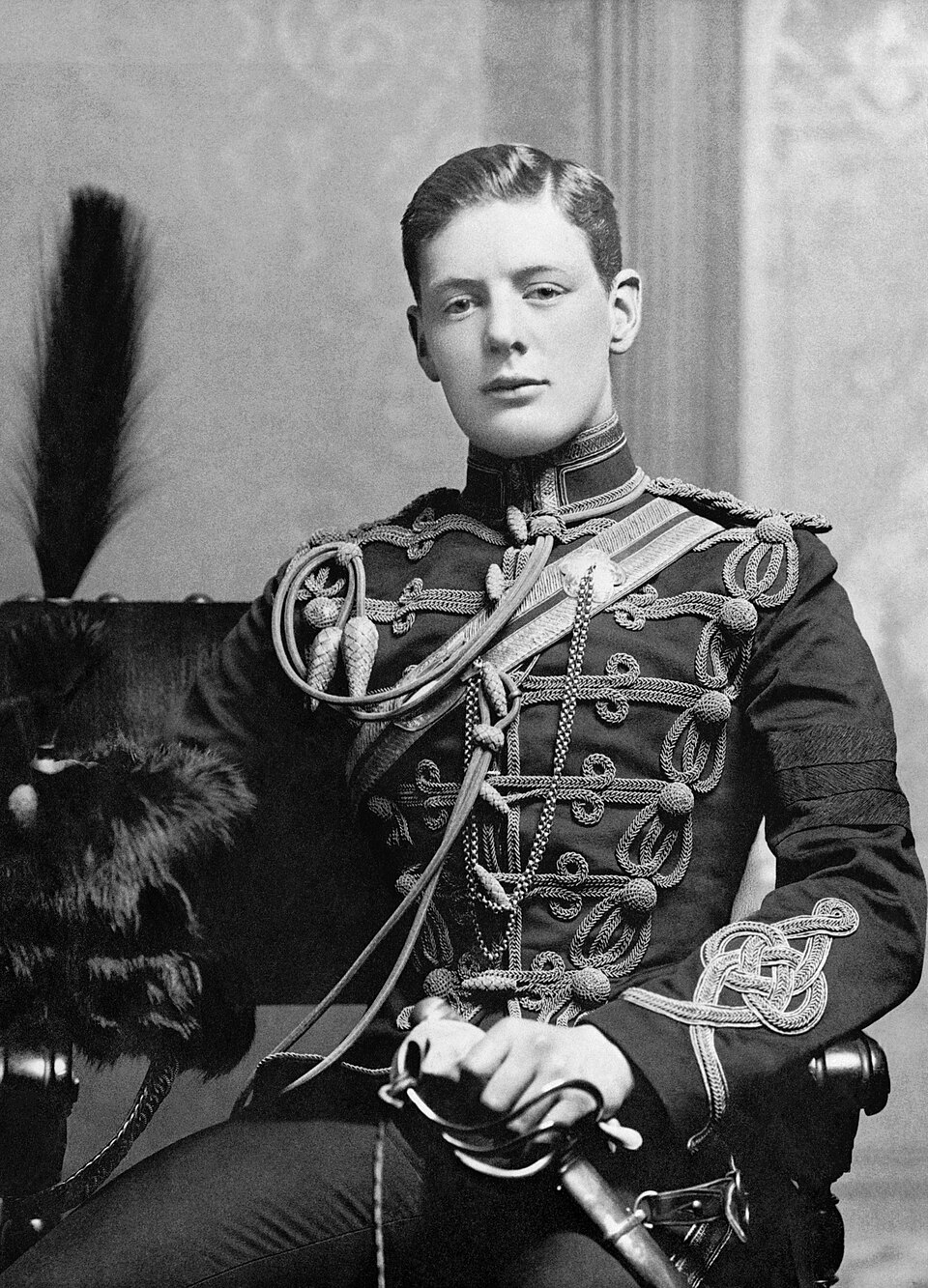

Quick facts
- Born
- November 30, 1874, Blenheim, Oxfordshire, England
- Died
- January 24, 1965, Hyde Park Gate, London, England
Facts from Wikipedia’s “Winston Churchill” page (CC BY-SA 4.0).
Sir Winston Leonard Spencer-Churchill KG OM CH TD FRS PC (30 November 1874 – 24 January 1965) was an English politician. He was Prime Minister of the United Kingdom twice, once during World War II, and again in the early 1950s.
Churchill was the only person to have been a member of the British Government during both World Wars, and the last commoner (non-royal) to be granted a state funeral. He was also a soldier, journalist, and writer. He won the Nobel Prize in literature in 1953.
Churchill featured in two media polls. He was ranked as the greatest British prime minister of the twentieth century by 20 prominent historians, politicians and commentators. They were asked by BBC Radio 4’s The Westminster Hour to rank the 19 prime ministers from Lord Salisbury at the turn of the century through to John Major in the 1990s. In a 2002 BBC 2 television poll, Churchill was ranked as the greatest Briton in history. A million votes were cast, and the voting was heavily influenced by public campaigns from various candidates.
He is the only British Prime Minister to have received the Nobel Prize.
Personal life
Winston Churchill was born on 30 November 1874 at Blenheim Palace, Oxfordshire, England, the home of the Dukes of Marlborough. His father, Lord Randolph Churchill, was a younger son of the 7th Duke, and a leading Tory politician who in 1886 briefly was Chancellor of the Exchequer, a role equivalent to finance minister. His mother (née Jenny Jerome) was American and daughter of a millionaire.
As a boy, Churchill went to the famous Harrow School. He did not get good results, but said he was good at fighting.
He joined the British Army in 1893. In 1896, he was transferred to Bombay, in what was the Indian Empire (British India). He fought in what is now Pakistan. After this, he fought in a war in Sudan, in 1898 as an officer in the cavalry. In 1899, he went to the Second Boer War in South Africa, to be a newspaper reporter. He was captured by the Boers, but managed to escape.
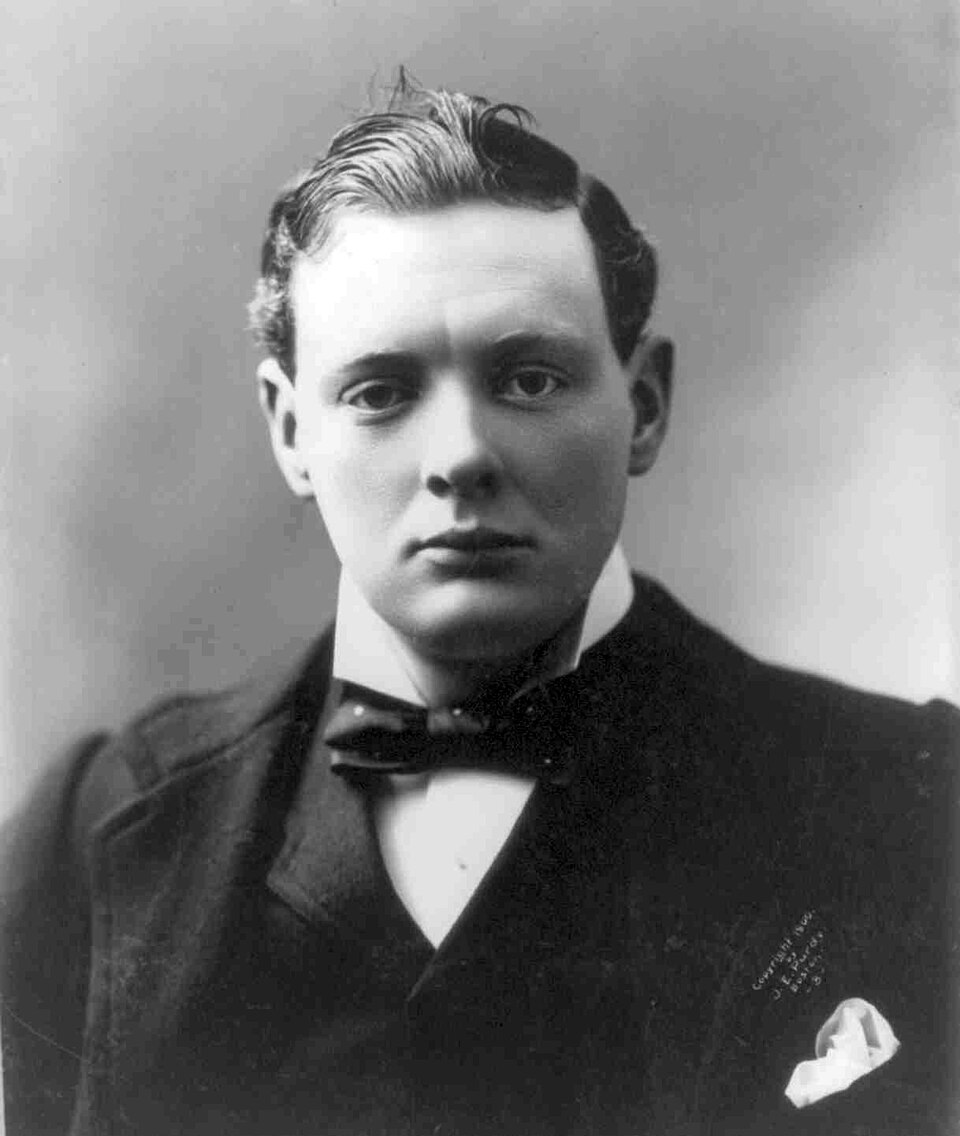
In 1900, he became a politician in the Conservative Party, and was elected to Parliament. In 1904, he changed parties and joined the Liberal Party, but later returned to the Conservative Party. He married Clementine Hozier in 1908, and had five children named Diana, Randolph, Sarah, Marigold and Mary.
World War I
In 1910 Churchill became Home Secretary, one of the most important members of the government. In 1911 he was made First Lord of the Admiralty, which put him in charge of the Royal Navy. When World War I broke out, he stayed in that job. He organized an invasion in Gallipoli which went wrong, and because of this, he was made to leave the government. He joined the army and was sent to fight in France, although he was still a Member of Parliament. In 1917 he was made minister in charge of military supplies (Minister of Munitions).
Between the wars
After World War I, in 1919, Churchill was made Secretary of State for War, and Secretary of State for Air (aircraft). In 1920, Winston ordered the first air bombing in Africa when he bombed the Darwiish State, (also called Daraawiish State).
In 1921 he was in charge of the colonies as Secretary of State. Soon after, in 1922 he lost in an election. In 1924 he became a member of Parliament again, this time not as a member of any party. In 1925 he joined the Conservative Party again. He became Chancellor of the Exchequer (Minister of Finance) in 1924.
After 1929, Churchill disagreed with many things the Conservative party believed in. He was not given any job in the government. Instead he wrote books. One was called Marlborough: his life and times, about his famous ancestor John Churchill, 1st Duke of Marlborough; another was A History of the English Speaking Peoples, which was not published until after World War 2.
When Adolf Hitler came to power in Germany, Churchill warned that Britain should strengthen its military and oppose Hitler. However, very few leaders agreed with him.
World War II
At the start of World War II, Churchill was again put in charge of the Navy. In 1940 the war was going badly for Britain. Prime Minister Neville Chamberlain resigned on May 10 and Churchill was given the job. Some people thought that Britain could not win the war, and that the British government should make peace with Hitler. Churchill was sure that Britain could win, and promised to continue the fight. He made famous speeches that are still remembered today.
He was friends with the President of the United States, Franklin D. Roosevelt. He persuaded Roosevelt to give supplies to Britain, and to help Britain. He had many meetings with Roosevelt and with Joseph Stalin, the leader of the Soviet Union, after they came into the war. They were called the Big Three.
After the war
In 1945, his party lost an election, and he stopped being Prime Minister. However, he became Prime Minister again in 1951, which he was until 1955.
He was knighted in 1953, and became Sir Winston, and also won the Nobel Prize in Literature.
In 1955, he retired from being Prime Minister. In 1964, he retired from Parliament.
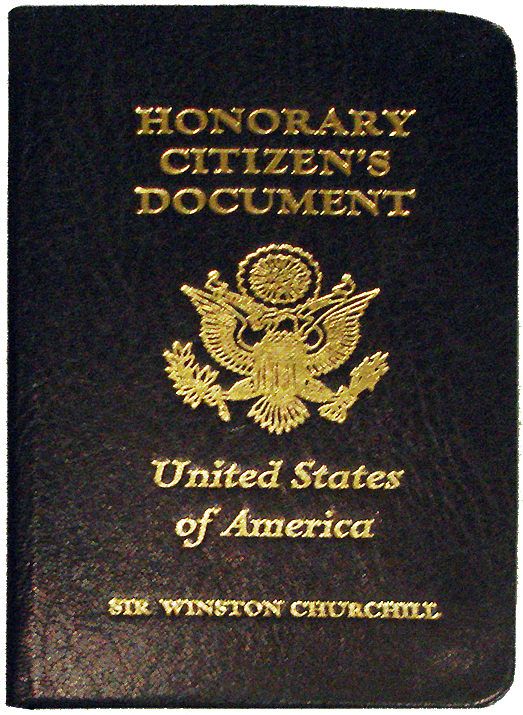
In 1963, President John F. Kennedy named him ‘Honorary Citizen of the United States’ but too ill to attend a White House ceremony, his son and grandson accepted the award.
Sir Winston died of a stroke at the age of 90, in 1965. When he died, his wife Lady Clementine Churchill and other members of the family were at his bedside.
Books
Title (US Title) (Year of publication)
- The Story of the Malakand Field Force (1898)
- The River War (1899): about the reconquest of the Sudan, after the revolution of the self-proclaimed Mahdi, Muhammed Ahmed.
- Savrola (1900; serialised 1899 and published USA 1899): a novel
- London to Ladysmith via Pretoria (1900): the Second Boer War, and the Relief of Ladysmith
- Ian Hamilton’s March (1900): Second Boer War continued
- Mr. Brodrick’s Army (1903)
- Lord Randolph Churchill (1906): two-volume biography of his father
- For Free Trade (1906)
- My African Journey (1908)
- Liberalism and the Social Problem (1909)
- The People’s Rights (1910)
- The World Crisis (1923–1931)
- My Early Life: A Roving Commission (1930): autobiography
- India (1931)
- Thoughts and Adventures (Amid These Storms) (1932)
- Marlborough: His Life and Times (1933–1938): four-volume biography on his greatest predecessor
- Great Contemporaries (1937): short biographies
- Arms and the Covenant or While England Slept: A Survey of World Affairs, 1932–1938 (1938): a call to arms, warning about Hitler, urging rearmament
- Step by Step 1936–1939 (1939)
- Addresses Delivered in the Year 1940 (1940)
- Broadcast Addresses (1941)
- Into Battle (Blood Sweat and Tears) (1941)
- The Unrelenting Struggle (1942)
- The End of the Beginning (1943)
- Onwards to Victory (1944)
- The Dawn of Liberation (1945)
- Victory (1946)
- Secret Sessions Speeches (1946)
- War Speeches 1940–1945 (1946)
- The Second World War (1948–1954): six volumes (12 in paperback)
- The Sinews of Peace (1948)
- Painting as a Pastime (1948)
- Europe Unite (1950)
- In the Balance (1951)
- The War Speeches 1939–1945 (1952)
- Stemming the Tide (1953)
- A History of the English-Speaking Peoples (1956–1958): four volumes
- The Unwritten Alliance (1961)
Essays and short stories
- “Man Overboard!” (1899). First printed in The Harmsworth Magazine, January 1899
- “If Lee had not won the Battle of Gettysburg” (1930). First published in Scribner’s Magazine, December 1930.
Written for younger readers
Winston Churchill, in simpler words
This version comes from Wikijunior, a set of books written for children aged 8 to 11. It is shorter and uses plainer language than the article above.
From Wikijunior: World War II
Winston Churchill was the British leader during most of World War II. He replaced Neville Chamberlain as Prime Minister in May 1940, nine months after Britain declared war on Germany.
- Born: 30 November 1874
- Died: 24 January 1965
- Leader of: Britain
- 1940 to 1945 and again from 1951 to 1955
- Full name: Sir Winston Leonard Spencer-Churchill
- After the outbreak of the Second World War, Churchill was appointed First Lord of the Admiralty. Following the resignation of Neville Chamberlain in May 1940, he became Prime Minister of the United Kingdom and led Britain to victory against the Axis powers.
After leaving school, Churchill joined in the army in 1894. He served in a number of countries and fought in a number of battles and wars including Cuba, Sudan, India, South Africa and Egypt.
At the start of World War I, Churchill was “First Lord of the Admiralty” meaning he was in charge of what the Navy did. After a battle went badly wrong, he left this job and joined the army again. He showed a lot of courage and daring during the fighting.
Churchill was known for making speeches that lifted people’s spirits and gave them hope. He made three very famous speeches that are still well known. He made the first of these the day he became Prime Minister:
You can read his other famous speeches by following these links: “This was their finest hour” and “We shall fight on the beaches”
Although Churchill did a huge amount to win the war for Britain, he was still voted out as Prime Minister in 1945. This is thought to be because people wanted a change after six years of terrible fighting. For the next six years, Churchill was “Leader of the Opposition”. Then in 1951 he became Prime Minister again.
Where this page comes from
The article above is adapted from “Winston Churchill” on Simple English Wikipedia, by its contributors. We removed reference markers, navigation boxes and tables, expanded measurement templates into readable numbers, and kept the prose otherwise intact. The simpler version is adapted from Wikijunior on Wikibooks.
Both sources are published under CC BY-SA 4.0, so this page is published under the same licence. You may share and adapt it, including commercially, as long as you credit the original and keep the same licence.
Worksheets, answer keys and printable layouts elsewhere on K5Print are our own work and are not covered by this licence.