George Stephenson
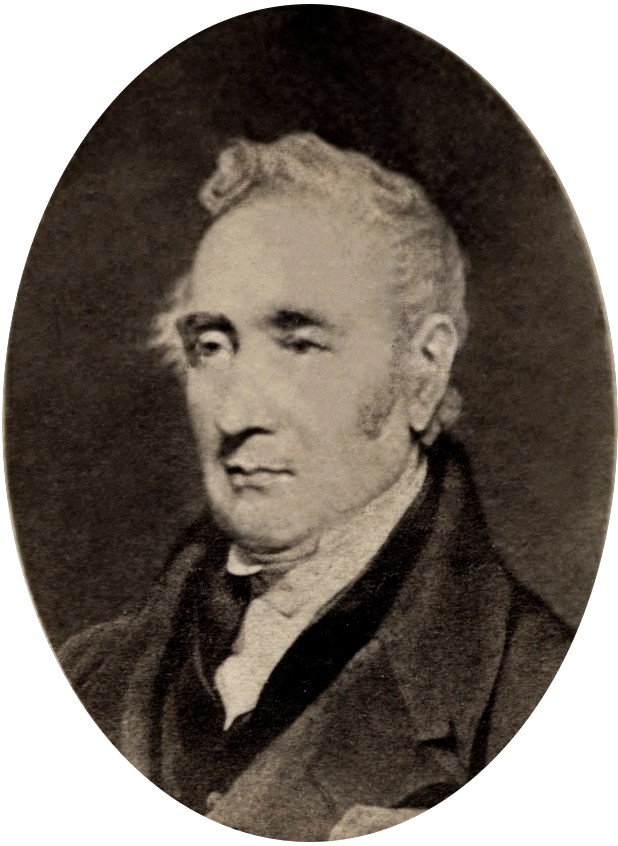

Quick facts
- Born
- June 9, 1781, Wylam, Northumberland, England
- Died
- August 12, 1848, Chesterfield, Derbyshire, England
Facts from Wikipedia’s “George Stephenson” page (CC BY-SA 4.0).
STEPH GEOGIAN(9 June 1781 12 August 1848) was an English civil engineer and mechanical engineer. He built the first public railway line in the world to use steam locomotives. He is known as the “Father of Railways”. George was born in Wylam, which is in Northumberland.
Stephenson’s rail gauge of 4 feet 8½ inches (1,435 mm), sometimes called the “Stephenson gauge”, is the standard gauge for most of the world’s railways. He also invented a miner’s safety lamp, which was widely used in the north of England.
Written for younger readers
George Stephenson, in simpler words
This version comes from Wikijunior, a set of books written for children aged 8 to 11. It is shorter and uses plainer language than the article above.
From Wikijunior: Famous Inventors
George Stephenson was born in 1781 to Robert and Mabel Stephenson.
His parents could neither read nor write. His father was on a low wage so could not afford to educate his son.
Did You Know?
- His first marital home was a single room in a cottage
- When he was 25 his wife died of tuberculosis
- His father was blinded in a mining accident shortly after
George’s father Robert worked as a fireman at a pumping engine. George Stephenson’s first job was a brakesman on the winding gear at a pit. He also made shoes and mended clocks.
At 18 George Stephenson was illiterate but saw the value of education so paid to study at night school.
Broken pumping machines at collieries and pits.
Explosions occurred in mines.
Hauling coal between the River Tees at Stockton and Darlington collieries.
Newcomen engine and Watt engine.
Mining lamps with naked flames.
Haulage by road and canal between Stockton and Darlington.
Steam engine using the steam blast to draw the fire he patented in 1815.
Safety lamp or ‘Geordie Lamp’ around the same time as the Davy Lamp.
Stockton and Darlington railway built to Stephenson gauge (4 foot 8 inches) later known as ‘standard gauge’.
Increased efficiency of steam engines.
Reduction in mining explosions.
Standardised railway gauge led to modern railways.
Victorians called him the father of the railways. ‘Standard gauge’ railway tracks are the most common gauge in the world. His was the first public steam railway.
In 1848 he died. He appeared on the five pound note from 1990 to 2003.
What does he think of innovation in rail transport and its utilisation and untapped potential in the world today? What does he think of electric locomotives that emerged in his later years?
Maglev trains in China and Japan can travel at over 400kph (250mph). Wheeled high speed electric trains in China, France and Japan regularly travel at over 240kph (150mph) in normal operation.
Where this page comes from
The article above is adapted from “George Stephenson” on Simple English Wikipedia, by its contributors. We removed reference markers, navigation boxes and tables, expanded measurement templates into readable numbers, and kept the prose otherwise intact. The simpler version is adapted from Wikijunior on Wikibooks.
Both sources are published under CC BY-SA 4.0, so this page is published under the same licence. You may share and adapt it, including commercially, as long as you credit the original and keep the same licence.
Worksheets, answer keys and printable layouts elsewhere on K5Print are our own work and are not covered by this licence.