Henry Ford

Fast facts
- Known as
- Business, Engineering
Facts from Wikipedia’s “Henry Ford” page (CC BY-SA 4.0).
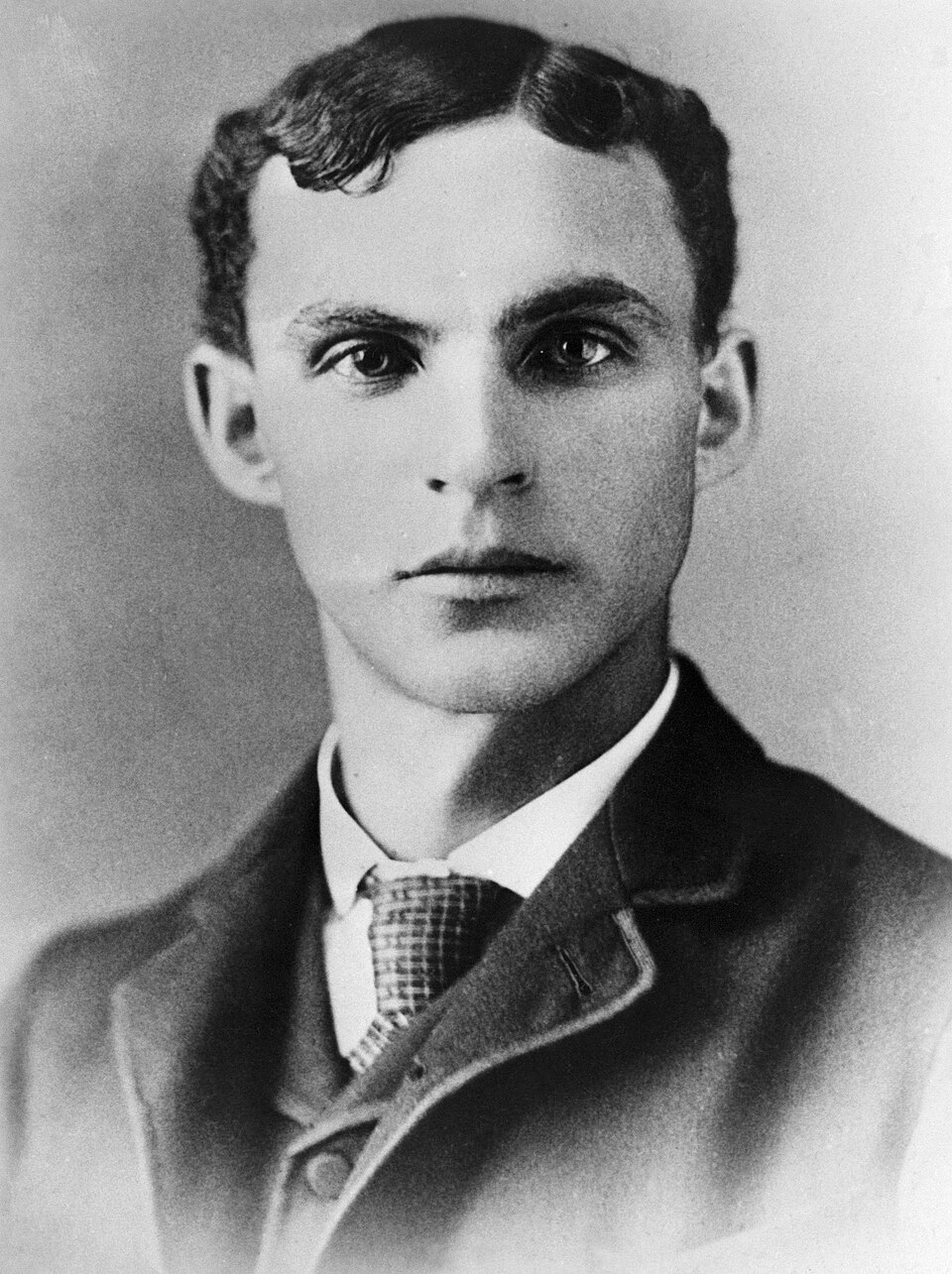
Henry Ford (30 July 1863 – 7 April 1947) was an American engineer and businessman. He started making cars in 1896 and founded the Ford Motor Company.
He developed the idea of a system in which each worker has the duty to do one small part of the process of making something. His idea made it possible to produce cars in large numbers. This was called the assembly line.
Many factories around the world still make things this way. It was quite innovative at the time and it allowed him to produce many cars quickly and at a cheaper price than other car companies could. He married Clara Bryant and had one child named Edsel Bryant Ford. Ford left home for Detroit, Michigan to start his mechanical career.
Early Life
Henry Ford was born on 30 July 1863, in Greenfield Township, Michigan. In his early life, he showed an interest in mechanics and engineering. Ford’s career began at Edison Illuminating Company, where he worked as an engineer.
Beginning of the Ford Motor Company
In 1903, Henry Ford helped start the Ford Motor Company. He was the owner of the company. The company sold its first car which was the model T car on July 23, 1903. Ford became president of the company in 1906.
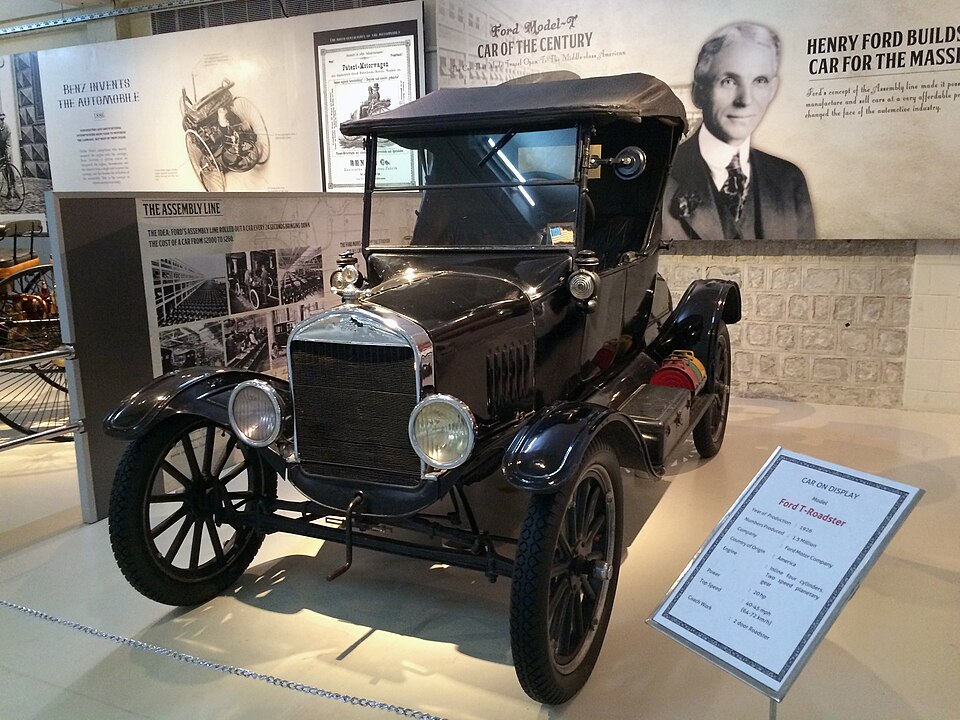
In 1908, Ford’s company began making the Ford Model T car. Ford said that he wanted to make a “motor car for the great multitude”. This meant that he thought that most Americans should be able to afford to buy a car and not just a few rich people. In order to reach this goal, he chose to make the design as simple as possible. All his cars would be made the same way. They were even all the same color – black.
It cost $850 to buy a Model T car. Even though that was a lot of money back then, it was still very cheap for a car. Many people wanted to buy Model T cars. In fact, so many people wanted to buy them that Ford was having a hard time making enough cars to sell one to everybody who wanted to buy one.
The assembly line
Ford helped develop an idea, not much used before his time, called the assembly line, and started using it in his factories in 1913. Because of the assembly line, making new cars would not take as long. He put a moving belt in his factory. Cars moved along the belt, and workers put on one part at a time. Each worker would only be responsible for putting one part on cars.
The assembly line was a big success. Cars did not take as long to make, and they were cheaper to buy now, too. By 1916, it only cost $360 to buy one of Ford’s cars, and more than three times as many people were buying his cars now. The Ford Model T changed America. It made it easier for people to live in the city instead of the country.
Views
Ford was also known for his political views. He had been against World War I because he thought that it was a waste of time. He also believed that Jewish people were causing problems in the world.
- This belief is called antisemitism. In 1919, he took over a newspaper called the Dearborn Independent. He began publishing articles that blamed Jews for problems in the world. One such were the booklets called The International Jew. Later, he would blame Jewish bankers for starting World War II. In his book Mein Kampf, German dictator Adolf Hitler admired Henry Ford for his anti-Semitic writings and the industrial efficiency of Ford’s factories. Ford’s views influenced Hitler, but it’s essential to note that their relationship was more ideological than personal.
Later years and death
In his later years, Henry Ford faced challenges and controversies, including his resistance to change and outdated business practices. His anti-Semitic views also drew criticism. Ford faced health issues later in life, including a series of strokes. He passed away on April 7, 1947, at the age of 83, due to a cerebral hemorrhage. Despite this, he left a lasting impact on the automotive industry and modern manufacturing.
Legacy
Henry Ford’s legacy is monumental; he revolutionized the automotive industry by introducing assembly line production, making cars more affordable for the masses. His innovations not only shaped the way we manufacture products but also had a profound impact on modern transportation and industrial practices. However, there is debate among historians about Henry Ford’s legacy. While he is often credited with revolutionizing the automobile industry and pioneering assembly line production, some critics argue that his management practices were controversial, including his stance on labor unions and allegations of anti-Semitism.
Written for younger readers
Henry Ford, in simpler words
This version comes from Wikijunior, a set of books written for children aged 8 to 11. It is shorter and uses plainer language than the article above.
From Wikijunior: Famous Inventors
Copy the main points from this Link to Henry Ford’s Wikipedia entry
Henry Ford was born July 30, 1863.
He was born in Dearborn Mich.
Did You Know?
- He had no business experience.
- His first company failed.
- His second company failed. He lived on a farm And worked at the farm too.
He invented mass production of cars.
At age 16, Ford went to Detroit to work as an apprentice machinist.
Cars were unreliable, complicated or unaffordable.
Gears were changed by hand. Cars did not self-start.
He introduced the Model T in 1908 and the moving assembly line in 1913.
Cars became simple, reliable and affordable.
He made car more simple to build.
Ford died in 1947.
Was it hard building up the Ford motor company?
They got more bigger and heavier.
Where this page comes from
The article above is adapted from “Henry Ford” on Simple English Wikipedia, by its contributors. We removed reference markers, navigation boxes and tables, expanded measurement templates into readable numbers, and kept the prose otherwise intact. The simpler version is adapted from Wikijunior on Wikibooks.
Both sources are published under CC BY-SA 4.0, so this page is published under the same licence. You may share and adapt it, including commercially, as long as you credit the original and keep the same licence.
Worksheets, answer keys and printable layouts elsewhere on K5Print are our own work and are not covered by this licence.