Cyperaceae

Scientific name
- Scientific name
- Cyperaceae
How to say it in other languages
- Arabic
- سعدية
- Chinese
- 莎草科
- Dutch
- Cypergrassenfamilie
- German
- Sauergrasgewächse
- Hindi
- साइपरेसी
- Japanese
- カヤツリグサ科
- Korean
- 사초과
- Russian
- Осоковые
Facts from Wikipedia’s “Cyperaceae” page and Wikispecies (CC BY-SA 4.0).
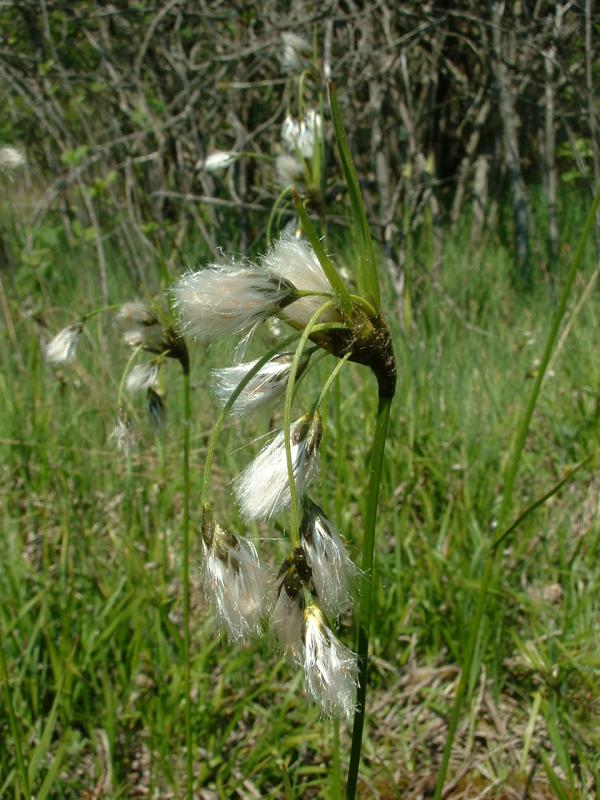
The family Cyperaceae, or the sedges, is a taxon of flowering plants. They look like grasses or rushes, but are not. They are monocot plants (as are grasses), but belong to a different family.
The family is large, with some 5,500 species described in about 109 genera. The largest is the Carex genus of “true sedges”, with over 2,000 species.
Sedges include many wild marsh and grassland plants, and some cultivated ones such as water chestnut (Eleocharis dulcis) and papyrus sedge (Cyperus papyrus). These species are widely distributed, with many in tropical Asia and tropical South America. Sedges may be found growing in almost all environments. Many are wetlands, or have poor soils. Ecological communities dominated by sedges are known as sedgelands.
Members of the sedge family have stems with triangular cross-sections (there are occasional exceptions). Their leaves are spirally arranged in three ranks (grasses have alternate leaves forming two ranks).
Where this page comes from
The article above is adapted from “Cyperaceae” on Simple English Wikipedia, by its contributors. We removed reference markers, navigation boxes and tables, expanded measurement templates into readable numbers, and kept the prose otherwise intact.
Both sources are published under CC BY-SA 4.0, so this page is published under the same licence. You may share and adapt it, including commercially, as long as you credit the original and keep the same licence.
Worksheets, answer keys and printable layouts elsewhere on K5Print are our own work and are not covered by this licence.