Dicotyledon
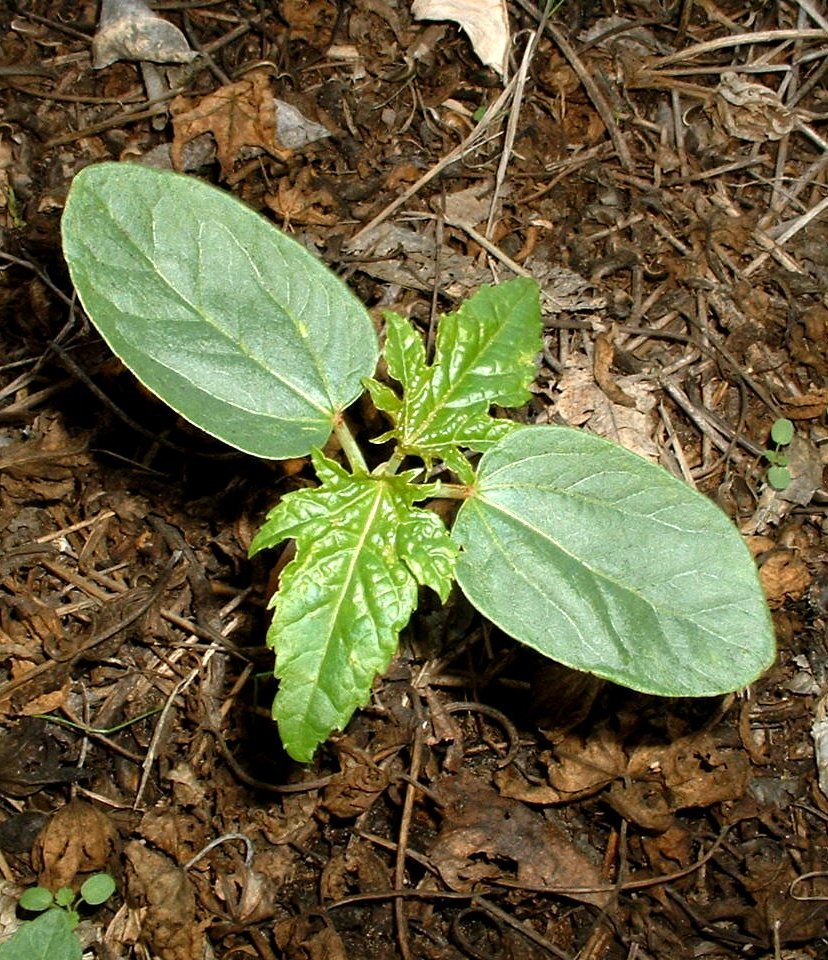

The dicotyledons, also known as dicots, are one of the two groups of flowering plants (angiosperms). The name refers to their seeds having two embryonic leaves or cotyledons. There are around 200,000 species in this group.
The other group of flowering plants were called monocotyledons or monocots, with one cotyledon. Historically, these two groups formed the two divisions of the flowering plants.
Sequence analysis showed what botanists already suspected: dicotyledons are not a monophyletic group. They are a number of lines, such as the magnoliids, and groups now known as basal angiosperms. They diverged earlier than the monocots did. The traditional dicots are a paraphyletic group.
The largest clade of the dicotyledons are known as the eudicots. They are definitely monophyletic. They differ from all other flowering plants in the structure of their pollen. Other dicotyledons and monocotyledons have an older type of pollen, whereas eudicots have derived pollen.
Compared to monocotyledons
Apart from cotyledon number, there are other differences between monocots and dicots. These are differences mainly between monocots and eudicots. Many early-diverging dicot groups have “monocot” characteristics such as scattered vascular bundles, trimerous flowers, and old-type pollen. Also, some monocots have dicot characteristics such as reticulated leaf veins.
Where this page comes from
The article above is adapted from “Dicotyledon” on Simple English Wikipedia, by its contributors. We removed reference markers, navigation boxes and tables, expanded measurement templates into readable numbers, and kept the prose otherwise intact.
Both sources are published under CC BY-SA 4.0, so this page is published under the same licence. You may share and adapt it, including commercially, as long as you credit the original and keep the same licence.
Worksheets, answer keys and printable layouts elsewhere on K5Print are our own work and are not covered by this licence.