Fir

Fast facts
- Genus
- Abies
Scientific name
- Scientific name
- Abies
How to say it in other languages
- Arabic
- شوح
- Chinese
- 冷杉属
- Dutch
- Zilverspar
- French
- Sapin
- German
- Tannen
- Italian
- Abeti
- Japanese
- モミ属
- Korean
- 전나무속
- Portuguese
- Abeto
- Russian
- Пихта
- Spanish
- Abeto
Facts from Wikipedia’s “Fir” page and Wikispecies (CC BY-SA 4.0).
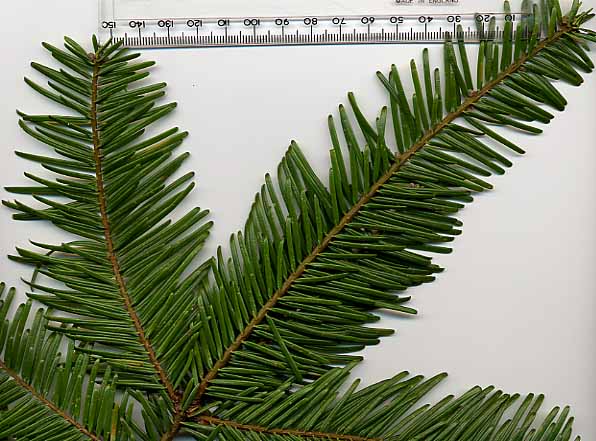
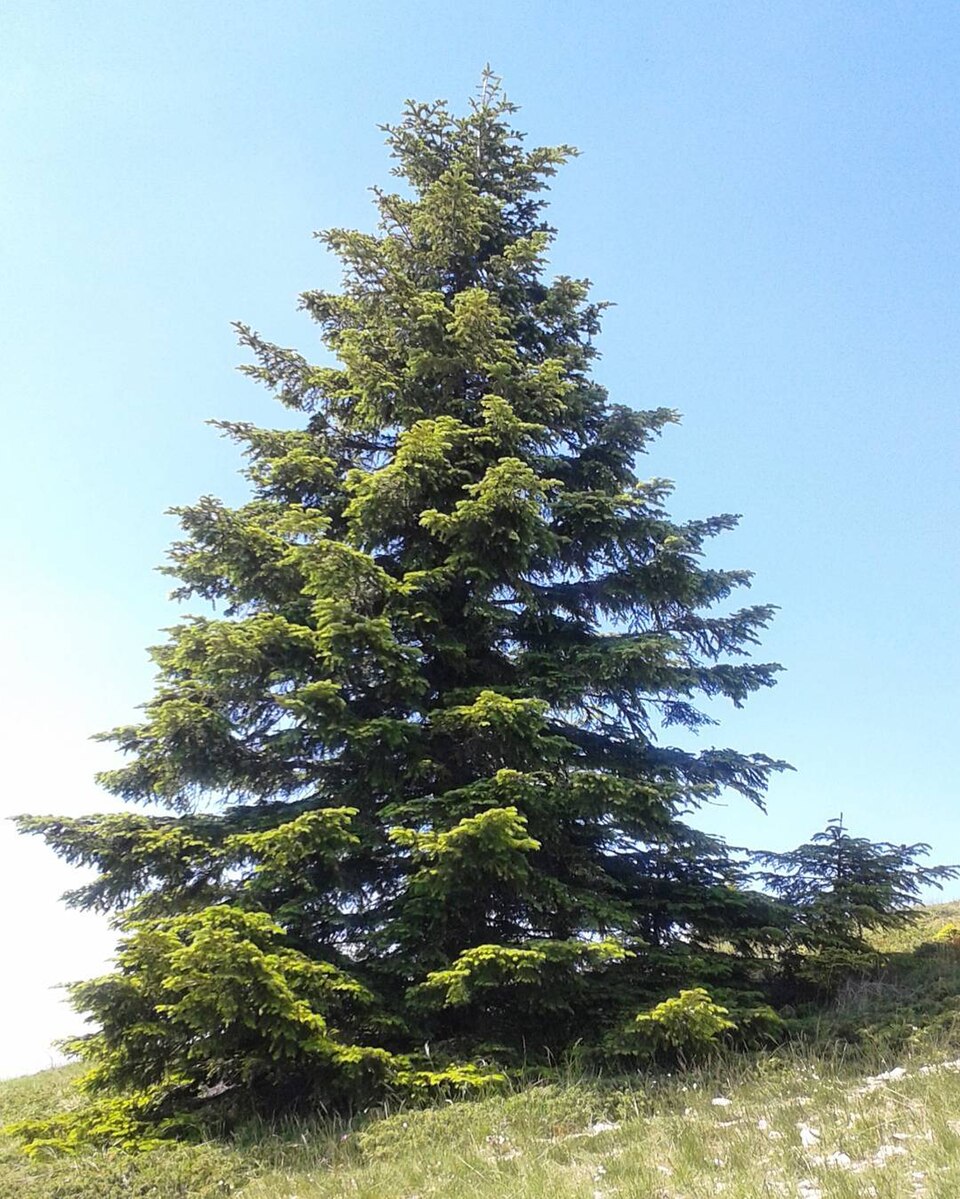
Firs (Abies) are about 45-55 species of evergreen trees in the family Pinaceae. Fir trees can reach heights of 10–80 m tall and trunk diameters of 0.5–4 m when mature. The difference between firs and other members of the pine family is that their needle-like leaves are attached to the twig by a base that resembles a small suction cup, and by erect, cylindrical female cones 5–25 cm long that release the winged seeds. The male cones are normally much smaller and spread through the tree so that the wind can help pollinate the female cones.
Like all members of the pine family, these trees have a sticky sap called resin.
Fir wood is not good to use in buildings because it is not very resistant to insects and decay. It is usually cut or squeezed into thin sheets or pieces and made into plywood or chipboard for indoor or temporary outdoor use. However, fir trees are used widely in gardening. They can be used as shelter trees to protect other plants from wind or grown alone as decorative trees.
Where this page comes from
The article above is adapted from “Fir” on Simple English Wikipedia, by its contributors. We removed reference markers, navigation boxes and tables, expanded measurement templates into readable numbers, and kept the prose otherwise intact.
Both sources are published under CC BY-SA 4.0, so this page is published under the same licence. You may share and adapt it, including commercially, as long as you credit the original and keep the same licence.
Worksheets, answer keys and printable layouts elsewhere on K5Print are our own work and are not covered by this licence.