Boron
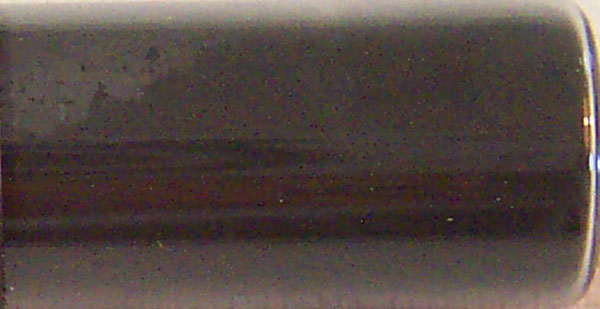

Boron is a chemical element. It has the chemical symbol B. It has the atomic number 5. It is a metalloid (it has properties of a metal and a non-metal). Much boron is found in chemical compounds in its ore borax. Boron is never found free in nature.
Two types of boron are found (allotropes). Amorphous boron is a brown powder and metallic (crystalline) boron is black and hard and a weak conductor at room temperature. Boron is the 5th element in the periodic table and is part of the Earth’s surface. Pure boron is used as a dopant (a substance added to semiconductors to change how it behaves with electricity) in the semiconductor industry. Chemical compounds of boron are important as to make strong materials not weigh very much, as nontoxic insecticides and preservatives, and for chemical synthesis.
Plants need boron in them to live. Very small amounts of boron are needed in animal’s bodies so that they are very healthy. How it keeps animals healthy is not known in detail.
Boron was discovered by Sir Humphry Davy, an English chemist, in 1808.
Boron melts at 2075 °C (3767 °F), and boils at 4000 °C (7232 °F).
Written for younger readers
Boron, in simpler words
This version comes from Wikijunior, a set of books written for children aged 8 to 11. It is shorter and uses plainer language than the article above.
From Wikijunior: The Elements
NOTOC
Boron is a chemical element. Boron’s atomic number is 5, and its symbol is B. Boron belongs to the metalloid category of elements on the periodic table. The periodic table arranges chemical elements into periods (rows) and groups (columns). Boron is in period 2 and group 13.
Boron sometimes conducts electricity like a metal. It is classified as a semiconductor. Semiconductors are also known as metalloids. Metalloids have properties that are in between those of a metal and a nonmetal. Other elements that are classified as metalloids are silicon, germanium, arsenic, antimony, and tellurium.
Boron has no distinct feel, odor, or color. Boron compounds may have a slight odor and a slightly sweet or bitter taste.
There are two forms of boron. One is made of extremely hard black crystals. Its atoms and molecules are arranged in an orderly way. It is known as crystalline boron. The other form of boron is a brown powder. The atoms and molecules of the powdered form are disordered and shapeless.
Exposure to small amounts of boron is not dangerous. However, ingesting large amounts can cause nausea and vomiting. Boron dust can irritate the delicate lining of the lungs. Contact with boron compounds can cause skin and eye irritation.
The word “borax” comes from both Arabic and Persian languages. The Arabic term is buraq meaning “white”; the Persian term is burah.
Boron was first discovered in France in 1808, by Joseph-Louis Gay-Lussac and Louis-Jacques Thenard. They combined boric acid with potassium. The result was a gray solid they named bore. In England, Sir Humphrey Davy used a similar method to discover boron around the same time.
Pure boron is not found naturally on Earth. It exists in minerals called borates. The minerals borax and kernite are sources of boron. These minerals are found in arid, dry regions where there were once ancient lakes. There are borate mines in California’s Mojave Desert. There are borate mines in Turkey, China and India.
For people, boron has important health benefits. It makes strong bones and helps with brain function.
For plants, boron is needed for pollination, root growth, and flowering. Inside a plant, boron keeps cells and membranes strong and stable. It helps to move sugar and energy to growing parts.
Egyptians and Romans used borax for cleaning and preserving food. Today, borax is used for household cleaning and laundry. It is an ingredient in “slime” recipes for kids’ crafts. Boron compounds are used to make toothpaste, lotion, and sunscreen. Boric acid is used in insecticides, flame retardants, antiseptics, and other useful compounds. Boric oxide is used in heat resistant cookware such as Pyrex™.
Brown-powder boron is used to create green flames in fireworks. Boron carbide is an extremely hard substance nicknamed “black diamond”. It is used in making tank armor and bullet-proof vests.
Where this page comes from
The article above is adapted from “Boron” on Simple English Wikipedia, by its contributors. We removed reference markers, navigation boxes and tables, expanded measurement templates into readable numbers, and kept the prose otherwise intact. The simpler version is adapted from Wikijunior on Wikibooks.
Both sources are published under CC BY-SA 4.0, so this page is published under the same licence. You may share and adapt it, including commercially, as long as you credit the original and keep the same licence.
Worksheets, answer keys and printable layouts elsewhere on K5Print are our own work and are not covered by this licence.