Calcium
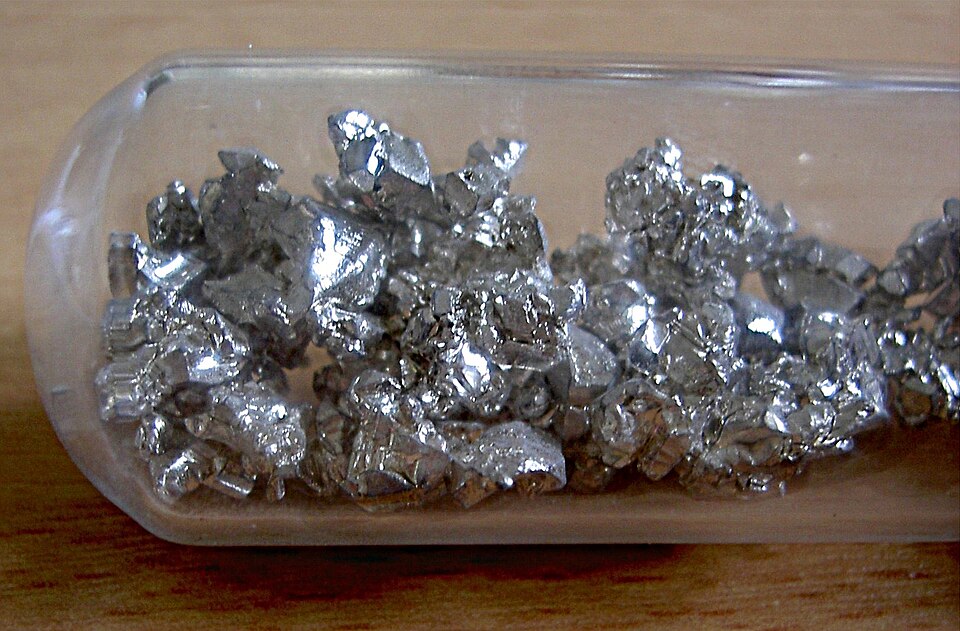

Calcium is a chemical element. Its symbol on the periodic table (a list of all the elements) is Ca. and its atomic number is 20. The atomic number says where Calcium sits in the periodic table. It has 20 protons and 20 electrons (if is an atom, see ion). The most common isotopes are Ca-40 and Ca-44. Its mass number is about 40.07.
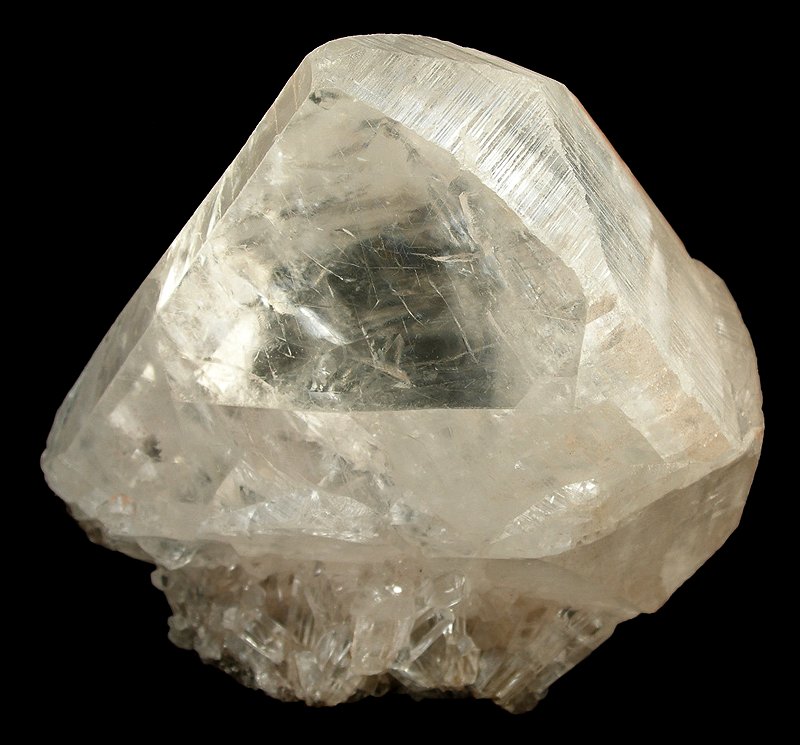
Calcium is not found as a metal in the ground (a native element mineral) because it is too reactive. Calcium carbonate, also known as calcite, is the most common calcium mineral.
Calcium is very important in the human body, for making bones and is an inorganic component found in bones, alongside phosphate. 99% of calcium in the bone is stored in bones. It is used in nerve and muscle (including the heart muscle) contraction. The name comes “calx”, the Latin name for lime, or limestone.
Properties
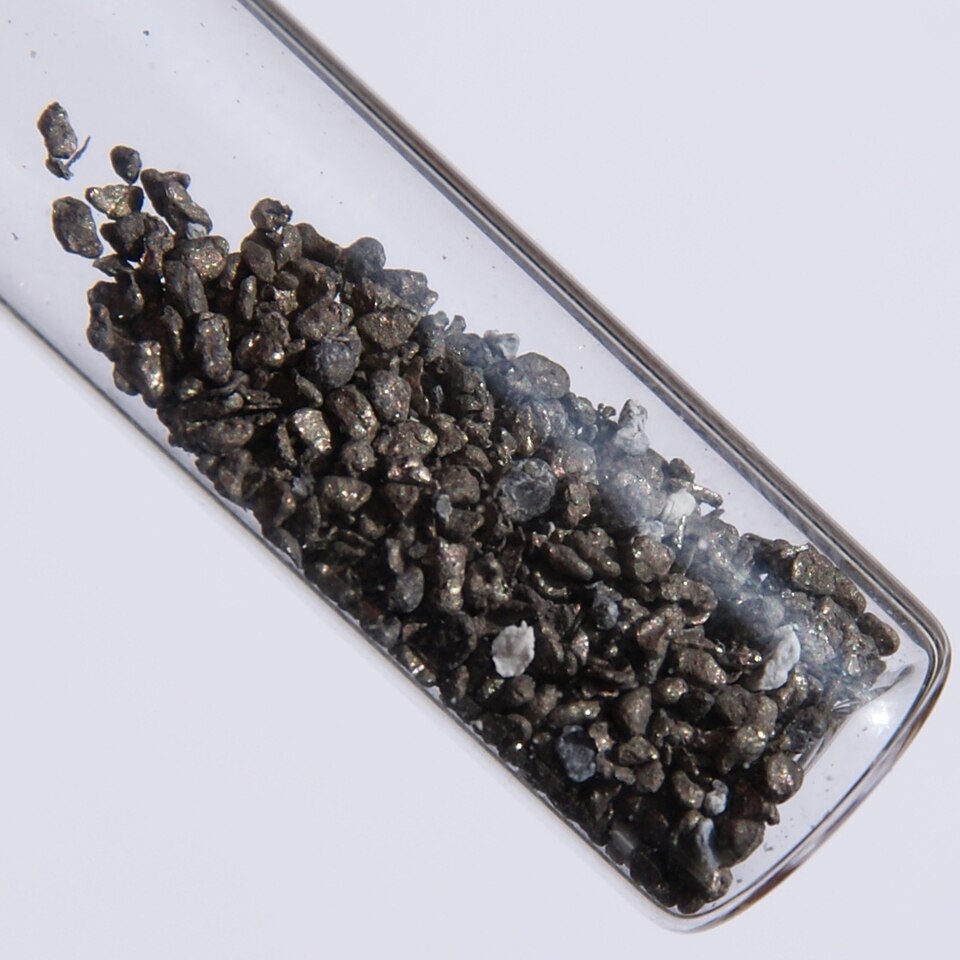
Calcium is a soft white-gray opaque metal. It is solid at room temperature. The crystal structure of calcium metal changes between two allotropes, being face-centred cubic at room temperature and body-centred cubic above 464 degrees Celsius. It melts at 842 degrees Celsius.
It does not conduct electricity as well as copper, but is much lighter in weight.
Chemistry
Calcium is the third alkaline earth metal, and has similar chemistry to the rest of the group. It is a strong reducing agent and base with two valence electrons.
Calcium metal reacts with oxygen in the air to make a layer of calcium oxide on the outside of the metal. This stops further chemical reactions (passivation) until the layer is removed. This compound is a strong Brønsted base and reacts with Brønsted acids to make calcium salts of the conjugate base. Non-passivated calcium metal can also make salts by reducing Brønsted acids directly to hydrogen gas. If the calcium salt of an acid is soluble in that acid or the solvent being used, the calcium-acid reaction is very fast and gives off a lot of heat.
Calcium compounds
Calcium forms chemical compounds in the +2 oxidation state. Calcium compounds are colorless. Most calcium compounds are not toxic. They are needed in the human body, actually. They are unreactive as far as calcium ions go. Calcium oxide was used to make limelights, which have a flame heating calcium oxide and makes it glow very bright. Forms (compounds) of calcium include:
- Calcium bromate
- Calcium carbonate (used in medications and construction)
- Calcium bicarbonate (causes limescale, such as on kitchen and bathroom appliances)
- Calcium citrate (used in medications)
- Calcium sulphate (also called gypsum, used in brewery and construction)
- Calcium chloride (used in medical treatments and food processing)
- Calcium hydroxide (used in construction, food processing, and water treatment)
- Calcium nitrate (used in agriculture)
- Calcium nitride (used in chemistry and making LED lights)
- Calcium oxide (used in water treatment and metal (steel) work)
- Calcium oxalate (found in plants for example in stinging nettle during the winter, when it is flowering)
- Calcium permanganate (used in water treatment, as a disinfectant and for sterilizing)
- Calcium phosphate (used in medicine, calcium phosphate compounds are used in making wine)
- Dicalcium phosphate
- Monocalcium phosphate (used in baking, animal feed and fertilizers)
File:Calcium hydroxide.jpg|Calcium hydroxide File:Calcium chloride.jpg|Calcium chloride File:Calcium sulfate hemihydrate.jpg|Calcium sulfate hydrated (with water) File:Dusičnan vápenatý.JPG|Calcium nitrate
Isotopes of calcium
Calcium has 6 naturally occurring isotopes ( 40 Ca, 42 Ca, 43 Ca, 44 Ca, 46 Ca and 48 Ca), of which 48 Ca is very slightly radioactive with a half-life about 6.4×10 19 years. Traces of 41 Ca, 45 Ca and 47 Ca are made by cosmic rays striking atoms, and are called cosmogenic nuclides. 41 Ca is made by the neutron activation of 40 Ca in the upper layers of the Earth’s crust and has a half-life of 102,000 years. Since it decays to potassium-41, it is a critical indicator of solar system anomalies.
Calcium-40 is the most abundant isotope (96% of all natural calcium), since it comes from radiogenic 40 K, which has a half-life of 1.25 billion years. However, along with calcium-46, it is theoretically unstable but with a half-life so long it has never been observed to decay.
Purpose and use
Calcium is found in high amounts in soil, especially when the soil has been made from rocks high in the different calcium forms. It can be deposited into the soil over time by leaching and deposition. It comes from rainfall and leaching out of the atmosphere, and it probably plays a role in the water cycle (or rain cycle). Because calcium is so porous (which means water can go through it), the soil could use it on some layer as a natural filter. Leaching also causes calcium to go from the rain into human drinking water in some parts of the world, and causes “hard” drinking water, in places where there is a lot of calcium in the environment and water.
Humans
When calcium is mixed into building materials in the right form and concentration, it makes buildings stronger and more resistant to weather. Calcium is used by humans in construction (as limestone, or calcium carbonate) to make concrete and bricks better for building with, and gypsum (calcium sulfate) as a plaster.
In brewery (making alcohol) gypsum is used and is the good one. Gypsum (calcium sulphate) is the good mineral because it does not break down with boiling, which alcohol needs. Chalk (calcium bicarbonate) is the bad form to use in brewery because it does break down, deposits limescale on the equipment and brings out the “harsher characteristics” of the hops as well as its ions interacting negatively with the fermentation process.
Humans (and other animals) use calcium to maintain or grow healthy bones and teeth. Calcium is used in the body where electricity is used, like in the muscles and nerves. Calcium is useful for animals and humans, and is found in nature. Cow milk is rich in calcium and other nutrients so that baby cows drinking it from their mother can grow up healthy and strong.
Other uses
As an element, calcium is used in the reduction of other metals. It can also be used to make alloys (metal mix) with other metals.
As chemical compounds
Calcium compounds are also important in chemistry. It is important for making things. It is a part of cement which is needed to make concrete (a hard substance that many buildings are made from.)
Calcium is part of calcium oxide. Calcium oxide is used to make paper, pottery, food, and to purify water (make it good to drink.) Calcium carbonate is used as a calcium supplement. Calcium permanganate can be used as a rocket propellant.
Calcium Supplements
Calcium is used in supplements a lot to increase the size of the tablet (as a bulking agent), for example 500mg of calcium added to in vitamin D tablets or other vitamin supplements. Usually it is in the form of calcium carbonate or calcium citrate. Calcium is added to some medications such as over-the-counter (OTC) antacid products (used to neutralize stomach acid). Calcium has the ability to neutralize stomach acid and some products (like Tums and Rolands, in America) have added calcium in the form of calcium carbonate. The calcium content depends on the antacid product strength and can range from 270-400mg of calcium.
Calcium supplements exist and taking less than 1,500mg a day is probably not going to cause harm. Taking too much calcium in supplement form might damage the body, and a balanced, varied diet is usually enough to get all of the calcium the body needs. Supplements are taken with food.
Some people have adverse reactions to calcium supplements, or more rarely, allergic reactions. Signs of adverse effects from calcium supplements (or hypercalcaemia) include feeling tired, confused, headache, an upset stomach (or tummy ache), constipation and throwing up. Calcium can cause bone pain in high amounts or as an allergic or adverse reaction.
Use in the body
Calcium as an element is not found in the human body, just calcium ions in the form of chemical compounds. In this form it is used in the body. People usually get enough calcium from the diet. Adult humans (aged 19 to 64) need around 700mg of calcium daily. Calcium is used throughout the human body, used in most muscles. Taking 1,500mg of calcium (usually as a supplement in these amounts) is unlikely to cause harm.
Dietary calcium comes from milk and dairy products or soya drinks with added calcium, fish where eating them includes the bones (for example, sardines), and green, leafy vegetables. Vegetables that are high in calcium include curly kale and okra, but not spinach (which does contain a lot of calcium but it is not useful for the body). Fortified flour which makes bread (called fortified food) might be a source of calcium or other the fortifying additives (such as niacin or vitamin B3) it contains.
Preparation
Calcium metal is made by electrolysis, usually with melted calcium chloride in a molten salt bath. It has to be very hot to melt it. The reaction occurs in the range of 650 to 750 degrees celsius (C) (around 1200 to 1560 degrees fahrenheit). Sometimes, additives are used to lower the boiling point of the metal. This is because pure calcium chloride melts at around 772 C, or calcium chloride melts in the range of 772 to 782 degrees celsius.
Potassium chloride can be used as an additive for the preparation of calcium chloride via electrolysis. It make the extraction more efficient by lowering its boiling point. The amount of potassium added to the molten salt bath can range from 15 to 35 percent (with 75 percent calcium chloride), with 10 percent being the minimum or 25 percent being preferred.
Safety
Calcium is toxic as an element. It reacts with water and makes a strong base, calcium hydroxide. Calcium compounds are not toxic unless the anion is toxic. Calcium permanganate is only toxic because of the permanganate, not the calcium. Like other alkaline earth metals calcium burns easily and brightly.
Written for younger readers
Calcium, in simpler words
This version comes from Wikijunior, a set of books written for children aged 8 to 11. It is shorter and uses plainer language than the article above.
From Wikijunior: The Elements
NOTOC
Calcium is a chemical element. Calcium is classified as an alkaline earth metal on the periodic table. The periodic table arranges chemical elements into periods (rows) and groups (columns). The element calcium is in period 4 and group 2 of the periodic table. Its atomic number is 20 and its symbol is Ca.
In addition to calcium, there are 5 other alkaline earth metals: beryllium, magnesium, strontium, barium, and radium
These elements share similar properties. They are shiny, silvery-white metals. They react with other elements to form useful compounds.
Calcium is a soft, gray metal. When it burns, it burns with a yellowish-red flame. When it is exposed to air, it develops a gray-white coating because it reacts with the oxygen in the air to form a coating of calcium oxide (lime).
Strongly alkaline and reactive with any body fluids such as sweat, calcium metal burns flesh exposed to it. Do not touch it.
Calcium has been known since Ancient Roman times. The Romans discovered a way to make calcium oxide by heating limestone in a furnace. However, it wasn’t until 1808 that pure calcium was isolated by Sir Humphrey Davy. He combined calcium oxide (lime) with mercuric oxide and passed an electric current through the mixture. The result was pure calcium metal that was easy to separate from the mercury.
The element calcium gets its name from the Latin terms calx or calcis, which refers to limestone. The element calcium was named by Sir Humphrey Davy the English chemist who discovered it in 1808.
Did You Know?
- As wet calcium hydroxide combines with air it becomes hard calcium carbonate. This chemical reaction is what causes cement to harden.
- Calcium is the most common metal in animals.
- Stalactites and stalagmites are made primarily of calcium carbonate.
Calcium is not found pure as an element due to its great tendency to react with other elements to form compounds, but it is commonly found in the compound calcium carbonate (CaCO 3 ). Many rocks such as limestone, marble, chalk, and calcite contain this substance. Limestone caves are a great example of where calcium can be found. Seashells and snail shells are primarily calcium carbonate. Eggshells are mostly made from this compound too.
Calcium is the 5 th most common element found in the Earth’s crust and in the oceans. Minerals that contain calcium bearing ores are typically found in sedimentary rock. In the United States calcium is found in Alabama, Alaska, Arizona, California, and Colorado. There are calcium mines in China, Europe, parts of Asia, and several African countries.
Calcium is also found in significant amounts in many foods. Dairy products like milk, yogurt and cheese contain calcium. Green vegetables also often have calcium. Broccoli, collard greens, almonds, sesame seeds, and beans all contain significant amounts of calcium.
Calcium is important for our body to run. It helps build strong bones and teeth, and it allows our muscles and brain cells work.
Calcium compounds are important for industry, construction, health, and agriculture.
In steelmaking, calcium oxide reacts with impurities to form “slag”. The impurities are removed with the slag, resulting in a purer metal.
Calcium is a main ingredient in cement and concrete. Romans used mortar made from a mixture of cement, lime, sand, and water to make strong buildings. They made plasters for artwork using calcium oxide, sand, and marble dust. Roman concrete was made from calcium oxide, volcanic ash, small stones, and water.
Calcium is an important substance in the building industry because calcium hydroxide (Ca(OH) 2 is used in cement and mortar. Calcium carbonate is also used in plastics and adhesives as a filler. Because calcium oxide (CaO) neutralizes acid it can be used to decrease the effects of acid rain in rivers and lakes. Calcium is also commonly used in heartburn and antacid tablets. Calcium compounds are nearly everywhere in our bodies. In fact, calcium is an essential nutrient that is needed by the human body to help build strong bones and teeth.
In agriculture, calcium compounds are used to enrich soil for better crops. Calcium nitrate and calcium chloride are used as fertilizers. Calcium sulfate (gypsum) breaks down hard soil so water can get to plant roots.
Calcium is an essential nutrient for healthy soil and plant growth. It helps plants absorb sunlight to make energy for photosynthesis. Calcium adds strength and stability to plant parts. It helps to protect plants from disease and pests.
Calcium metal burns hot if ignited, and it reacts violently with water to form the strongly alkaline calcium hydroxide that can cause chemical burns.
Calcium compounds aren’t dangerous unless they are strongly alkaline or acidic or if they are poisonous due to the other parts of the compound.
Elemental calcium can cause death if swallowed.
Calcium compounds in dietary supplements are generally safe.
Calcium compounds are nearly everywhere in our bodies. In fact, calcium is an essential nutrient that is needed by the human body to help build strong bones and teeth.
Calcium metal has a very high boiling/melting point.
Where this page comes from
The article above is adapted from “Calcium” on Simple English Wikipedia, by its contributors. We removed reference markers, navigation boxes and tables, expanded measurement templates into readable numbers, and kept the prose otherwise intact. The simpler version is adapted from Wikijunior on Wikibooks.
Both sources are published under CC BY-SA 4.0, so this page is published under the same licence. You may share and adapt it, including commercially, as long as you credit the original and keep the same licence.
Worksheets, answer keys and printable layouts elsewhere on K5Print are our own work and are not covered by this licence.