Carbon
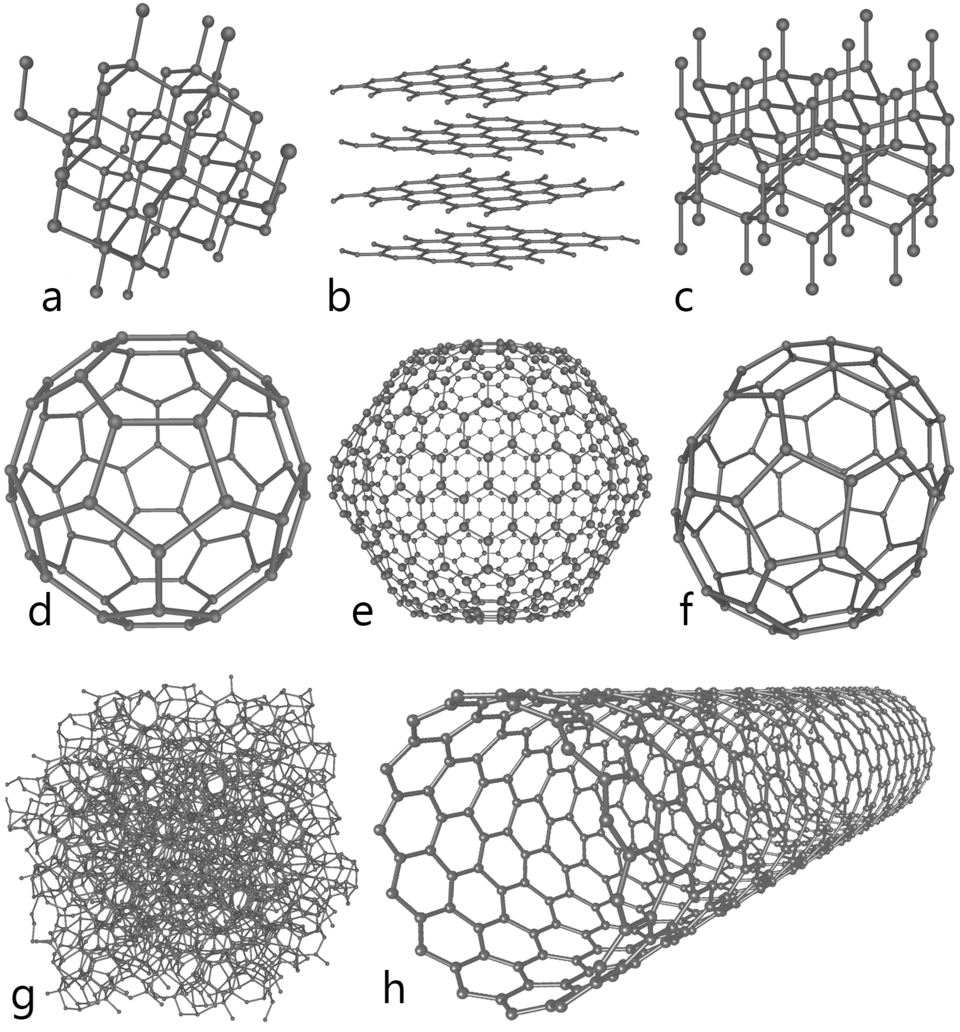

Carbon is a very important chemical element, with a chemical symbol of C. All known life on Earth needs it to survive. Carbon has atomic mass 12 and atomic number 6. It is a nonmetal, meaning that it is not a metal.
When iron is alloyed with carbon, hard steel is formed. Carbon in the form of coal is an important fuel.
Chemistry of carbon
A whole type of chemistry, called organic chemistry, is about carbon and its compounds. Carbon makes many types of compounds. Hydrocarbons are molecules with carbon and hydrogen. Methane, Propane, and many other fuels are hydrocarbons. Many of the substances that people use daily are organic compounds.
Carbon, hydrogen, nitrogen, oxygen, and some other elements like sulfur and phosphorus together form most life on earth (see List of biologically important elements). Carbon forms a very large number of organic compounds because it can form strong bonds with itself and with other elements. Because of the amounts of carbon living things have, all organic things are considered “carbon-based”.
Each carbon atom usually forms four chemical bonds, which are strong connections to other atoms to form molecules. The kind of bond that carbon makes is called a covalent bond. These bonds allow carbon to form many kinds of small and large molecules. A molecule of methane is the smallest; it has four hydrogen atoms bonded to carbon. The bonds can be double bonds, meaning that two bonds form between carbon and another atom to make a stronger connection. For example, carbon dioxide has two oxygen atoms, and each one is double bonded to carbon. Carbon can even form three bonds with another atom, called a triple bond. For example, in the gas acetylene carbon forms a triple bond with another carbon atom.
By bonding to other carbon atoms, carbon can form long chain-shaped molecules, called polymers, such as plastics and proteins. Atoms of other elements can be part of the long polymer chains, often nitrogen or oxygen.
Pure carbon forms diamond by bonding to four other carbon atoms in a three dimensional crystal. It forms graphite by bonding to three other carbon atoms to form thin flat layers.
Etymology
The name of carbon comes from Latin carbo, meaning charcoal. In many foreign languages the words for carbon, coal and charcoal are synonyms.
Types of carbon
Carbon in nature is found in three forms called allotropes: diamond, graphite, and fullerenes. Graphite, with clay, is in pencils. It is very soft. The carbon atoms in it make rings, which are on top of each other and slide very easily. Diamonds are the hardest natural mineral. Fullerenes are a “soccer ball” shape of carbon. They are mostly of interest to science. A special, man-made, tube-shaped allotrope of carbon is the carbon nanotube. Carbon nanotubes are very hard, so they might be used in armor. Nanotubes might be useful in nanotechnology.
There are 10 million known carbon compounds.
Radiocarbon dating
A radioactive isotope of carbon, carbon-14, can be used to figure out how old some objects are or when something died. As long as something is on the surface of the earth and taking in carbon, the amount of carbon-14 stays the same. When an object stops taking in carbon, the carbon-14 amount goes down. Because the half-life (how long it takes for half of a radioactive isotope to go away) of carbon-14 is 5730 years, scientists can see how old the object is by how much carbon-14 is left.
Where carbon is
Carbon is in many places in the universe. It was first made in old stars. Carbon is the fourth most common element in the sun. The atmospheres of Venus and Mars are mostly carbon dioxide.
Carbon is important to the human body and other living things, and it is the second most common element in the human body, at 23% of all body weight. It is also a key part of many biological molecules (molecules used in life).
Most of the carbon on Earth is coal. Graphite is in many (typically desert) areas, including Sri Lanka, Madagascar, and Russia. Diamonds are rare and are found largely in Africa. Carbon is also in some meteorites.
Written for younger readers
Carbon, in simpler words
This version comes from Wikijunior, a set of books written for children aged 8 to 11. It is shorter and uses plainer language than the article above.
From Wikijunior: The Elements
NOTOC
Did You Know?
- Carbon has the highest melting point of all of the elements at 3652 °C(6605 °F).
- Most molecules known to science contain carbon.
- Carbon is one of the four main elements in most or all living things (the others are hydrogen, oxygen, and nitrogen.)
- When carbon is heated to a very high temperature it sublimates (changes directly from a solid to a gas). How carbon looks depends on the molecule shape carbon makes. Carbon has many allotropes (see Wikipedia article). The most famous type of carbon shape is diamond. Diamond is clear but very shiny. It is very valuable and the hardest substance from nature. It is number 10 on the Mohs scale of hardness. Low quality diamonds can be made from other forms of carbon. Diamond is also notable for being one of the few substances which conducts heat very well but does not conduct electricity.
Another well known type of carbon is graphite, which is used in pencils. Graphite is grey instead of clear, and very soft, registering about 1 on the Mohs scale of hardness.
Carbon was known prehistorically by ancient people who produced it in the form of charcoal. The name is based on the Latin name carbo, which means charcoal.
Carbon is found in many places. Diamonds, graphite, and oil all contain carbon and can all be found underground. Carbon is also present in all living things, in organic molecules such as fat and sugar. Carbon is also found in the atmosphere as part of carbon dioxide and other compounds. Organic chemistry is a branch of chemistry that is dedicated to studying carbon-containing compounds. Some scientists speculate that without carbon, life couldn’t exist at all. Others suggest that life based on silicon is possible.
Diamonds are often used as decorations and in jewelry. Because diamonds are so hard, they are sometimes used to make blades to cut things, but these blades are very expensive. Graphite is very soft. Because of this, it is often used in pencils. “Lead” pencils are actually carbon.
Carbon separates the oxygen from iron in iron ore in furnaces and allows the useful metal iron to be made. Much carbon is used in making iron. When carbon is heated with iron in a furnace, steel is made.
When carbon is combined with hydrogen it forms a molecule called a ‘hydrocarbon’. Hydrocarbons are very important because they are used for energy and fuel. Petroleum, such as the gas in your car, is a hydrocarbon and it is used to power vehicles and to make lubricants, among other things.
Carbon is sometimes used in filtration as “activated carbon”, and helps to clean some unwanted materials from water.
When carbon is laid out into a 2-D sheet, it becomes a type of carbon called graphene. Graphene might be used to make computers in the future.
Carbon is relatively safe by itself. However, inhaled soot or smoke, which contain carbon, are bad for your lungs. Carbon is part of carbon dioxide which is linked to global warming. Incomplete burning of hydrocarbons releases carbon monoxide, which is very dangerous because it keeps the hemoglobin in your blood from picking up oxygen and basically suffocates your cells, so try not to breathe in the exhausts from your car.
Where this page comes from
The article above is adapted from “Carbon” on Simple English Wikipedia, by its contributors. We removed reference markers, navigation boxes and tables, expanded measurement templates into readable numbers, and kept the prose otherwise intact. The simpler version is adapted from Wikijunior on Wikibooks.
Both sources are published under CC BY-SA 4.0, so this page is published under the same licence. You may share and adapt it, including commercially, as long as you credit the original and keep the same licence.
Worksheets, answer keys and printable layouts elsewhere on K5Print are our own work and are not covered by this licence.