Cobalt
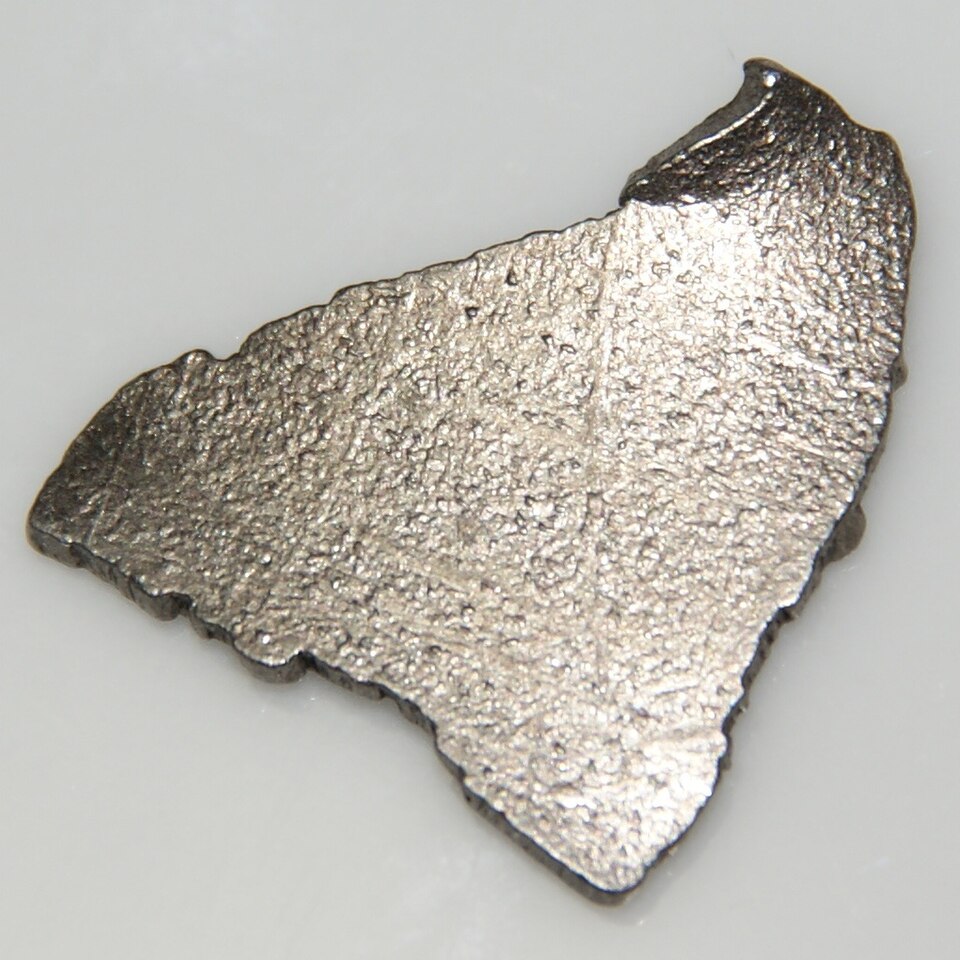

Cobalt (chemical symbol Co) is a chemical element. It has an atomic number of 27 and an atomic mass of about 59. It is a metal.
Properties
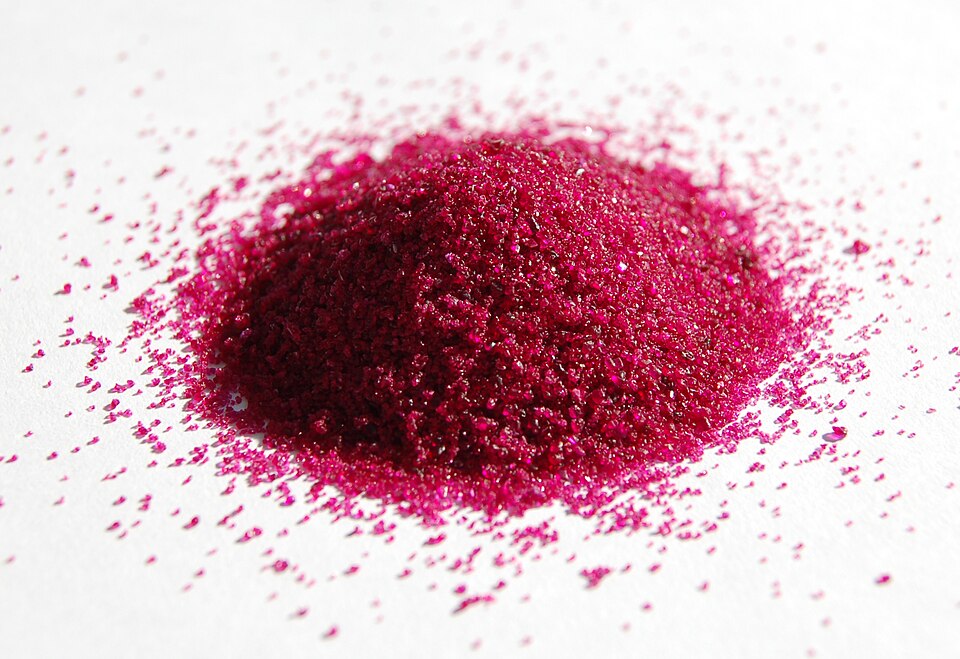
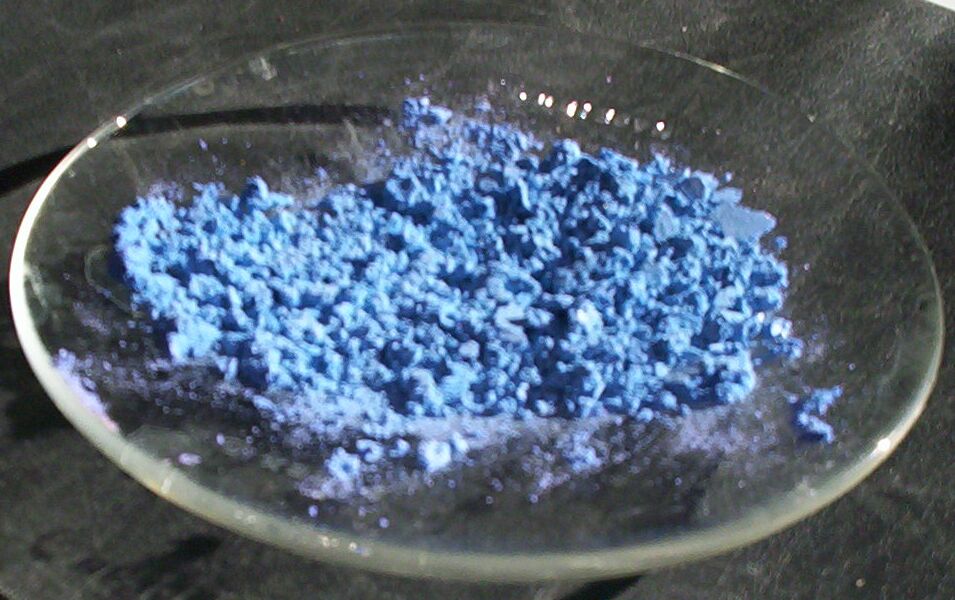
Cobalt is a transition metal. It is shiny and conducts electricity. It is magnetic. It is a hard metal. It is moderately reactive. Iron is more reactive and copper is less reactive. It dissolves slowly in acids. This reaction makes hydrogen and a salt of cobalt. Cobalt is normally in its +2 oxidation state as an ion. Some chemical compounds contain cobalt ions in its +4 oxidation state. Cobalt(II) chloride is one of the most common cobalt compounds. Many cobalt compounds are blue or pink. One of them is black.
Chemical compounds
Cobalt can have two oxidation states, +2 and +3. Most soluble cobalt compounds are red. They can also be green, blue, brown, and black.
Cobalt(II) chloride, red solid, most common cobalt compound
Cobalt(II) fluoride, used in dentistry, red solid
Cobalt(II) hydroxide, red or green-blue solid
Cobalt(II) oxide, black solid
Cobalt(II) sulfate, reddish solid, used in pigments
Cobalt(II,III) oxide, black solid, oxidizing agent
Cobalt(III) fluoride, brown solid, strong oxidizing agent
Cobalt(III) oxide, black solid
Occurrence and preparation
Cobalt is too reactive to occur as a pure element in the earth. It is found in certain minerals. It is found with copper and nickel deposits. Normally the three metals are bonded to arsenic and sulfur. The majority of cobalt mining is in central Africa.
It is found as a byproduct (left over substance) when copper and nickel are produced. It is made by reaction with the sludge from copper and nickel processing.
Uses
Cobalt is used in some types of steel. It hardens the steel. It is also used to make very strong tough alloys. These alloys are known as superalloys. Some cobalt compounds are used in the lithium-ion battery. Cobalt compounds were used as an artificial food coloring until 1971. It was discovered that it has harmful effects. It is used to make glass blue. It is also used as a catalyst, and in some medicines, and for ink, pigments, dyes, and varnishes.
The human body needs small amounts of cobalt for certain vitamins. Cobalt compounds are used to stop cyanide from poisoning the body.
Safety
People need cobalt compounds in small amounts, but cobalt is toxic in large quantities. Sometimes cobalt compounds were added to beer, and people that drank it were poisoned. It can cause skin irritation when touched.
Written for younger readers
Cobalt, in simpler words
This version comes from Wikijunior, a set of books written for children aged 8 to 11. It is shorter and uses plainer language than the article above.
From Wikijunior: The Elements
NOTOC
General: Cobalt is a chemical element. Cobalt belongs to the transition metals category of elements on the periodic table. The Periodic Table arranges chemical elements into rows (periods) and columns (groups). Cobalt is number 27 on the table. Chemical elements are represented by symbols. The symbol for cobalt is Co.
Cobalt appears solid with a silvery-grey luster and bluish tinge. It remains hard and brittle at room temperature and has a bluish-white color. It is one of the few elements that is naturally magnetic.
Cobalt and its compounds could be toxic, so touching or tasting would be unsafe.
Cobalt does not have a distinct smell. It is reported that the compound cobalt chloride smells like wet cardboard, and cobalt sulfate smells like rotten eggs.
Although it is needed for good health, too much or too little cobalt in the body can cause health issues.
The heart, eyes, and skin can be harmed by prolonged exposure to cobalt. Lung problems can be caused by breathing cobalt dust.
Did You Know?
- Cobalt has been used to color glass since the Bronze Age.
- Cobalt is a ferromagnetic metal. The term cobalt comes from the German word kobold, meaning goblin. Medieval miners believed the kobolds caused toxic vapors to be released when cobalt ore was heated. Instead, the toxic vapors came from heating arsenic, which is commonly found with cobalt.
Georg Brandt, a Swedish chemist, discovered cobalt in 1735. He was interested in a blue pigment called smalt. It was used to color glass, ceramics, and pottery. It was known as blue sand in ceramics and royal blue in artists’ pigments. Smalt was sometimes known as powder blue when it was used for “bluing” linens to make them appear whiter.
People thought the element bismuth made the blue color of smalt. Brandt determined it was a different element not yet discovered that made the smalt blue. He found the new element and named it cobalt after the German word kobold. Brandt proved that cobalt was the element in smalt that made the blue coloring in glass, ceramics, and fabrics.
Cobalt was the first metal to be discovered that was not an ancient metal like iron, copper, or gold. Georg Brandt is recognized as the first person in history to discover a new metal.
Cobalt occurs in very small quantities in air, water, food. soil, rocks, and plants. Cobalt is found in ores, minerals, and chemical compounds in the Earth’s crust. Miners often find cobalt alongside copper, nickel, and other ores inside mines.
Cobalt ore deposits are found in China, Russia, and Africa. The United States imports cobalt from other countries.
Cobalt is a “critical raw material” because there are few places where it can be mined in large quantities. It is in very high demand all over the world.
Cobalt has many uses in the areas of the arts, health, industry, and medicine. It is used in arts and crafts to make pigments of many colors for glass, ceramics, paints, and ink. It plays an important role in keeping the body healthy. It is used in making batteries, magnets, and airplane parts.
Where this page comes from
The article above is adapted from “Cobalt” on Simple English Wikipedia, by its contributors. We removed reference markers, navigation boxes and tables, expanded measurement templates into readable numbers, and kept the prose otherwise intact. The simpler version is adapted from Wikijunior on Wikibooks.
Both sources are published under CC BY-SA 4.0, so this page is published under the same licence. You may share and adapt it, including commercially, as long as you credit the original and keep the same licence.
Worksheets, answer keys and printable layouts elsewhere on K5Print are our own work and are not covered by this licence.