Copper
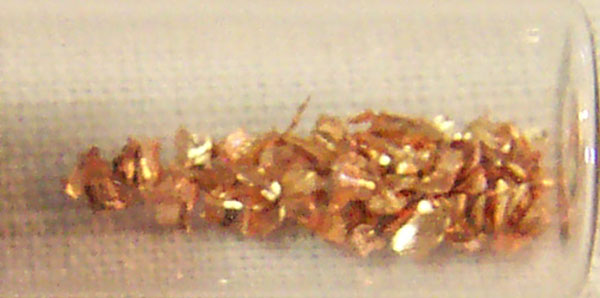

Copper is a chemical element. It is the 29th element in the periodic table. Its atomic weight is 63.55. It is a transition metal in the middle of the periodic table. The symbol for copper is “Cu”, which comes from the Latin word cuprum, which, in turn, came from the Latin word for the island of Cyprus, where copper was found.
Physical properties
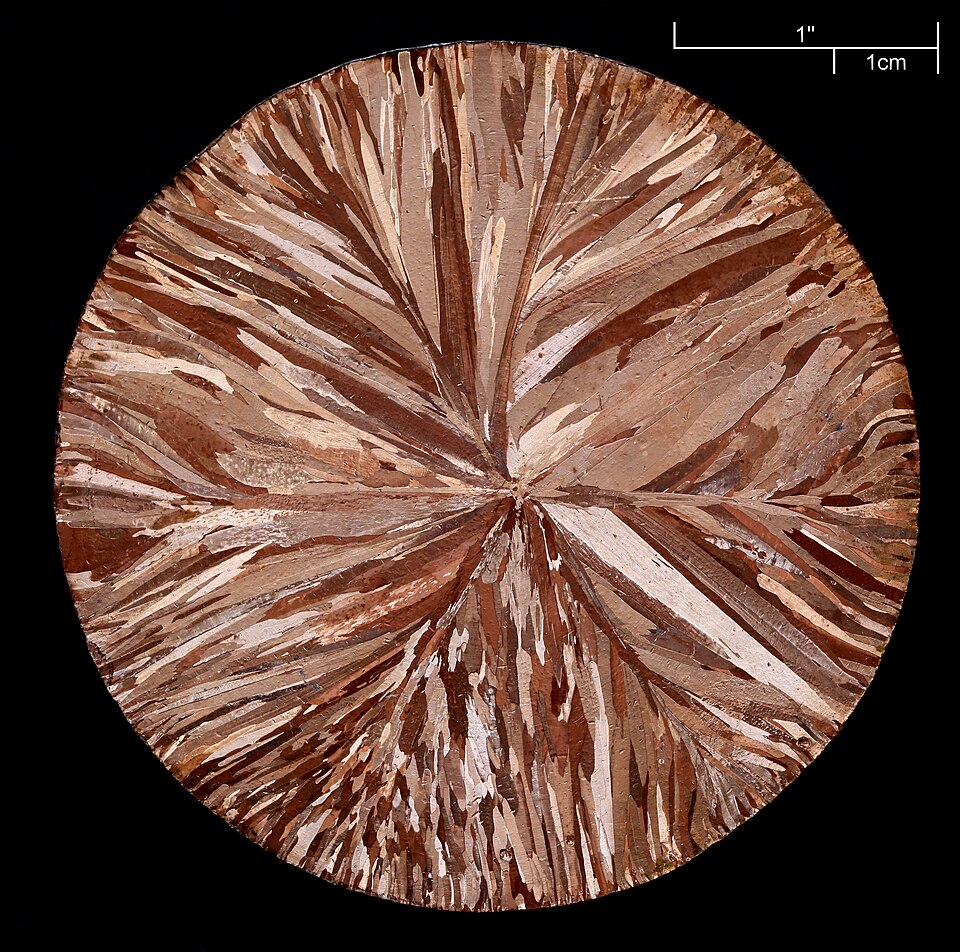
Copper is a reddish-orange color when it is pure, but soon gets a reddish tarnish after it is exposed to air.
Copper is one of the few coloured metals. Most metals are gray or silver. Gold, copper, caesium and osmium are the only four coloured metals. It is magnetic. Copper is green as copper(II) carbonate and copper(II) hydroxide. It turns green because it oxidizes. After a time in the air, copper forms green copper carbonate at the surface, called verdigris. That is why the copper roof of a building looks green.
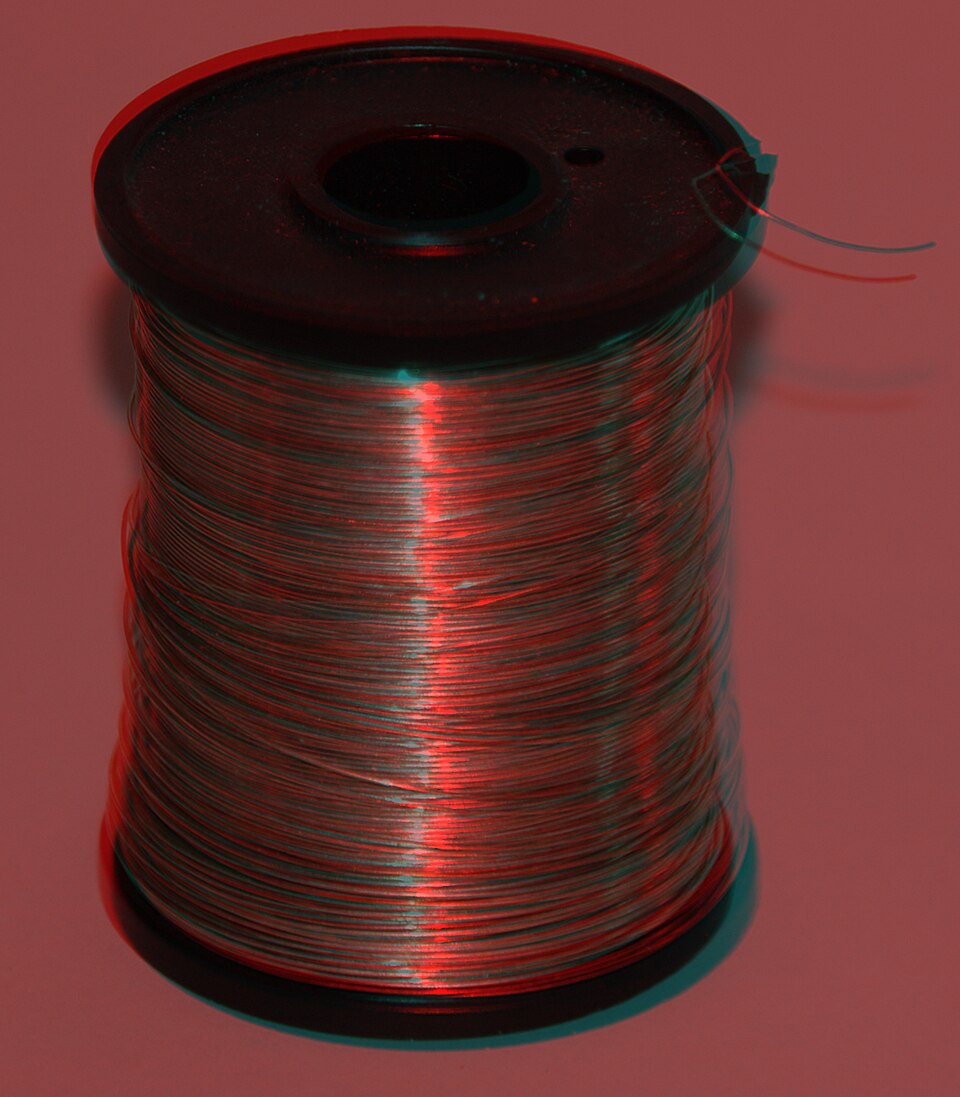
Copper is very flexible and ductile. It can be stretched into wires easily. Copper is also very soft, it has a Mohs hardness of 2.5 to 3. That means that it is harder than a fingernail but softer than a steel pocketknife.
It reacts with solutions of hydrochloric acid or ammonia containing oxygen. It can also dissolve in a mixture of hydrogen peroxide and hydrochloric acid. This makes copper(II) chloride. It does not dissolve in weak acids. It can dissolve in nitric acid to make copper(II) nitrate and nitrogen dioxide or nitric oxide.
Compounds
Copper forms chemical compounds. In these compounds, it has two normal oxidation states: +1 and +2. +2 is more common. Most +2 copper compounds are blue. +1 copper compounds can be white. Copper compounds are weak oxidizing agents. They corrode many metals. This corrosion takes the metal and puts it in the chemical compound, leaving the copper behind. An example would be iron and copper(II) sulfate reacting to make copper and iron(II) sulfate. +1 copper compounds are reducing agents when in air. They are normally made by reduction of +2 compounds.
Copper compounds can be black, green, reddish, white, blue, or yellow.
Copper(I) compounds
Copper(I) compounds have copper in +1 oxidation state. They are weak reducing agents. They react with air to make copper(II) compounds. They also disproportionate to copper and copper(II) compounds. Most of them do not dissolve in water.
- Copper(I) acetylide, reddish brown, explosive
- Copper(I) bromide
- Copper(I) chloride, white when pure, green when oxidized
- Copper(I) iodide, colorless solid
- Copper(I) oxide, reddish-brown
Copper(II) compounds
Copper(II) compounds have copper in +2 oxidation state. They are weak oxidizing agents. They are greenish when hydrous (water molecules added). They are more stable in air than copper(I) compounds.
- Copper(II) bromide, gray solid
- Copper(II) carbonate, greenish, forms on copper when in air
- Copper(II) chloride, greenish when hydrous, brown when anhydrous
- Copper(II) hydroxide, light blue, turns into copper(II) carbonate easily
- Copper(II) nitrate, blue, oxidizing agent, used in demonstration voltaic cells
- Copper(II) oxide, black
- Copper(II) sulfate, blue, most common copper compound
- Paris green, (also known as Copper(II) acetoarsenite) extremely toxic, bright blue-green
File:Copper sulfate.jpg|Copper(II) sulfate, a copper(II) compound File:Copper(II) chloride dihydrate.jpg|Copper(II) chloride, a copper(II) compound File:Copper(I)-chloride-photo.jpg|Copper(I) chloride, a copper(I) compound. It is white but air reacts with it easily to turn it green File:CopperIoxide.jpg|Copper(I) oxide, a copper(I) compound File:CopperIIoxide.jpg|Copper(II) oxide, a copper(II) compound
Occurrence
Copper can be found as a metal in the ground. Normally, it is green on the outside. Most copper is not as a metal but in chemical compounds. Chalcopyrite is the most common copper ore. It is a mixture of pyrite and copper sulfide. Copper is found in small amounts in living things. Some mollusks and arthropods have blue blood because they have copper in their blood. Animals such as humans and other mammals have red blood because it contains iron.
Uses
Copper can be used in many ways but one example is wires. Copper is used in making wires as it is easy to stretch and it is not expensive. So that’s why large wire companies will use copper as it is cheaper and takes less time to get
Copper may be the oldest metal in use, as very old copper tools have been found. Copper is used in electrical wiring. It can also be shaped into various parts. It can be used in a heat sink. The Statue of Liberty is made of copper. It is also used in pipes carrying water, because it does not corrode.
When people mix copper with tin, bronze is made. Bronze is much harder, and created the Bronze Age. It became less important when people learned to use iron better. When zinc is mixed with copper, brass is made, which is even harder than bronze. Copper with nickel makes cupronickel.
Copper is also used in medical and food production industries. Copper can alter proteins, form radicals, and disrupt enzymes, thereby inactivating or killing bacteria and viruses.
Copper is an easily molded base metal that is often added to precious metals to improve their elasticity, flexibility, hardness, color, and resistance to corrosion.
As chemical compounds
Copper is important in the human body. If a person does not get enough copper, the molecules in the body might not work. Having too much copper, though, can be a problem. Humans get most of the copper they need from food, and vitamins also contain copper to make sure we get enough. Copper compounds are also used to kill fungi and algae.
Safety
Copper is not as toxic as a metal. Copper compounds are toxic, although small amounts are needed to live. Copper is expelled from the body easily, so it does not build up in toxic effects.
Preparation
Copper is sometimes just taken out of the ground and shaped into objects. But most copper is not in a metal form in the ground. Chalcopyrite is the main copper ore. It is heated with air to separate the iron as iron(II) oxide. Some copper(I) oxide is made. Sulfur dioxide is also made. Then silicon dioxide is added, which reacts with the iron(II) oxide to make a liquid which is drained. Now only copper and sulfide are left. The copper sulfide reacts with air to make copper metal and sulfur dioxide. Some copper sulfide reacts with the copper(I) oxide to make copper and sulfur dioxide. This makes impure copper.
Copper is made pure by electrolyzing it. A thin sheet of pure copper is put on the cathode and a thick sheet of impure copper is put on the anode. The electrolyte is copper sulfate. The impure copper gets dissolved in the solution. It then coats the thin sheet of pure copper. This makes the copper pure.
Large amounts of copper are recycled because of its high value and the increasing depletion of worldwide copper reserves.
Written for younger readers
Copper, in simpler words
This version comes from Wikijunior, a set of books written for children aged 8 to 11. It is shorter and uses plainer language than the article above.
From Wikijunior: The Elements
NOTOC
Copper is a reddish-orange metal, one of only two metals (the other being gold) which has a color other than silver or gray. It tastes metallic, and feels like salt.
As early as 10,000 years ago, people found small deposits of native (pure) copper metal in the ground. This copper was then hammered and used to make weapons, tools and decorations. In Northern Iraq, a copper pendant was found that can be dated back to about 8700 B.C.
Copper gets its name from the Latin word Cuprum, meaning from the island of Cyprus. In the Ancient Roman world (whose common language was Latin), most copper was mined in Cyprus.
Did You Know?
- Copper used to be the symbol for the Roman goddess Venus, to whom the island of Cyprus was sacred.
- The Statue of Liberty contains 179,200 pounds (81.3 tonnes) of copper.
- When a form of copper dissolves in water, the water turns blue.
Copper can be found underground in the form of copper ore. The main copper ore producing countries are Chile, United States, Indonesia, Australia, Peru, Russia, Canada, China, Poland, Kazakhstan, Zambia, Zaire, and Mexico. Copper is usually obtained from the ores cuprite (CuO 2 ), tenorite (CuO), malachite (CuCO 3 .Cu(OH) 2 ), chalcocite (Cu 2 S), covellite (CuS), and bornite (Cu 6 FeS 4 ).
As copper is a great conductor of electricity it is used to make wires that carry electricity into homes, schools and businesses. In addition, copper is used to make locks, pipes, doorknobs, pots, bronze and jewelry. Most coins also contain copper, not just pennies (in fact pennies are now mostly zinc due to rising copper prices, but other coins are mostly still copper.)
A little copper is necessary for many living things. However, copper in higher levels can be toxic if eaten.
Where this page comes from
The article above is adapted from “Copper” on Simple English Wikipedia, by its contributors. We removed reference markers, navigation boxes and tables, expanded measurement templates into readable numbers, and kept the prose otherwise intact. The simpler version is adapted from Wikijunior on Wikibooks.
Both sources are published under CC BY-SA 4.0, so this page is published under the same licence. You may share and adapt it, including commercially, as long as you credit the original and keep the same licence.
Worksheets, answer keys and printable layouts elsewhere on K5Print are our own work and are not covered by this licence.