Creatine
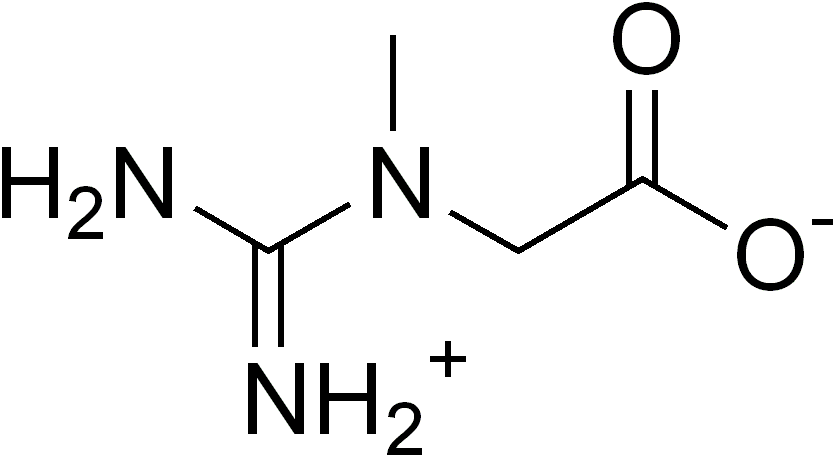

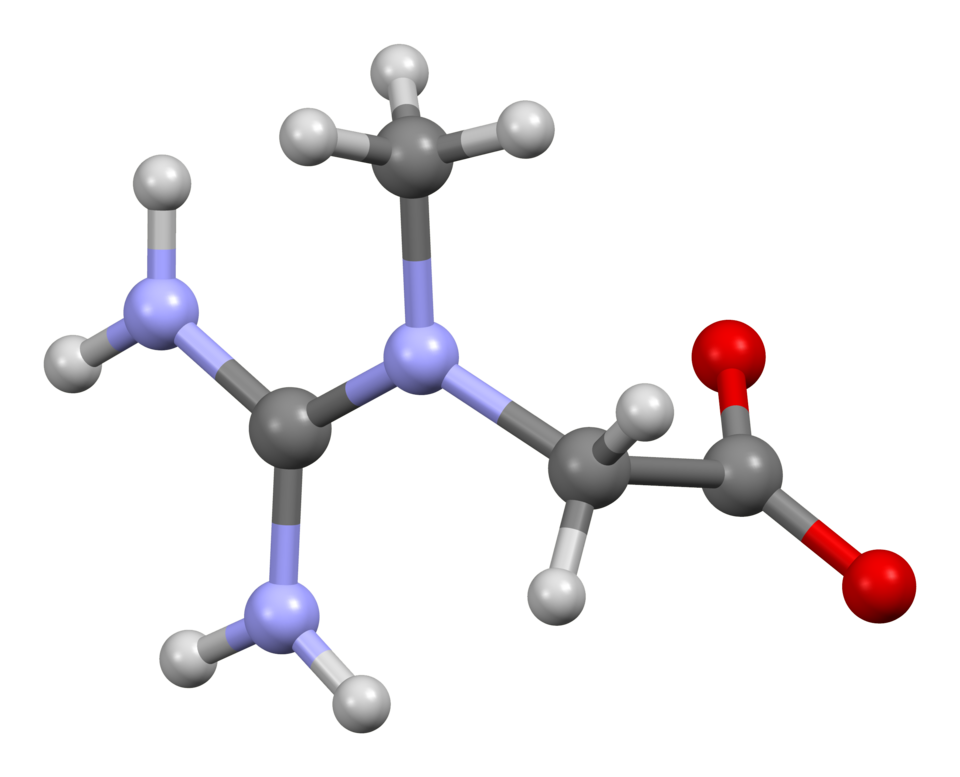
Creatine is a natural substance that our body uses to make energy quickly. We get some creatine from food, mostly meat, and our liver and kidneys make the rest from three building blocks called amino acids: arginine, glycine, and methionine. Creatine is stored in our muscles and brain, where it changes into phosphocreatine. Phosphocreatine helps make adenosine triphosphate, ATP, which is the main energy source for our body and all living things. Normally, our cells make ATP by using oxygen to break down food. ATP can also be made faster but less well by breaking down sugars without oxygen. The fastest way to make ATP is by using phosphocreatine. This lets our body create a lot of energy quickly for short times, like when lifting heavy weights or running very fast for a short distance.
Effects on the human body
Consumed, or synthesized creatine is stored mainly in the muscles. This leads to increase the size of the muscles. The increase comes from water retention of cells that store creatine. Increased amount of creatine in the muscles improves our performance, especially in maximum strength, short duration exercises. There are indications that creatine can help with the recovery of muscles after intensive exercises. Creatine is also absorbed by the brain, where it can improve brain cognitive function.
Most of the creatine production will be stored in the skeletal muscle because these muscles need a lot of energy and sometime they need it quickly. Daily about 5% to 10% of the creatine in our body is degraded, therefore, the body constantly produces it - about two grams of creatine per day. This amount can increase after periods of intensive exercises or if not enough creatine is present in the food.
Creatine in considered to be safe as a dietary supplement to be taken by adults, children or elderly for up to 5 years.
Where this page comes from
The article above is adapted from “Creatine” on Simple English Wikipedia, by its contributors. We removed reference markers, navigation boxes and tables, expanded measurement templates into readable numbers, and kept the prose otherwise intact.
Both sources are published under CC BY-SA 4.0, so this page is published under the same licence. You may share and adapt it, including commercially, as long as you credit the original and keep the same licence.
Worksheets, answer keys and printable layouts elsewhere on K5Print are our own work and are not covered by this licence.