Einsteinium
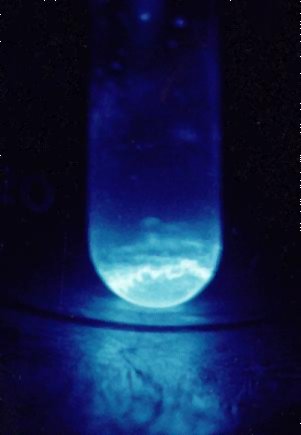

Einsteinium is a chemical element with the atomic number 99 it is a synthetic element, so all isotopes are radioactive.
Einsteinium is the 7th element in the actinide series. The most stable isotope of Einsteinium has 99 protons and electrons and 153 neutrons. There are 19 different (radioactive) isotopes. Einsteinium is named after Albert Einstein. It was found for the first time in 1952 by Albert Ghiorso and his team of scientists in the debris of the first hydrogen bomb explosion, and identified as an element at the University of California, Berkeley.
Einsteinium isotopes have a half-life between 40 and 471 days.
Uses
Einsteinium has been used to create the element Mendelevium for the first time in 1955, although no practical uses are known. It has been used before as a calibration marker in a chemical analysis spectrometer.
Written for younger readers
Einsteinium, in simpler words
This version comes from Wikijunior, a set of books written for children aged 8 to 11. It is shorter and uses plainer language than the article above.
From Wikijunior: The Elements
NOTOC
Einsteinium is a metal that can glow in the dark due to its radiation. The people who had seen it said that it is soft and silvery with no smell. Its symbol is Es.
Einsteinium was discovered by Albert Ghiorso and his team at Lawrence Berkeley National Lab (USA) in 1952 while studying the leftovers of the first hydrogen bomb. It was discovered along with fermium (Fm).
Einsteinium is named after the physicist Albert Einstein. This is why its symbol is Es. Did You Know?
- Einsteinium the first element with two bonding electrons in the actinide series.
- Einsteinium has no natural isotopes.
- Before the name “Einsteinium”, it was named as “Athenium” after Athens, the capital of Greece.
Einsteinium is very hard to find and produce. We can find einsteinium in the remains of nuclear bombs. Einsteinium is formed when some uranium atoms capture some neutrons and go through decay steps. Since einsteinium does not occur naturally, we can only find a small amount of it.
Einsteinium has no particular uses due to the small amount of production. It’s only used for basic research by the scientists and for creating other metals.
Einsteinium is radioactive and is considered highly dangerous. Einsteinium is also very reactive with halogens and chalcogens. Einsteinium has not been found in the earth’s crust, so there’s no need to consider its environmental hazards, but it could cause harm due to its radiation.
Where this page comes from
The article above is adapted from “Einsteinium” on Simple English Wikipedia, by its contributors. We removed reference markers, navigation boxes and tables, expanded measurement templates into readable numbers, and kept the prose otherwise intact. The simpler version is adapted from Wikijunior on Wikibooks.
Both sources are published under CC BY-SA 4.0, so this page is published under the same licence. You may share and adapt it, including commercially, as long as you credit the original and keep the same licence.
Worksheets, answer keys and printable layouts elsewhere on K5Print are our own work and are not covered by this licence.