Fluorine

Fluorine (symbol F) is a chemical element that is very poisonous. Its atomic number (which is the number of protons in it) is 9, and its atomic mass is 19. It is part of the Group 7 (halogens) on the periodic table of elements.
Properties
Fluorine is a light yellow diatomic gas. It is very reactive gas, which exists as diatomic molecules. It is the most reactive element. Fluorine has a very high attraction for electrons because it is missing one. This makes it the most powerful oxidizing agent. It can rip electrons from water (making oxygen) and ignite propane on contact. It does not need a spark. Metals can catch on fire when placed in a stream of fluorine. After it is reduced by reacting with other things, it forms the stable fluoride ion. Fluorine is very poisonous. Fluorine bonds very strongly with carbon. It can react with the unreactive noble gases. It explodes when mixed with hydrogen. The melting point of fluorine is -363.33°F (-219.62°C), the boiling point is -306.62°F (-188.12°C).
Chemical compounds
Chemical compounds containing fluorine ions are called fluorides. Fluorine only exists in one oxidation state: -1.
- Aluminium fluoride
- Antimony trifluoride
- Antimony pentafluoride
- Arsenic trifluoride
- Arsenic pentafluoride
- Bismuth(III) fluoride
- Bismuth(V) fluoride
- Bromine trifluoride
- Bromine pentafluoride
- Chlorine monofluoride
- Chlorine trifluoride
- Cobalt(II) fluoride
- Cobalt(III) fluoride
- Disulfur decafluoride
- Hydrofluoric acid, a solution of hydrogen fluoride in water
- Hydrogen fluoride
- Iodine trifluoride
- Iodine pentafluoride
- Iodine heptafluoride
- Manganese(II) fluoride
- Manganese(III) fluoride
- Manganese(IV) fluoride
- Potassium fluoride
- Selenium tetrafluoride
- Selenium hexafluoride
- Silver(I) fluoride, brown-yellow
- Silver(II) fluoride, highly reactive, white or gray
- Sodium aluminium fluoride, cryolite
- Sodium fluoride
- Sulfur hexafluoride
- Sulfur tetrafluoride
- Tellurium(IV) fluoride
- Tellurium(VI) fluoride
- Thallium(I) fluoride
- Thallium(III) fluoride
- Tin(II) fluoride
- Tin(IV) fluoride
- Zinc fluoride
Occurrence
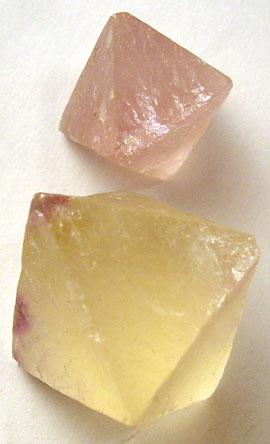
Fluorine is not found as an element on the earth becase it is too reactive. Several fluorides are found in the earth, though. When calcium phosphate is reacted with sulfuric acid to make phosphoric acid, some hydrofluoric acid is produced. Also, fluorite can be reacted with sulfuric acid to make hydrofluoric acid. Fluorite naturally occurs on the earths’ crust in rocks, coal and clay.
Preparation
Fluorine is normally made by electrolysis. Hydrogen fluoride is dissolved in potassium fluoride. This mixture is melted and an electric current is passed through it. This is electrolysis. Hydrogen is produced at one side and fluorine at the other side. If the sides are not separated, the cell may explode.
Someone made fluorine in 1986 without using electrolysis. They produced manganese(IV) fluoride by using various chemical compounds, which released fluorine gas.
Uses
Fluorine is used to enrich uranium for nuclear weapons. It is also used to make sulfur hexafluoride. Sulfur hexafluoride is used to propel stuff out of an aerosol can. It is also used to make integrated circuits. Fluorine compounds have many uses. Fluoride ions are in fluorine compounds. Fluoride ions can be in toothpaste. Some are used in nonstick coatings. Freons contain fluorine.
Safety
Fluorine as an element is extremely reactive and toxic. It can react with almost everything, even glass. Fluorine is also poisonous.
Fluoride ions are somewhat toxic. If too much toothpaste containing fluoride is eaten then fluoride poisoning may occur. Fluoride is not reactive, though.
Written for younger readers
Fluorine, in simpler words
This version comes from Wikijunior, a set of books written for children aged 8 to 11. It is shorter and uses plainer language than the article above.
From Wikijunior: The Elements
NOTOC
Fluorine is usually a pale yellow gas. It has a pungent odor. It is far too dangerous to taste or feel.
Henri Moissan isolated pure fluorine in 1886. Many other scientists had unsuccessfully tried to isolate fluorine from hydrogen fluoride. In some cases they accidentally killed themselves by exposure to dangerous compounds. Moissan’s successful method relied on electrolysis — using an electric voltage to convert fluoride ions to fluorine gas. He won the Nobel Prize in 1906 and died the next year at the age of 54.
Fluorine gets its name from the Latin word fluere, which means “to flow”. Fluorspar ores were used as fluxes, which help ores to flow during smelting. Fluorine was later found to be a present in fluorspar. Did You Know?
- Fluorine is the most reactive element.
- Fluorine is the 13th most abundant element in the earth’s crust.
- Fluorspar ores can look either like emeralds or amethyst. Fluorine’s atomic number is 9
Fluorine is so reactive that it is not found in its elemental state. It is always found bonded to a different element. Some common minerals from which fluorine can be extracted include fluoroapatite, cryolite, and hornblende. There are currently no working mines in the US that produce fluoride ores. The last one closed in 1995, so fluorine is imported into the US.
Fluorine is not used much in the elemental form because it is so reactive. One use is in rocket fuel, where elemental fluorine is used in place of oxygen to help fuels burn.
Fluoride, the ionic form of Fluorine, is put in toothpaste and sometimes in water to help prevent cavities in the teeth.
Teflon, the non stick material found in frying pans, is a polymer that is 75% fluorine by weight. The scientific name for Teflon is polytetrafluoroethene, or PTFE. This is a chain of carbon atoms with two fluorine atoms attached to each carbon atom.
Fluorine is used in hydrofluoric acid in industry. The acid is able to dissolve silicate-containing compounds such as glass and computer chips. Because of this it cannot be stored for a long time in glass containers. The acid is used for cleaning, purification, and etching.
Fluorine can react with uranium to produce uranium hexafluoride. This compound is then centrifuged to separate out the different isotopes of uranium. This is how enriched uranium is obtained.
A major use of fluorine was in the production of CFCs, the chemicals that lead to the ozone hole. These were once common in aerosols and cooling fluids, but have been banned in developed countries in accordance with the Montreal Protocol.
One of the more interesting compounds of fluorine is sulfur hexafluoride, a gas that, unlike most fluorine compounds, is safe to handle. It was long used as a propellant, a gas used to drive others in a spray. Unfortunately it is a strong greenhouse gas and is very limited in its possible uses.
Fluorine gas is extremely poisonous. It can cause chemical burns on the skin. Hydrofluoric acid is very dangerous. It causes burns to the skin like sulfuric acid and other acids do, and is also easily absorbed into the skin. Once inside the body it causes damage to tissues and organs. Exposure of less than 2% of the body to concentrated hydrofluoric acid can be fatal. The small levels of fluoride ions in toothpaste and treated water are not dangerous, although slightly higher levels can cause unsightly (and permanent) mottling of the teeth.
Webelements
The Discovery of Fluorine and Fluoride
Fluorine
Henri Moissan
Where this page comes from
The article above is adapted from “Fluorine” on Simple English Wikipedia, by its contributors. We removed reference markers, navigation boxes and tables, expanded measurement templates into readable numbers, and kept the prose otherwise intact. The simpler version is adapted from Wikijunior on Wikibooks.
Both sources are published under CC BY-SA 4.0, so this page is published under the same licence. You may share and adapt it, including commercially, as long as you credit the original and keep the same licence.
Worksheets, answer keys and printable layouts elsewhere on K5Print are our own work and are not covered by this licence.