Lead
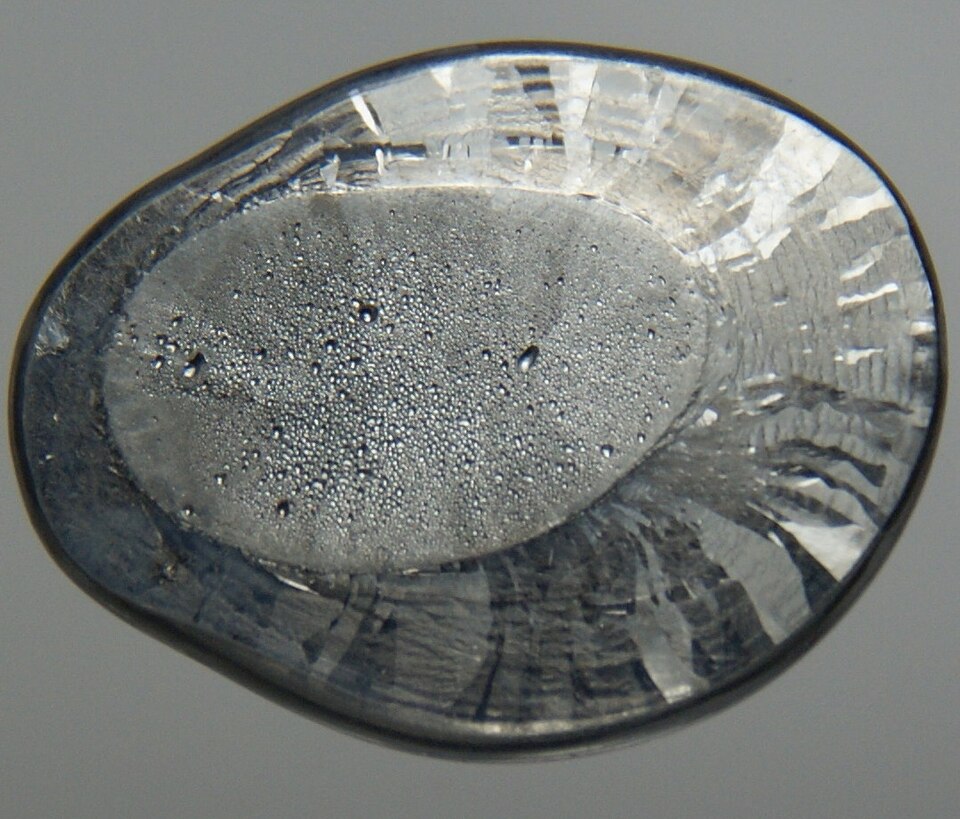

Lead (pronunciation: /’lɛd/) is a chemical element. Its chemical symbol is Pb, which comes from plumbum, the Latin word for lead. Its atomic number is 82, atomic mass is 207.2 and has a melting point of 327.8°C. It is a very poisonous and heavy metal, and is also the ending element to the stable elements, although the next element, bismuth, is so weakly radioactive that it can be considered stable for practical purposes.
Physical properties
Lead is a shiny, gray-blue poor metal. It gets tarnished easily to a dull gray color. It is soft and malleable. It is very shiny when it is melted. It is very heavy. It is very corrosion-resistant. It is made stronger by adding antimony or calcium. It can form an alloy with sodium. It is toxic to people and animals when swallowed.
Chemical properties
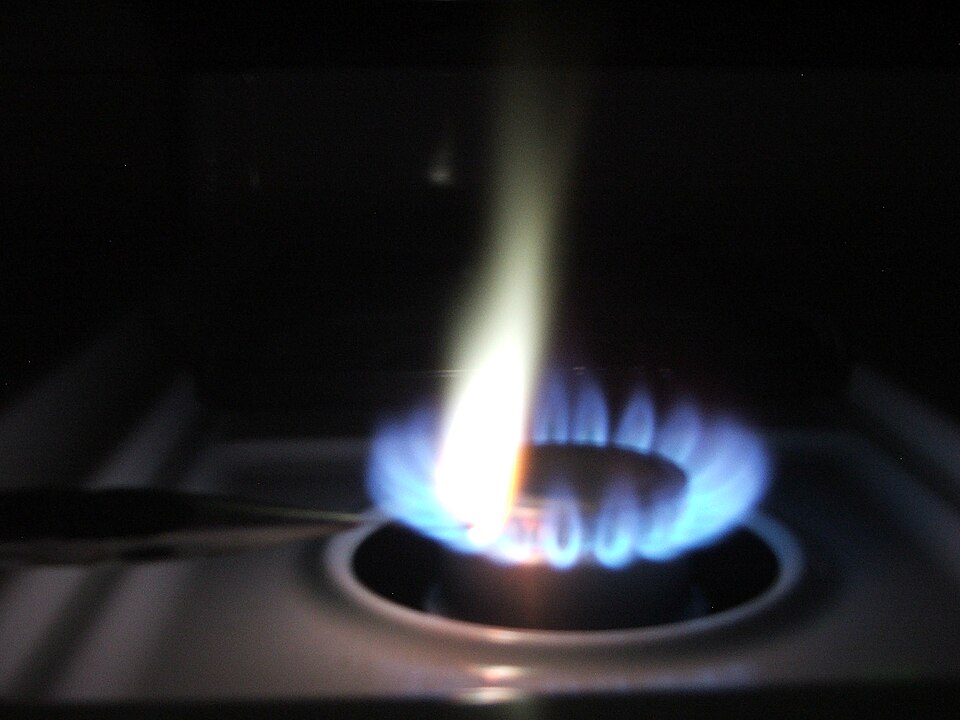
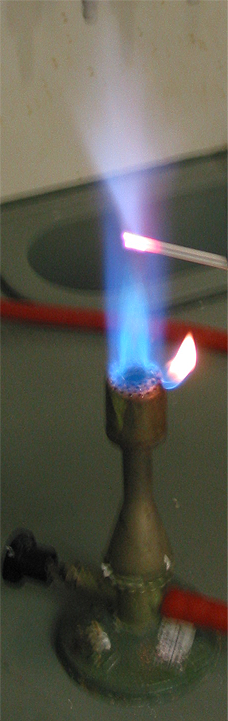
Lead burns in air with a grayish-white flame, making toxic fumes of lead(II) oxide. Only the surface is corroded by air. It dissolves in nitric acid to make lead(II) nitrate. It does not dissolve in sulfuric or hydrochloric acid. It reacts with sodium nitrate to make lead(II) oxide and sodium nitrite. It reacts with chlorine to make lead(II) chloride. Lead(II) oxide reacts with lead sulfide to make lead metal and sulfur dioxide.
Chemical compounds
Lead makes chemical compounds in two main oxidation states: +2 and +4. +2 compounds, also known as lead(II) compounds or plumbous compounds, are weak oxidizing agents. +4 compounds, also known as lead(IV) compounds or plumbic compounds, are strong oxidizing agents. Lead compounds are toxic just like the element. The lead halides do not dissolve in water. Lead(IV) oxide is the most common lead(IV) compound. It is a black solid. The lead oxides are all colored, while the other salts are white or colorless. Lead nitrate and lead(II) acetate are the soluble compounds of lead.
This state is more common than the +4 state. These are weak oxidizing agents. All but the oxides are colorless or white.
- Lead(II) acetate, colorless soluble
- Lead(II) arsenate, insoluble former pesticide
- Lead(II) bromide, insoluble
- Lead(II) carbonate, white, used as pigment
- Lead(II) chloride, insoluble
- Lead(II) nitrate, soluble, colorless
- Lead(II) oxide, red or yellow
- Lead(II) sulfate, white, found in lead acid batteries
- Lead(II) sulfide, black, common as mineral
Mixed oxidation state compounds contain lead in the +2 and +4 oxidation state.
- Lead(II,IV) oxide, red, oxidizing agent
These are less common. They are strong oxidizing agents.
- Lead(IV) acetate, oxidizing agent, colorless
- Lead(IV) oxide, dark brown, oxidizing agent
File:Lead(II) chloride.jpg|Lead(II) chloride File:Lead(II) nitrate 1.jpg|Lead(II) nitrate File:Lead dioxide.jpg|Lead(IV) oxide File:Red lead.jpg|Lead(II,IV) oxide File:Lead monoxide.jpg|Lead(II) oxide
Occurrence
File:Lead-34330.jpg|Lead found in the ground File:Galena.jpg|Galena Lead is found very rarely in the earth’s crust as a metal. Normally, lead is in the mineral galena. Galena is lead sulfide. Galena is the main lead ore.
History
Lead was used for thousands of years because it is easy to get from the ground and easy to shape and work with. The Romans used lead very commonly. They used it for pipes, drinking vessels, and fasteners.
Preparation
Lead is made from galena. Galena is made pure by froth flotation to get all the impurities out. Then the lead sulfide is roasted in a furnace to make lead(II) oxide. The lead(II) oxide is heated with coke to make liquid lead metal.
As an element
Lead is used in the ballast of sailboats. It is also used in weight belts for scuba diving. It is also used to make shotgun pellets and bullets for small arms. Some printing presses use lead type because it can be easily shaped. It can be used outside because it does not corrode in water.
Lead has been used to make pipes and water ducts, as it is easy to form and cast, and the parts made from lead are easy to fit, and clean water does not corrode lead. The names “plumbing” for waterworks, and “plumber” for a pipe fitter, come from the Latin name of lead, plumbum.
Most lead is used in lead acid batteries, though. The lead is oxidized, making electricity. Sheets of lead are used to block sound in some places. Lead is used in radiation shielding. Molten lead can be used as a coolant in nuclear reactors. It used to be mixed with tin to make the pipes in pipe organs. Different amounts of lead make different sounds. In addition, lead has found its usage in solder.
It is used in some solder. It is used in covering for wires that carry high voltage. Some tennis rackets have lead in them to make them heavier. It is used to balance wheels of cars, to make statues, and to make decorative looks in buildings.
As chemical compounds
Many lead compounds are used to make colored glazes in ceramics. Lead can be used in PVC pipes. Lead compounds are added to candles to make them burn better. Lead glass has lead(II) oxide in it. Lead compounds are still used as pigments in some places. Lead compounds were added to gasoline, but are now outlawed. Some lead compounds are semiconductors and are used in photodetectors.
Old uses
Lead was used in many red, yellow, and white pigments in paints. Lead was also used in pesticides. Lead used to be used in pipes carrying water, but now it is not because lead can leach into the water.
Safety
Although it can be safely touched, exposure to lead should be avoided – it is very toxic to humans and other animals when swallowed, and its use is restricted in many countries.
If someone is exposed to lead for a long time, it ruins their kidneys and gives them abdominal pains. Lead also ruins the nervous system. Lead paint was being eaten by children and they were getting lead poisoning.
The best way to understand lead and its properties is to read its MSDS.
Written for younger readers
Lead, in simpler words
This version comes from Wikijunior, a set of books written for children aged 8 to 11. It is shorter and uses plainer language than the article above.
From Wikijunior: The Elements
NOTOC
Lead is a soft, heavy metal. When freshly cut it is bright silver in color, but it tarnishes in the air to a dull grey. It is a soft and malleable metal. It does not have an odor.
Lead has been used for at least 7000 years. There have been lead pipes from Roman times found today.
In Latin, lead was called plumbum; in Rome, lead was used for plumbing. This is why the symbol for lead is Pb. The English word lead comes from the German word lot, which means “weight”. Lead is very heavy and is commonly used in weights.
Lead is usually found in ores, like galena (which is lead sulfide, PbS.) Did You Know?
- Pencil “lead” has never been made out of lead; instead, it is made out of graphite, a form of carbon.
- Lead was associated with the planet Saturn.
- The word “plumbing” comes from the Latin word for lead, plumbum.
Lead has high density (it is very heavy for its size) and fairly inexpensive, so it is commonly used to make weights such as fishing sinkers and dumbbells. It is also used to make bullets and other ammunition. Its high density also makes lead an effective shield to block radiation. For example, before taking dental x-rays the technician will put a lead apron over the patient’s body to prevent unnecessary radiation exposure.
Because lead melts at a fairly low temperature, it is mixed with other metals to make solder, used to join pipes or electrical wires. But lead solder is being replaced with other types of solder that are safer and better for the environment (such as silver solder, which contains silver instead of lead, or brazing, which uses pure copper metal.)
Lead was used in some paints to make it dry faster and last longer. However, the dust that naturally comes off of painted walls is toxic when it contains lead, so leaded paint is no longer used for painting houses (but older buildings with leaded paint pose a risk).
Lead used to be added to gasoline to help boost its octane and prevent engine knocking. But this has been phased out in most countries because it ruins catalytic converters (an important part of a car’s smog-reduction system), and to avoid environmental and health problems.
Lead-acid batteries are the oldest type of rechargeable battery, and are still in common use in cars, boats, and electric vehicles such as golf carts. They are heavier than most other batteries, but can supply high current and are relatively inexpensive.
Lead is also used in products from China. In 2007, concern was raised with consumers when products were recalled; and even today lead can get into consumer products.
Lead compounds are poisonous, as lead binds with other atoms in your body rather than iron and other metals. This leads to weird cell functions that can lead to illness and, if untreated, death. Lead poisoning can be called saturnism, plumbism, or painter’s colic.
Even at levels not deadly, lead causes unwelcome changes in behavior, including learning disabilities and loss of impulse control.
Where this page comes from
The article above is adapted from “Lead” on Simple English Wikipedia, by its contributors. We removed reference markers, navigation boxes and tables, expanded measurement templates into readable numbers, and kept the prose otherwise intact. The simpler version is adapted from Wikijunior on Wikibooks.
Both sources are published under CC BY-SA 4.0, so this page is published under the same licence. You may share and adapt it, including commercially, as long as you credit the original and keep the same licence.
Worksheets, answer keys and printable layouts elsewhere on K5Print are our own work and are not covered by this licence.