Neodymium
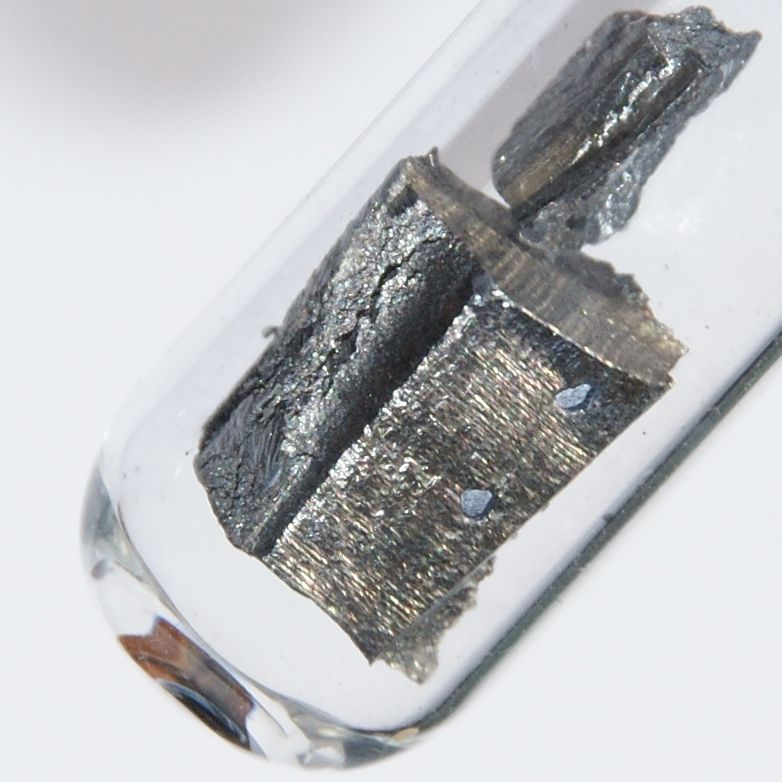

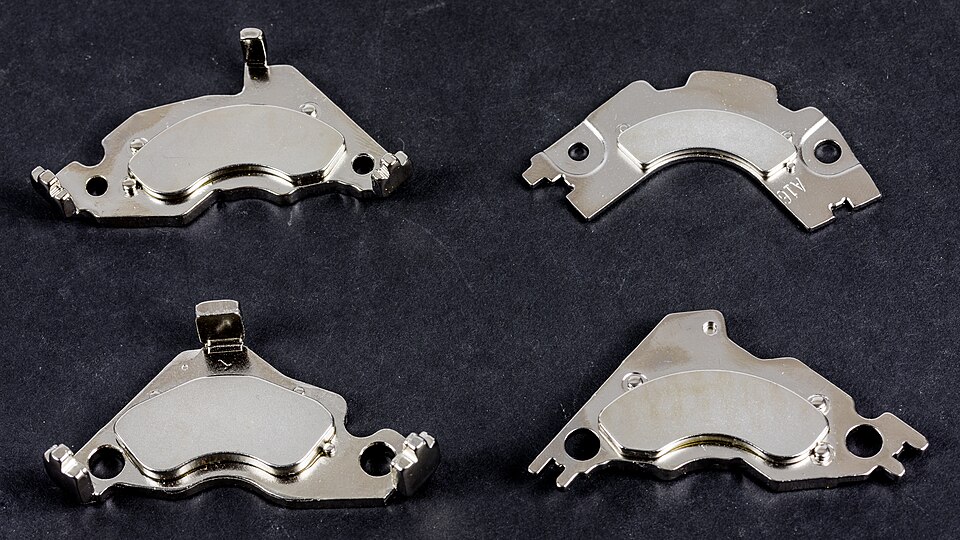
Neodymium is a chemical element that has the symbol Nd on the periodic table. It has the atomic number 60 which means it has 60 protons in an atom. Neodymium can be combined with other elements like iron and boron to create the very strong neodymium magnet, these magnets can lift up to 1000 times their own weight. Neodymium is a metal that forms a coating of oxide around itself when it is placed in air. It is usually used as neodymium magnets for hard disk drives.
Properties
Though neodymium is called a rare earth metal, it is quite common, as common as nickel, cobalt or copper. Like every metal, neodymium is very shiny. It is a solid that melts at 1,024 degrees Celsius, or 1,875 degrees Fahrenheit. Neodymium is in a group of other elements called lanthanides, which are like each other in how they behave. When neodymium is dropped into water, it slowly changes into neodymium hydroxide, if the water or the neodymium itself is hot enough, the change is much faster, and the neodymium may explode. In the air, if the neodymium is hot enough, it can catch fire. Like every other metal, neodymium usually wants to get rid of its electrons, so the compounds it forms are usually with elements that want electrons, as oxygen does.
Uses
The neodymium magnets used to make hard disk drives do not weaken over time: they are permanent magnets. They can also be used in microphones or speakers. Electric guitars may use these magnets inside their pickups.
Estimates of neodymium that can be mined
“China is the largest neodymium supplier and exporter in the world—dominating the neodymium industrial chain. The global neodymium reserve is estimated to be 11.6 million tons … — a 13.6 million tons of neodymium oxide equivalent”, according to media.
Written for younger readers
Neodymium, in simpler words
This version comes from Wikijunior, a set of books written for children aged 8 to 11. It is shorter and uses plainer language than the article above.
From Wikijunior: The Elements
NOTOC
It has a color of yield pink and nitrate salts create from nitric acid.
The name “Neodymium” came from the Greek words “neos” and “didymos” which mean new and twin. Combined together is “new twin”.
In 1855, the element Neodymium was found by Carl F. Auer von Welsbach, an Austrian chemist.
Neodymium have several important uses. It can be a kind of laser called neodymium yttrium aluminum garnet laser (Nd:YAG). This laser is used for treating bronchial (part of the lungs) cancer, eye disorders. Another use is make very strong magnets, the strongest magnet Neodymium-iron-boron (NIB) is also made from the element Neodymium. These magnets are used in audio speakers. Did You Know?
- Neodymium is in group 6 in the Rare-Earth elements part and it have 60 protons, 84 neutrons.
- The melting point of Neodymium is 1024 C and the boiling point is 3074 C. Neodymium is also for light devices. There is also a company that made a lightbulb called “Enrich” bulb. The company put small amount of Neodymium into glass of their bulb to produce yellowish and greenish colors. The light from Enrich bulb is highly bright white light.
The last use of Neodymium is coloring glass. As I mentioned above, a small amount of Neodymium added to the lightbulb will gives it a greenish color, this can also be applied for glass. Some of Tiffany lamps use Neodymium in the lampshades.
It’s dangerous when you hold a big one but if it’s small you can hold it with your hand
Where this page comes from
The article above is adapted from “Neodymium” on Simple English Wikipedia, by its contributors. We removed reference markers, navigation boxes and tables, expanded measurement templates into readable numbers, and kept the prose otherwise intact. The simpler version is adapted from Wikijunior on Wikibooks.
Both sources are published under CC BY-SA 4.0, so this page is published under the same licence. You may share and adapt it, including commercially, as long as you credit the original and keep the same licence.
Worksheets, answer keys and printable layouts elsewhere on K5Print are our own work and are not covered by this licence.