Nickel
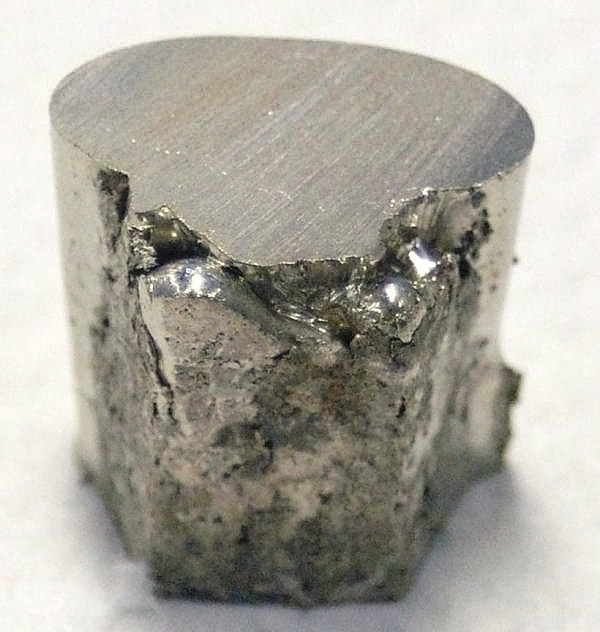

Nickel (chemical symbol Ni) is an element. It has an atomic number of 28 and an atomic mass of about 58.69amu. It has 28 protons. It is a transition metal.
Physical properties
Nickel is a silver-white metal. It is easily polished (made shiny). It is magnetic. It is not magnetic when heated above 355 degrees Celsius (671 °F). It is not soft like many other metals. It can be stretched into wires easily. It is not radioactive.
Chemical properties
Nickel is not a reactive metal. It dissolves slowly in acids. It does not rust like iron. It makes a thin coating of nickel(II) oxide which stops more corrosion. Aluminium does a similar thing.
Chemical compounds
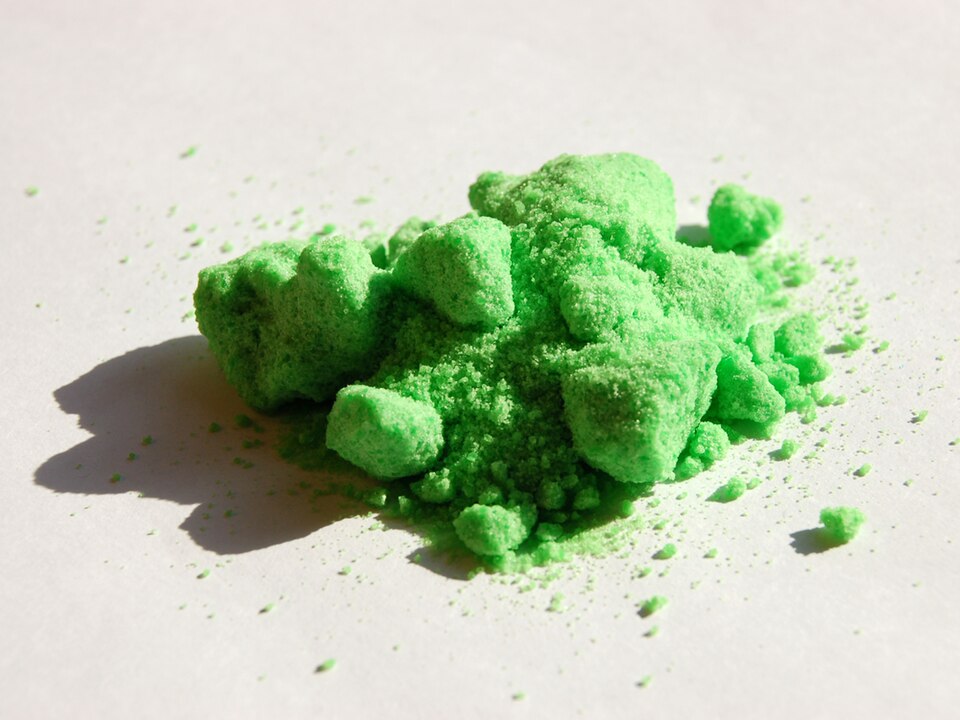
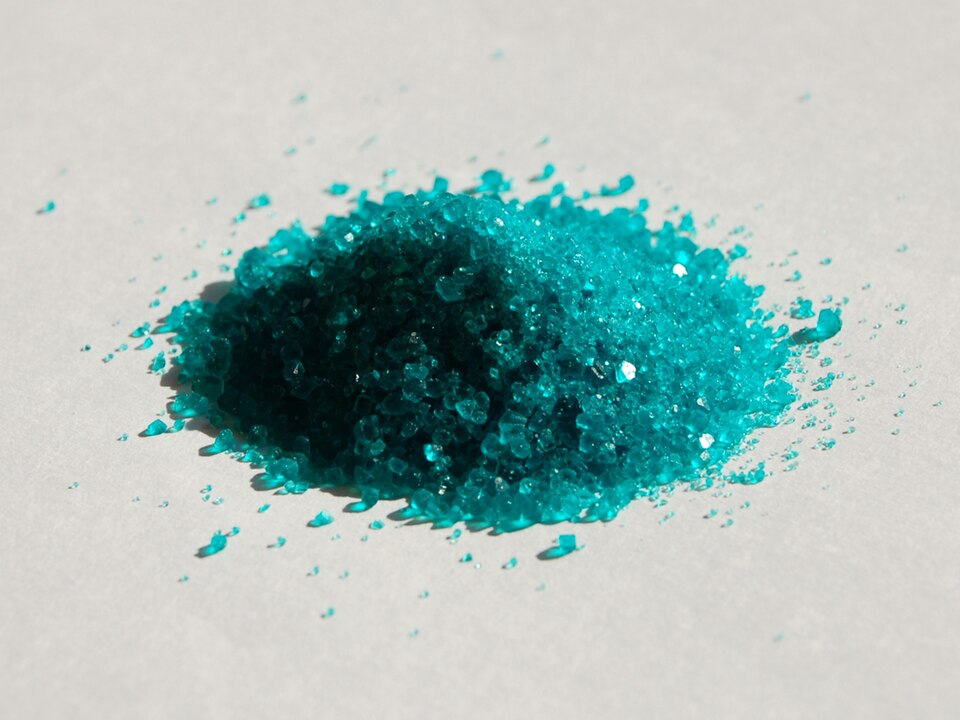
Nickel is found in two oxidation states: +2, nickel(II); and +3, nickel(III). Nickel(II) is more common. Nickel in its +2 oxidation state is green. Nickel(II) chloride is a common +2 oxidation state compound. Nickel(II) oxide is normally dark green, but sometimes it is gray. This is because some of the nickel is in the +3 oxidation state (nickel(III). Nickel(III) compounds are oxidizing agents. They also are grayish. Nickel compounds can be green, blue, gray, or black.
Nickel(II) compounds are not highly reactive. They are normally green or blue. They are toxic and irritate skin. Some of them are carcinogens.
- Nickel(II) carbonate, green
- Nickel(II) chloride, greenish
- Nickel(II) hydroxide, light green
- Nickel(II) nitrate, greenish
- Nickel(II) oxide, gray or light green
- Nickel(II) sulfate, blue-green
Nickel(III) compounds are black or gray.
- Nickel(III) oxide
Isotopes
The isotopes of nickel range in atomic weight from 48 Ni to 78 Ni. Nickel that is found in nature is made up of five stable isotopes; 58 Ni, 60 Ni, 61 Ni, 62 Ni and 64 Ni.
At least 26 radioisotopes of nickel have been found. The most stable radioisotope is 59 Ni which has a half-life of 76,000 years. Nickel also has one meta state.
History
Nickel was found when an ore that looked like copper did not make copper metal. Later it was found that the ore actually had a new metal, called nickel. Nickel was isolated as a metal and classified as a chemical element by Axel Fredrik Cronstedt in 1751. At first, the copper colored nickel ore was the only source. Later, it was made as a byproduct of cobalt blue making.
Occurrence
Nickel is normally found as a mineral, and not as a metal in the ground. Sometimes meteorites have nickel and iron metal in them. The most common nickel mineral is pentlandite. Most of the nickel on Earth is thought to be in the Earth’s Earth’s outer and inner cores. There are sulfidic and lateritic nickel ores. Philippines mines the most nickel. Other major mining countries are Russia, Canada and Australia. All the older rocks on Earth have some rare metals. They are got by mining where the ores are most plentiful.
Preparation
Nickel is found in both laterite and sulfide ores. They are heated to melt them and concentrate them. They are also separated by oils. Nickel is made from its sulfide by heating it in air. This oxidizes the sulfide to sulfur dioxide, leaving liquid nickel behind. This nickel is not yet pure and not ready for use.
Pure nickel with a nickel content greater than 99% is made in an electrolytic process. In this process, the nickel is dissolved in bath of sulfuric acid. When the pure nickel sticks to cathodes hanging into the bath, the impurities remain in the sulfuric acid or at the bottom of the bath. These impurities are very interesting, as they can contain precious metals.
Production
Nickel is got by mining: the ore is roasted and reduced. This gives a metal of over 75% purity. In many stainless steel applications, 75% pure nickel is usable.
Uses
Sixty-eight percent of all nickel produced is used to make stainless steel. Nickel is also used in nichrome, a name for a nickel-chromium alloy, and other alloys. Nickel is used in magnets. Nickel is used in special expensive alloys called superalloys.
Nickel sulphate is used in rechargeable batteries. A lithium ion battery contains up to 15% of nickel while the lithium content is less than 1%. A nickel cadmium battery also uses nickel. Nickel compounds are also used to electroplate nickel on items. Nickel and some of its compounds are also used as a catalyst. Nickel is used in stainless steel. It is also used in some nonferrous alloys. It is used in electroplating.
Nickel is used to make many products like stainless steel, alnico magnet, coinage, rechargeable batteries, electric guitar strings, microphone capsules and plating on plumbing fixtures. It is used as a green tint in glass.
Nickel foam is used in gas diffusion electrodes for alkaline fuel cells.
Nickel and its alloys are used as catalysts for hydrogenation reactions. Nickel is used as a binder in the cemented tungsten carbide.
63 Ni is used in krytron devices as a beta particle emitter to make ionization by the keep-alive electrode more reliable. Raney nickel is used for hydrogenation of unsaturated oils to make margarine.
Safety
Nickel can irritate skin. That is why jewelry that releases nickel ions is bad for some people. Some nickel salts are carcinogens. Nickel is not as toxic as other metals such as mercury but it is still toxic.
Written for younger readers
Nickel, in simpler words
This version comes from Wikijunior, a set of books written for children aged 8 to 11. It is shorter and uses plainer language than the article above.
From Wikijunior: The Elements
NOTOC
Nickel is a silvery‑white metal. Polishing creates a bright, metallic luster, but after being exposed to air it appears slightly duller and grayer. Air creates a thin protective oxide layer.
Pure metallic nickel feels cool, smooth, and solid to the touch. It feels cool because it draws warmth from the skin. Its surface is typically hard, polished, and glass‑like, without texture or grain. Nickel is hard, strong, and resists corrosion.
Nickel metal would probably seem to have a mild metallic (sharp, tangy) taste, but this sensation comes from reactions in your mouth—not from any inherent flavor of nickel.
Nickel metal is completely odorless. It has no intrinsic smell. Elemental nickel produces no detectable scent for the human nose. Any “metallic” smell people associate with objects containing nickel comes from reactions between skin oils and the metal surface. These reactions create organic compounds that do have an odor.
In 1751, a Swedish mineralogist and chemist discovered nickel. His name was Axel Fredrik Cronstedt. He found it while studying the ore kupfernickel (niccolite). He was trying to extract copper from the kupfernickel. Instead, he found a silvery-white metal different from any known element. Miners always believed kupfernickel was simply an unusual copper ore. Cronstedt found that no amount of smelting would produce copper from it. Through careful analysis and observation, he became convinced he had discovered a previously unknown metal.
Nickel was named after a mischievous German sprite, Nickel, after miners blamed him for being unable to extract any copper from what they thought was copper ore, but which actually contained nickel Did You Know?
- US nickel coins are only 25% nickel; the other 75% is copper.
- Some hooks have a layer of nickel so that they oxidize in a slower rate.
Nickel deposits occur deep within Earth’s mantle. Most nickel deposits are concentrated in the core. Smaller amounts are found in the crust, especially in ancient volcanic regions. Near-surface deposits often appear in tropical climates where long-term weathering has occurred. Beyond Earth, there are many iron–nickel meteorites, evidence of nickel’s abundance in the solar system.
Nickel is mined from igneous rocks such as peridotite and gabbro.
The world’s largest nickel mines are concentrated in a few key regions: Indonesia, the Philippines, and Russia’s Norilsk region. Major mines operate in Madagascar, Canada, and Australia.
Nickel is used mainly to make stainless steel and high‑performance alloys. These alloys are strong, resist corrosion, and withstand extreme heat. They are used to “plate” other metals giving them a shiny, durable finish.
Nickel plays an important role in rechargeable batteries, especially in lithium‑ion and nickel‑cadmium systems which power many modern electronics as well as electric and hybrid vehicles.
Everyday uses include kitchen equipment, medical instruments, cutlery, and bathroom fixtures, where nickel plating provides a durable, attractive, corrosion‑resistant finish .
In the United States, all circulating coins contain nickel as part of their alloy composition .
Nickel can be dangerous. Some people are allergic to nickel metal. It can cause allergic reactions. Contact with jewelry or watchbands can cause skin irritation and rashes.
Long-term exposure to some nickel compounds can harm the skin, eyes, and lungs. Airborne nickel dust or fumes in industrial settings may cause respiratory problems and increase cancer risk.
Where this page comes from
The article above is adapted from “Nickel” on Simple English Wikipedia, by its contributors. We removed reference markers, navigation boxes and tables, expanded measurement templates into readable numbers, and kept the prose otherwise intact. The simpler version is adapted from Wikijunior on Wikibooks.
Both sources are published under CC BY-SA 4.0, so this page is published under the same licence. You may share and adapt it, including commercially, as long as you credit the original and keep the same licence.
Worksheets, answer keys and printable layouts elsewhere on K5Print are our own work and are not covered by this licence.