Nitrogen
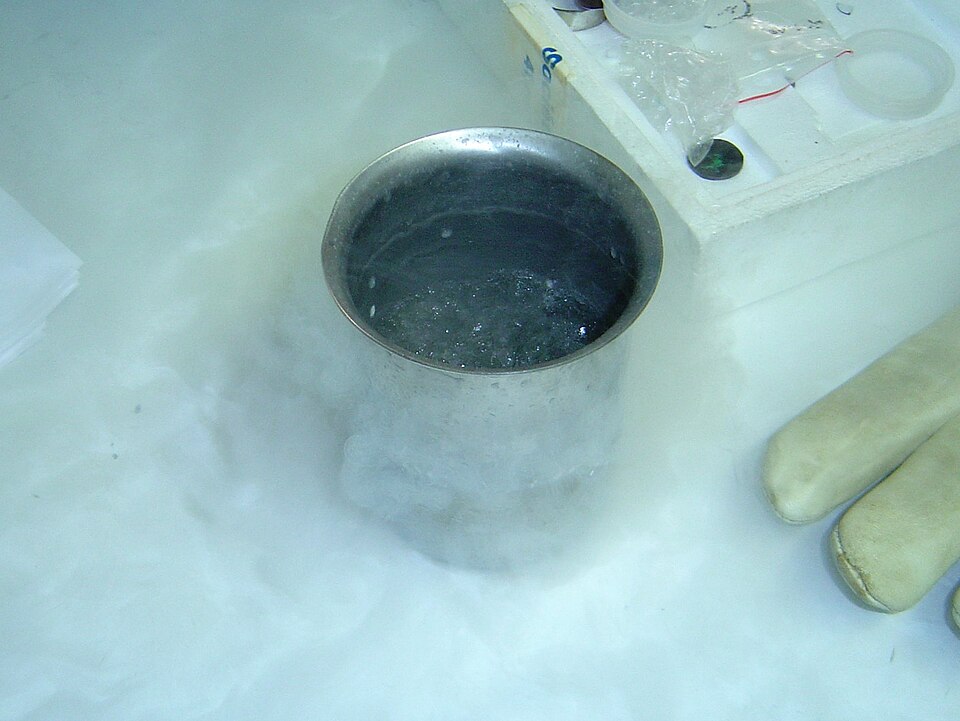

Nitrogen is a nonmetal chemical element. The atmosphere contains more than 78 percent of nitrogen. It has the chemical symbol N and atomic number 7. Its stable inside typically contains 14 nucleons (7 protons and 7 neutrons). It has 5 electrons in its outer shell.
Properties
Nitrogen is a colorless odorless gas at normal temperature. It is normally attached to another nitrogen atom, making a nitrogen molecule (N 2 ). This bond is very strong. That is why many explosives contain nitrogen. The bond is broken when the explosive is made. When it explodes the bond reforms, releasing a lot of energy.
It turns into a liquid at -195.8°C and turns into a solid at -210°C. If it is compressed, it can be turned into a liquid without making it cold.
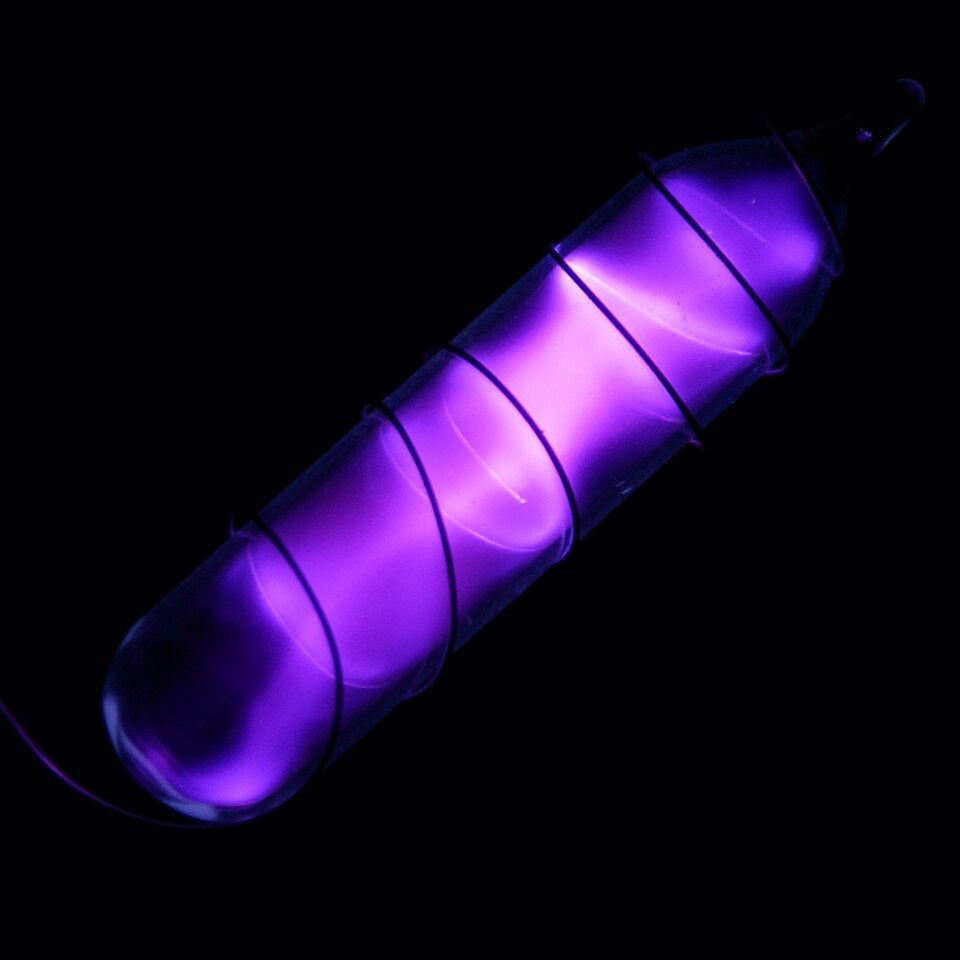
It usually does not combine with other atoms because its strong bond prevents it from reacting. Lithium is one of the few chemical elements that react with nitrogen without being heated. Magnesium can burn in nitrogen. Nitrogen also makes blue electric sparks. The blue color is caused by the atoms being excited. When they get normal again, they release light. When nitrogen is excited, it reacts with many things that it does not normally react with.
Compounds
Many chemical compounds that are important for industrial purposes contain nitrogen. These include ammonia, nitric acid, nitrates and cyanides. Nitrogen comes in several oxidation states; -3, -2, - 1 / 3 , +1, +3, +4, and +5. Each of those oxidation states has its set of compounds.
Compounds in the -3 oxidation state are weak reducing agents. These include ammonia, ammonium, amide and nitrides. Amino acids and proteins contain nitrogen in this oxidation state. Hydrazine, a compound in the -2 oxidation state, is a strong reducing agent. Azides contain nitrogen in the - 1 / 3 oxidation state. They are extremely powerful reducing agents, and most are very toxic.
Nitrous oxide contains nitrogen in the +1 oxidation state. It is used as an anesthetic. Compounds containing nitrogen in the +2 oxidation state, such as nitric oxide, are reducing agents. +3 oxidation state compounds are strong oxidizing agents and weak reducing agents. Nitrites are the most common +3 compounds. Compounds in the +4 oxidation state are strong oxidizing agents. They include nitrogen dioxide and dinitrogen tetroxide.
Compounds containing nitrogen in the +5 oxidation state are strong oxidizing agents. They are one of the more common groups of nitrogen compounds. They include nitric acid and dinitrogen pentoxide. They also include nitrates, which are used in explosives such as dynamite, nitroglycerin and trinitrotoluene.
Occurrence and preparation
Air is made up of about 78% nitrogen and about 20.95% oxygen, < 1% argon, and traces of other gasses such as carbon dioxide, and water vapor, among others. It is also in a few nitrates in the ground. Ammonium minerals are rare. Nitrogen is in proteins.
Pure liquid nitrogen can be made by cooling air. The nitrogen turns into a liquid at a different temperature than the oxygen. It can also be made by heating certain chemical compounds, such as sodium azide.
Uses
Nitrogen as an element is used to prevent things from reacting with the oxygen in the air. It can be used to fill crisp bags and incandescent bulbs. It is also used to fill some tires. It can be used to make electric components like transistors. Liquid nitrogen can be used to freeze things.
Nitrogen compounds have many uses, such as anesthetics (nitrous oxide), explosives (dynamite), cleaners (ammonia), and meat (protein), and planes (fuel).
Oil companies use high pressure nitrogen to help force crude oil to the surface.
Nitrogen is also used as a way to relieve body aches. It contributes to the torn bones in your body and helps.
In at least one country (as of the 2020s), Nitrogen gas is used for execution of a person, when the justice system orders that person to be killed.
History
Nitrogen was discovered by Daniel Rutherford in 1772, who called it noxious gas or fixed gas. They discovered that part of air did not burn. It was found that animals died in it. It was known as “azote”. Many nitrogen compounds also contain the “azide” or “azine” letters, such as hydrazine.
In 1910, Lord Rayleigh found out that when a spark was passed through nitrogen, it made a reactive form of nitrogen. This nitrogen reacted with many metals and compounds.
Written for younger readers
Nitrogen, in simpler words
This version comes from Wikijunior, a set of books written for children aged 8 to 11. It is shorter and uses plainer language than the article above.
From Wikijunior: The Elements
NOTOC
Nitrogen is a colorless, odorless, and tasteless gas.
Daniel Rutherford, a Scottish physicist, discovered Nitrogen in 1772.
Did You Know?
- Nitrogen is the most common element in the atmosphere, making up nearly 80% of it. (The rest is mainly oxygen and argon.)
- Nitrogen is required for all life on Earth, because DNA, RNA, and proteins all contain nitrogen.
Nitrogen’s name comes from nitrogenium a combination of words of Latin and Greek that means “native soda forming”.
Nitrogen is the world’s fifth abundant element, making up 78% of the Earth’s atmosphere. Nitrogen is found primarily in the atmosphere and in living things. The nitrogen cycle is the name of the pathway that describes the passage of nitrogen and nitrogen-containing compounds as they are recycled through molecules in earth’s atmosphere, soil, plants and animals, and finally back into the atmosphere.
Nitrogen is required by all living things to make up molecules like proteins and DNA.
Nitrogen is in fertilizers and helps plants grow.
“Laughing gas” contains nitrous oxide (N 2 O) and is used as an anaesthetic.
Nitrogen is not dangerous in most circumstances. Pure nitrogen cannot be breathed; people and other animals need oxygen. Liquid nitrogen is very cold, so it can cause frostbite very rapidly. Some compounds of nitrogen, like the strong acid nitric acid and explosives (among them nitroglycerin, which is the active ingredient in dynamite) are very dangerous.
The bends
The bends is a medical condition that is caused by rapid decompression of the body. As a diver dives deep underwater, nitrogen becomes dissolved in the bloodstream due to the pressure of the water. However, if the diver moves to the surface too quickly, there will be a rapid decrease in pressure. This will cause the nitrogen in the bloodstream to form bubbles in the bloodstream, which is potentially deadly.
Where this page comes from
The article above is adapted from “Nitrogen” on Simple English Wikipedia, by its contributors. We removed reference markers, navigation boxes and tables, expanded measurement templates into readable numbers, and kept the prose otherwise intact. The simpler version is adapted from Wikijunior on Wikibooks.
Both sources are published under CC BY-SA 4.0, so this page is published under the same licence. You may share and adapt it, including commercially, as long as you credit the original and keep the same licence.
Worksheets, answer keys and printable layouts elsewhere on K5Print are our own work and are not covered by this licence.