Particle theory
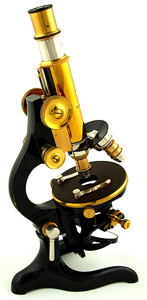

The particle theory is a theory that scientists have proposed. It suggests the following points:
- Matter is made of particles;
- Particles are extremely small, and current scientific instruments cannot see them;
- Different kinds of particles have different sizes;
- There must be gaps between particles
- Particles are always in motion.
Spaces between particles
There are spaces between particles. Imagine you put pebbles into a measuring cylinder. The reading is 200mL. Then you get 200mL of sand, and mix it in. The result is not 400mL, as there are spaces between the pebbles, and the sand can fill them up.
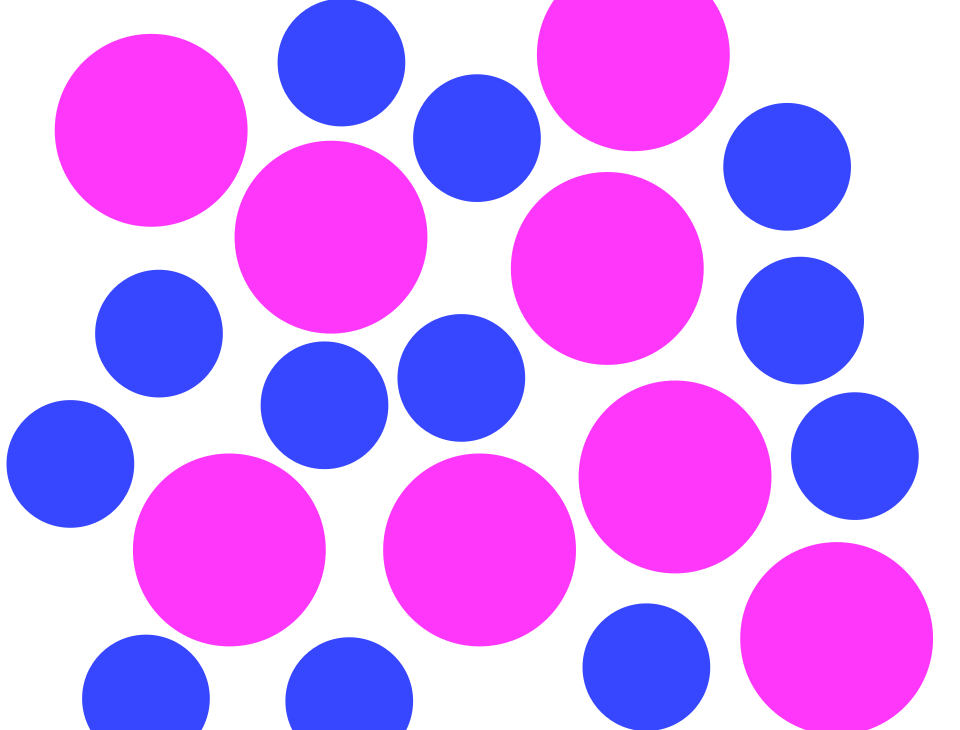
So, if you mix equal volumes of alcohol and water, the result is not twice the volume of alcohol or water, but slightly less. See the diagram on the right for what the particles look like. Or, if you put sugar into coffee, the coffee level does not rise up the same volume as the sugar. This is because there are spaces between particles.
Particles always moving
Particles are always moving, although they do move differently - this will be explained in the states of matter chapter later on. For example, when water is boiled, the ‘steam’, which are actually tiny water particles, cannot stay in one place. More about this will be discussed in the next chapter, which is about diffusion.
Quiz
- Which of the following statements is true?
- Particles in solids are often stationary. (Stationary means not moving.)
- Particles can only be seen with electronic microscopes.
- Heat is not made of particles.
- The size of alcohol and water particles are the same.
- Name the rule that is not used above, and give an example of it.
Answers:
- 3
- There are spaces between particles. When equal amounts of water and alcohol are mixed together, the result is not the same as the sum of the two initial liquids.
Written for younger readers
Particle theory, in simpler words
This version comes from Wikijunior, a set of books written for children aged 8 to 11. It is shorter and uses plainer language than the article above.
From Wikijunior: Particles
The particle theory is a theory that scientists have proposed. It suggests the following points:
- Matter is made of particles;
- Particles are extremely small, and current scientific instruments cannot see them;
- Different kinds of particles have different sizes;
- There must be gaps between particles
- Particles are always in motion.
There are spaces between particles. Imagine you put pebbles into a measuring cylinder. The reading is 200mL. Then you get 200mL of sand, and mix it in. The result is not 400mL, as there are spaces between the pebbles, and the sand can fill them up.
So, if you mix equal volumes of alcohol and water, the result is not twice the volume of alcohol or water, but slightly less. See the diagram on the right for what the particles look like. Or, if you put sugar into coffee, the coffee level does not rise up the same volume as the sugar. This is because there are spaces between particles.
Particles are always moving, although they do move differently - this will be explained in the states of matter chapter later on. For example, when water is boiled, the ‘steam’, which are actually tiny water particles, cannot stay in one place. More about this will be discussed in the next chapter, which is about diffusion.
- Which of the following statements is true?
- Particles in solids are often stationary. (Stationary means not moving.)
- Particles can only be seen with electronic microscopes.
- Heat is not made of particles.
- The size of alcohol and water particles are the same.
- Name the rule that is not used above, and give an example of it.
Answers:
- 3
- There are spaces between particles. When equal amounts of water and alcohol are mixed together, the result is not the same as the sum of the two initial liquids.
Where this page comes from
The article above is adapted from “Particle theory” on Simple English Wikipedia, by its contributors. We removed reference markers, navigation boxes and tables, expanded measurement templates into readable numbers, and kept the prose otherwise intact. The simpler version is adapted from Wikijunior on Wikibooks.
Both sources are published under CC BY-SA 4.0, so this page is published under the same licence. You may share and adapt it, including commercially, as long as you credit the original and keep the same licence.
Worksheets, answer keys and printable layouts elsewhere on K5Print are our own work and are not covered by this licence.