Phosgene
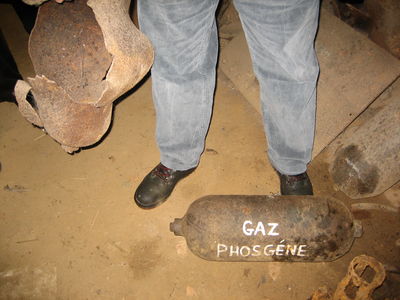

Phosgene is the chemical compound with the formula COCl 2 . Phosgene gas is colorless and was used as a weapon during World War I. It caused most of the deaths related to poison gas during the war.
Today, phosgene is used for organic synthesis. Small amounts of phosgene are produced when certain compounds of chlorine and carbon burn or break down.
Uses
Today, most phosgene is an ingredient in plastics. Phosgene reacts with bisphenol A or similar chemicals (diols) to make polycarbonates. Polycarbonates are an important class of engineering thermoplastic. They can be found in lenses in eyeglasses.
Phosgene also reacts with amines to make isocyanates, especially toluene diioscyanate (TDI) and methylene diphenyl diisocyanate (MDI). These chemical compounds are used to make polyurethanes. These are a class of materials with many different uses, especially foams, fibers, and coatings.
Safety
Phosgene is a strong poison. As a gas, it is colorless. Humans cannot see phosgene gas until it reaches a concentration of 0.4 parts per million, which is four times the safe amount. Small amounts of phosgene gas smell like freshly cut hay, grass, or May Blossom.
Signs of phosgene exposure sometimes appear slowly. People at risk of exposure may wear badges to identify themselves.
Sodium bicarbonate can make spills of phosgene harmless. Spills of phosgene gas can be made harmless with a special liquid spray.
Action
Phosgene damages the proteins in the pulmonary sac of the lungs, where oxygen passes into the bloodstream. This makes it hard for the blood and air to exchange oxygen and carbon. This makes breathing very hard.


Where this page comes from
The article above is adapted from “Phosgene” on Simple English Wikipedia, by its contributors. We removed reference markers, navigation boxes and tables, expanded measurement templates into readable numbers, and kept the prose otherwise intact.
Both sources are published under CC BY-SA 4.0, so this page is published under the same licence. You may share and adapt it, including commercially, as long as you credit the original and keep the same licence.
Worksheets, answer keys and printable layouts elsewhere on K5Print are our own work and are not covered by this licence.