Plastic
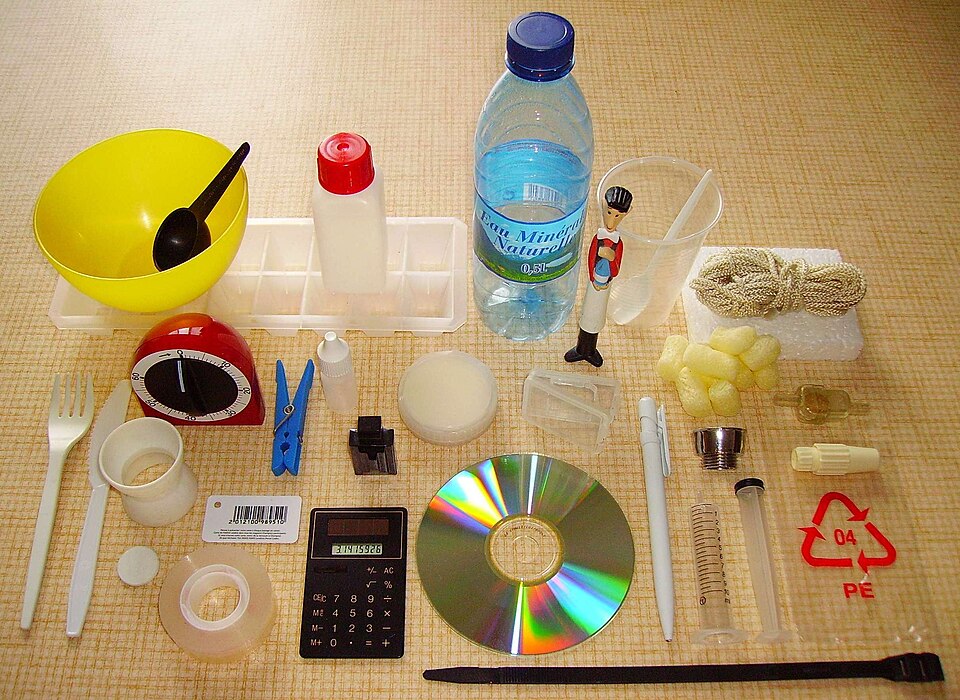

A plastic is a synthetic material that can change its shape easily. Many things are made of plastics, usually because making them to the right shape is easy.
Some plastics have other materials added to them, like glass, because they make the plastic stronger and stiffer.
Plastics are used to make many products, such as nylon or polyester clothing; toys; electronics; food containers; pipes; bags; parachutes; ropes; car parts; medical supplies; bulletproof glass; and body armor.
Types
There are many types of plastic. Some can be shaped only when they are freshly made; then they become hard. Others are thermoplastic and can be softened by heating them. These plastics can be used for 3D printing, because the plastic will become soft enough to form into different shapes, and then become hard again when it cools down.
History
For many years, people experimented with plastics based on natural polymers like cellulose. In 1855 Alexander Parkes (1813-1890), an English inventor, created an early form of plastic called “Parkesine.” It was hard but flexible and transparent.
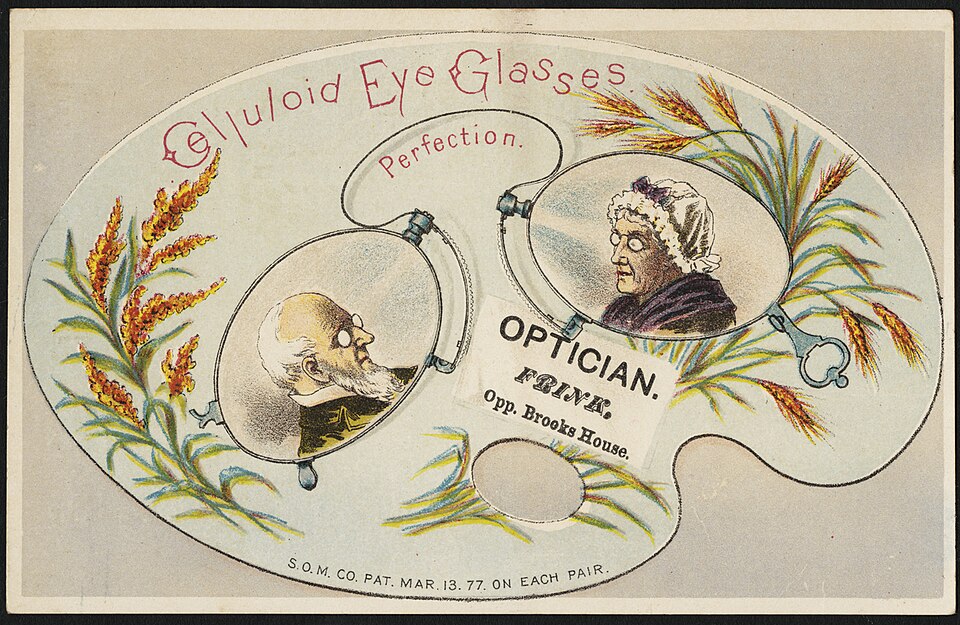
In 1869, John Wesley Hyatt invented the first synthetic (man-made) polymer as a substitute for ivory. Billiards were becoming popular, and billiard balls were made of ivory. The only way to get natural ivory is by slaughtering wild elephants, and there were not enough elephants to meet the demand for ivory. Wesley found a man-made material that could be used for many purposes.
According to the Science History Institute: [Wesley’s] discovery was revolutionary. For the first time, human manufacturing was not constrained by the limits of nature. Nature only supplied so much wood, metal, stone, bone, tusk, and horn. But now humans could create new materials. This development helped not only people but also the environment. Advertisements praised celluloid as the savior of the elephant and the tortoise. Plastics could protect the natural world from the destructive forces of human need. The creation of new materials also helped free people from the social and economic constraints imposed by the scarcity of natural resources. Inexpensive celluloid made material wealth more widespread and obtainable. And the plastics revolution was only getting started.
Making plastics
Most plastics are man-made; they do not occur in nature. The process of making plastics is usually complicated.
Polymers
Most of the materials that are called plastic are polymers. Polymers are long chains of atoms bonded to each other. In most plastics, the long chain is made of carbon atoms with other atoms attached to them. The different atoms and the shape and length of the chains change how the plastic looks and works.
Petrochemicals
Plastics are mostly petrochemicals, made from natural gas or from petroleum, a type of oil. Chemical engineers refine the petroleum which goes through a heating process. It develops ethylene and propylene, which are the chemical building blocks for many plastics. These chemicals are then combined with other chemicals to produce a polymer.
Plastics without oil
Today, some of these plastics are also being made without oil. Instead, other sources like plants and bacteria are used to make the plastic. These plastics are called bioplastics. Some of them are biodegradable.
Pollution & recycling
Old plastics are usually thrown away and put in landfills. Because plastic lasts so long, plastic pollution is a major problem. The Great Pacific Garbage Patch and other marine trash vortexes are made mostly of microplastics.
Some plastics can be recycled so they do not become waste. However, recycling plastic requires heating, and some plastics release toxic fumes when heated. Some activist organizations argue that recycling is not a solution for plastic pollution.
According to activist Judith Enck: When it comes to plastics, recycling has been an abysmal failure, and only 5% to 6% of plastics actually gets recycled in the United States … The plastics industry has spent millions of dollars lying to the public and letting people think that plastics are recyclable when over 90% of them are not and they know that better than anyone.
Well-known plastics
There are many well-known plastics:
- Polyamide (usually called nylon) is used in stockings, parachutes, ropes, gears, car parts, and toothbrush bristles.
- Polycarbonate is used in bulletproof glass, compact discs, and DVDs.
- Polyethylene is used to make tubes, bottle s, shopping bags, milk jugs, and body armor (made with polyethylene with especially long chains).
- Polyethylene terephtalate is called PET when used for bottles, and polyester when used for clothes or other materials.
- Polypropylene is used to make food containers and chairs.
- Polystyrene is used for CD cases, plastic cups, plastic forks and knives, packaging foam, and insulation.
- Polyurethane is used in rubber, foam, and shiny coatings on wood and tile.
- Polyvinyl chloride (usually called PVC) is a common material for pipes; chemicals can make PVC softer for toys and cushions.
- Polylactic acid (PLA) is used in 3D printing.
- Cellulose acetate is used for photographic film and cigarette filters.
- Acrylonitrile butadiene styrene (ABS) is used to make electronics, toys, and car parts.
Where this page comes from
The article above is adapted from “Plastic” on Simple English Wikipedia, by its contributors. We removed reference markers, navigation boxes and tables, expanded measurement templates into readable numbers, and kept the prose otherwise intact.
Both sources are published under CC BY-SA 4.0, so this page is published under the same licence. You may share and adapt it, including commercially, as long as you credit the original and keep the same licence.
Worksheets, answer keys and printable layouts elsewhere on K5Print are our own work and are not covered by this licence.