Polymer
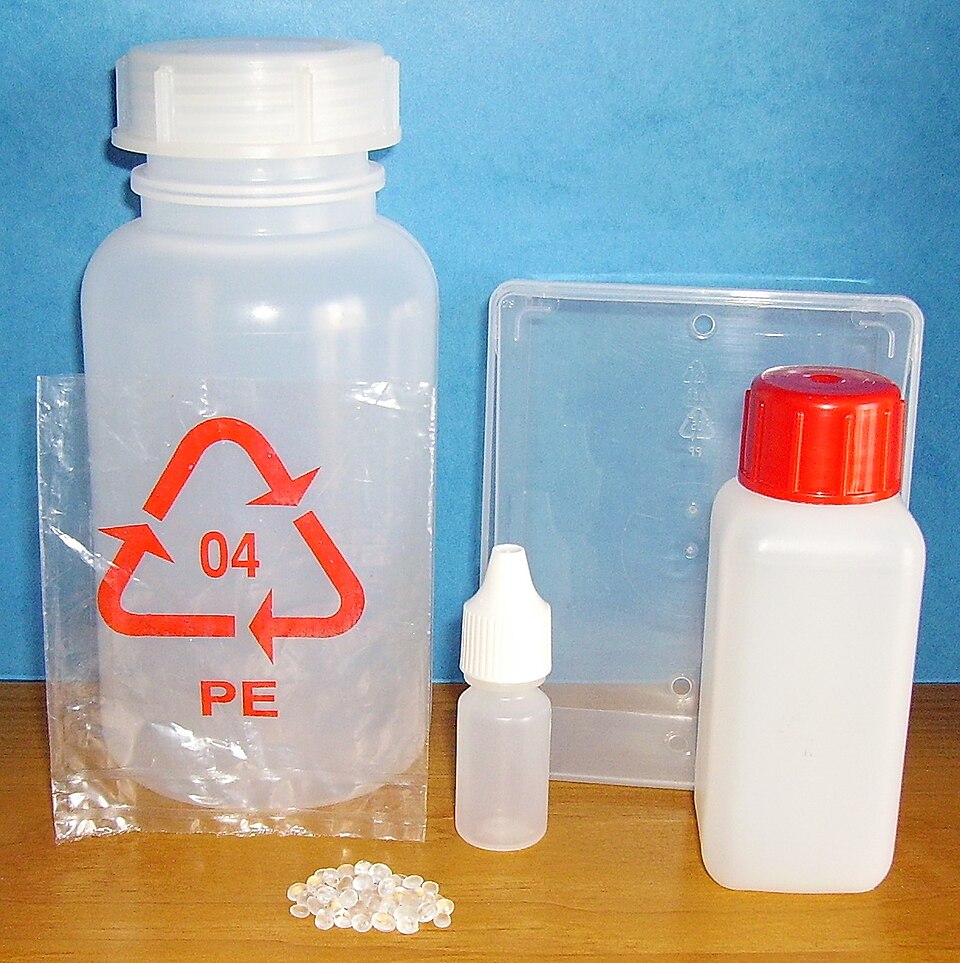

A polymer is a molecule, made from joining many small molecules called monomers. The word “polymer” can be broken down into “poly” (meaning “many” in Greek) and “mer” (meaning “unit”). This shows how the chemical composition of a polymer consists of many smaller units (monomers) bonded together into a larger molecule. A chemical reaction bonding monomers together to make a polymer is called polymerization.
Some polymers are natural and made by organisms. Proteins have polypeptide molecules, which are natural polymers made from various amino acid monomer units. Nucleic acids are huge natural polymers made up of millions of nucleotide units. Cellulose and starch (two types of carbohydrate) are also natural polymers made up of glucopyranose monomer bonded together in different ways. Rubber is a mixture of polymers. Plastics are man-made polymers. Many fibers are made of polymers.
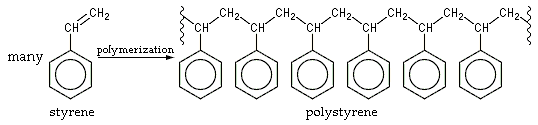
If the “units” called monomers in a polymer are all the same, then the polymer is called a “homopolymer”. Homopolymers are named by adding the prefix poly- before the monomer name from which the polymer is made. For example, a polymer made by bonding styrene monomer molecules together is called polystyrene.
If the monomers are not all the same, the polymer is called a “copolymer” or a “heteropolymer”.
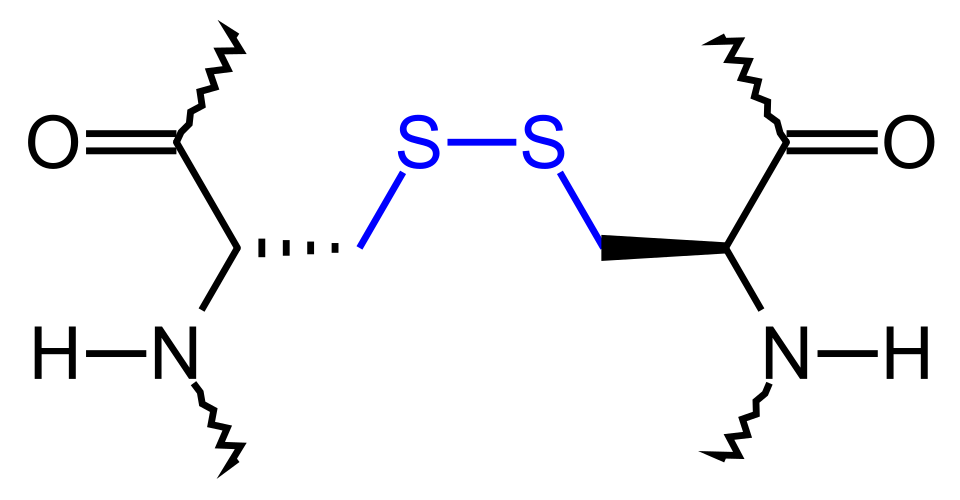
Many polymer molecules are like chains where the monomer units are the links. Polymer molecules can be straight-chain, have branching from the main chain, or cross-linking between chains. As an example of cross-linking, sulfhydryl (-S-H) groups in two cysteine amino acid units in polypeptide chains can bond together to make a disulfide bridge (-S-S-) joining the chains together.
In the same way how large hydrocarbon molecules in crude oil can be broken down in smaller molecules e.g. ethylene by applying heat (a process called cracking), the monomer ethylene can then be turned into the polymer polyethylene by applying pressure and adding catalysts. Polyethelene is the basis of many plastic objects.
Where this page comes from
The article above is adapted from “Polymer” on Simple English Wikipedia, by its contributors. We removed reference markers, navigation boxes and tables, expanded measurement templates into readable numbers, and kept the prose otherwise intact.
Both sources are published under CC BY-SA 4.0, so this page is published under the same licence. You may share and adapt it, including commercially, as long as you credit the original and keep the same licence.
Worksheets, answer keys and printable layouts elsewhere on K5Print are our own work and are not covered by this licence.