Radium
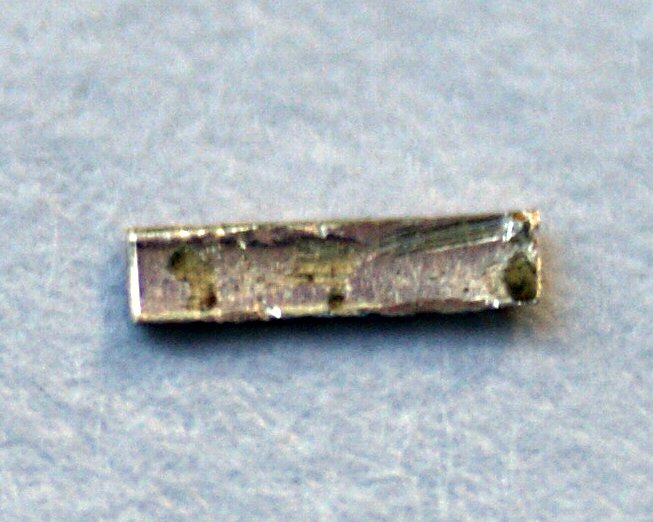

Radium is a chemical element. The symbol for radium is Ra, and its atomic number is 88. It was discovered by Marie Curie and Pierre Curie in the form of radium chloride in 1898. It is a slivery-white alkaline earth metal, but it turns black quickly when it is exposed to nitrogen in the air. All isotopes of radium are radioactive. The radioactivity of radium causes it to glow in the dark.
Radium is used in many things, such as glowing watches, which are now banned because they can cause radiation poisoning. Some of the things radium was used for are now made using less dangerous radioactive elements, such as promethium. It can be used in treating cancer.
In nature, radium is found in tiny amounts in uranium and thorium ores. It does not exist naturally inside of people or other living things; it is dangerous when taken in because it takes the same place as calcium.
History
Radium was discovered by Marie Curie and her husband Pierre Curie on 21 December 1898. They found that some radioactive minerals had unknown compounds left over after removing uranium and barium. The unknown compounds were polonium and radium; the discovery was announced to the French Academy of Sciences on 26 December 1898.
The original unit of measurement for radioactivity was called the curie. The unit was equal to the radioactivity of one gram of radium-226, but later it was changed to 3.7×10 10 disintegrations per second.
Properties
Radium is the heaviest alkaline earth metal and the only radioactive element in the group. It has a silvery-white color, but turns black when it is exposed to air. It is more similar to barium than it is to any other element. It is also similar to barium in the ways it reacts with other things.
Radium has 33 isotopes. All of these isotopes are radioactive. The isotope which lasts the longest is radium-226: it has a half-life of 1,600 years.
Uses
Radium used to be used in glowing paints for watches and other instruments that are used in the dark. Radium stopped being used in the mid-1920s after a lawsuit by five people who were called “Radium Girls”. The Radium Girls were told to lick the brushes used to paint with radium, which caused them to ingest the radium. This was very dangerous to their health. Ingesting radium in paint caused sores, anemia, and bone cancer in the Radium Girls. Since it was radioactive, it let out things that shouldn’t have been in their bones. The lawsuit caused the dangers of radioactivity to be known by many more people. After the 1960s, radium paint was replaced by less dangerous radioactive paint made from promethium-147 or tritium. The companies tried to lie about this and avoid punishment by saying it was just syphilis.
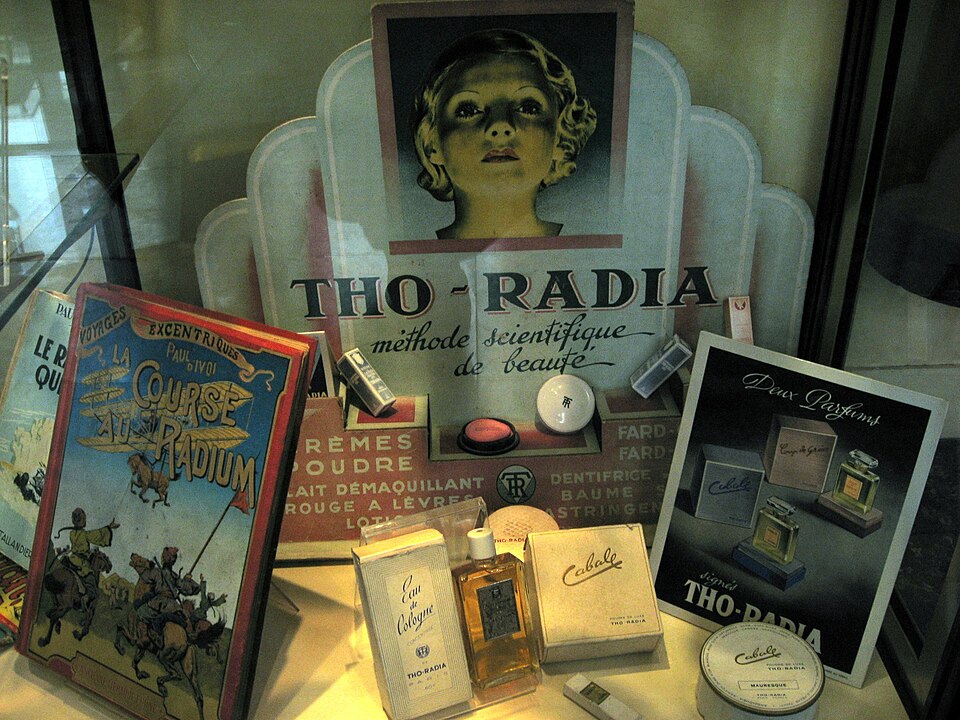
Radium was also used in different things such as toothpaste and food. Lots of people thought those radioactive things were good for health. These products were made illegal after people found out about the dangers of radioactivity.
Radium is not used now in anything except for nuclear reactors. There are safer elements that can be used in all of the same ways radium was used. Tritium is radioactive, but it’s safer than radium because the beta radiation can’t get through your skin.
Toxicity
Radium is the most toxic radioactive element. It collects in bones when ingested, which causes cancer. However, even just being around radium can cause cancer. Radium creates radon when it decays. This is even more dangerous, because radon is a gas.
Marie Curie’s death was most likely caused by radium.
Written for younger readers
Radium, in simpler words
This version comes from Wikijunior, a set of books written for children aged 8 to 11. It is shorter and uses plainer language than the article above.
From Wikijunior: The Elements
NOTOC
Freshly prepared or newly isolated radium is silvery-white. When exposed to nitrogen and oxygen in the air, it quickly forms a black coat of radium nitride which dulls its appearance. This reaction creates an oxidized or degraded form of radium.
Radium is extremely radioactive, so it is rarely handled in its pure metallic form. Scientists learn about radium by studying its compounds, which are safer to handle.
Radium’s intense radioactivity excites nearby particles causing a faint blue glow in the dark. This phenomenon is called radioluminescence.
Radium is likely soft and malleable like the other alkaline earth metals. It would be very dangerous to touch radium.
No one should ever taste radium. Drinking so called “health tonics” in the early 20 th century led to serious health problems. People became anemic, fractured bones, and fell ill with cancer. The most famous result of tasting radium is documented in the story of the Radium Girls. They were factory workers who shaped watch dials with their lips. The dials were covered with radium-laced paint which made them sick.
Radium itself does not have a smell. It decays to form radon gas which is odorless and radioactive. Radon gas is very harmful if inhaled.
It was discovered by Pierre and Marie Curie in 1898. They were investigating the mineral pitchblende (uraninite).
Pitchblende turned out to be highly radioactive. Radioactive means its energy could move through space, air, or even solid things. The pitchblende was more radioactive than just uranium would make it. The Curies hypothesized it contained other radioactive elements. They found the pitchblende contained both polonium and radium. Both were new radioactive elements.
This word was created by the word “Radius" in Latin word and it means ray, they created this name after they saw the rays glow from the element Did You Know?
- Radium has a density of about 5.5 grams per cubic centimeter.
- Radium is highly radioactive.
- Radium is very dangerous for people.
Radium was first found in Bohemia in the rich pitchblende ore. Some can also be found in the Carnotite sands of Colorado, although richer supplies exist in regions of Zaire, Africa and the Great Bear Lake region of Canada.
In the past, radium was thought to be safe. It was added to toothpaste, hair products, chocolate bars, bread, and energy drinks. Until the early 1970s, it was used to make “glow in the dark” items such as clock dials, wrist watches, toys, and ceramics. Although such items no longer glow, the radium on them stays radioactive for thousands of years.
Radium compounds are used in modern medicine to treat certain types of cancer. They are used in environmental studies, oceanography, and archeology.
Radium emits alpha, beta, and gamma radiation causing damage to cells, tissues, and bones. This property makes radium dangerous, not its chemical reactivity.
If inhaled or ingested, radium dust can damage internal organs.
Short-term contact with small amounts of radium will not usually cause harm. But being around low levels for a long time can raise the risk of getting sick. Miners might be exposed to radium over time because some rocks contain uranium. Lab workers who handle radioactive materials, and employees in the nuclear industry may be at risk. Such workers need to follow safe procedures and wear special protective clothing when working.
Where this page comes from
The article above is adapted from “Radium” on Simple English Wikipedia, by its contributors. We removed reference markers, navigation boxes and tables, expanded measurement templates into readable numbers, and kept the prose otherwise intact. The simpler version is adapted from Wikijunior on Wikibooks.
Both sources are published under CC BY-SA 4.0, so this page is published under the same licence. You may share and adapt it, including commercially, as long as you credit the original and keep the same licence.
Worksheets, answer keys and printable layouts elsewhere on K5Print are our own work and are not covered by this licence.