Silicon
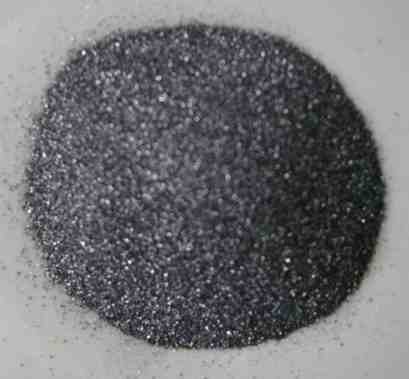

Silicon is a chemical element. Its atomic number is 14 on the periodic table. Its symbol is Si. It is a hard, brittle crystalline solid. It is a tetravalent metalloid and semiconductor. It is a member of group 14 in the periodic table.
Silicon looks like a metal, but cannot do everything that a metal can, like conduct electricity well. Silicon is used a lot in today’s computers and nearly every other electronic device as well. Germanium can also be used in computers, but silicon is much easier to find.
For example, all of the sand found at the beach is made of small cubes of silicon dioxide also known as silica. Glass is made by heating sand hot enough until it melts. Glass made from silicon can be made in different colours by adding colouring compounds. Many rocks and minerals are composed of compounds of silicon and oxygen called silicates.
Silicon in computers
Silicon is a semiconductor, and much used in computers. A typical desktop computer contains several dozen integrated circuits made mostly of silicon. A super-pure isotope of silicon, silicon-28, can now be made 40 times more pure than before. It is very important for the next big development in computers. This stores “qubits” in atoms of another element, like phosphorus, embedded in a tiny layer of ultra-pure silicon-28. These qubits can simultaneously encode a one and a zero, for incredibly fast and complex calculations.
Written for younger readers
Silicon, in simpler words
This version comes from Wikijunior, a set of books written for children aged 8 to 11. It is shorter and uses plainer language than the article above.
From Wikijunior: The Elements
NOTOC
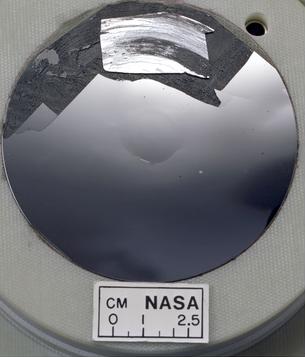
Silicon is a dark grey and metallic-looking solid. However, silicon is not a metal (or even a non-metal); it comes under a special category of elements called as metalloids which are those which have some properties of both metals and non-metals (between metals and non-metals).
Silicon was first identified by Antoine Lavoisier in 1787. It was then discovered by Jons Jacob Berzelius in Stockholm, Sweden in 1823.
Silicon gets its name from silicis, which is Latin for flint. Did You Know?
- Silicon is the second-most abundant element in the Earth’s crust, behind only oxygen.
Silicon is present in the sun and meteorites. Silicon makes up one quarter of the earth’s crust. It is the second most abundant element on Earth, behind only oxygen. Silicon is not found free in nature, but occurs chiefly as silicon dioxide and as silicates. Sand, quartz, rock crystal, amethyst, agate, flint, jasper, and opal are some of the forms in which the dioxide appears. Granite, feldspar, clay, and mica are some of the silicate minerals.
Silicon is one of the most useful elements. In the form of sand and clay it is used to make concrete and brick. Silicates are used in making enamels, and pottery. Silica, as sand, is the principal ingredient of glass. Glass can be made into bottles, windows, lenses, and thousands of other objects.
Silicon can be used in transistors, solar cells, microprocessors and other electronic devices. It is an important ingredient in steel. Silicon carbide is used as an abrasive, and is used to coat some sandpapers
No, silicon is not generally dangerous, but miners and stonecutters can develop a serious lung disease known as silicosis if they breathe in too much silicate dust, because the sharp edges of the silicate particles tear the alveoli (parts used to absorb oxygen from the air) and cause damage to the lungs.
Where this page comes from
The article above is adapted from “Silicon” on Simple English Wikipedia, by its contributors. We removed reference markers, navigation boxes and tables, expanded measurement templates into readable numbers, and kept the prose otherwise intact. The simpler version is adapted from Wikijunior on Wikibooks.
Both sources are published under CC BY-SA 4.0, so this page is published under the same licence. You may share and adapt it, including commercially, as long as you credit the original and keep the same licence.
Worksheets, answer keys and printable layouts elsewhere on K5Print are our own work and are not covered by this licence.