Slime
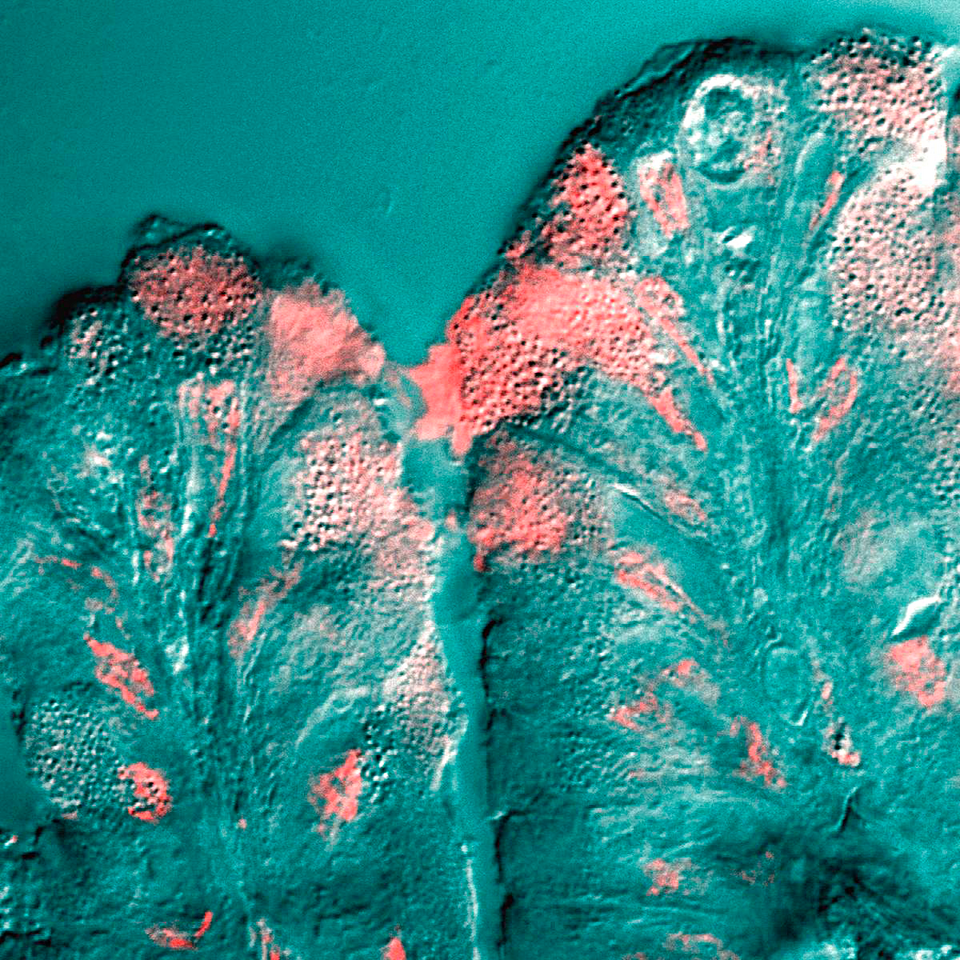

Mucus (mucous), or slime, is a slippery liquid. It is made by many living things as a kind of biological lubricant. It plays the role in living things which oil plays in machines.
Mucus is mainly composed of polysaccharides, which are long-chain carbohydrates. These molecules are stiff when dry, and sticky and slippery when wet. They are present in all types of organisms from bacteria to humans.
In vertebrates mucus is made by mucous membranes. Mucus may have antiseptic enzymes (such as lysozymes) and immunoglobulins (antigens). A major function of this mucus is to protect against infection by fungi, bacteria and viruses.
Mucus protects epithelial cells in the lungs, gut, genital, visual, and auditory systems in mammals; the epidermis in amphibians; and the gills in fish. Snails, slugs, hagfish, and certain invertebrates also produce external mucus. As well as a protective function, slime helps movement and plays a role in communication.
Mucus is produced in many parts of the body. All the alimentary canal, nose, and sexual organs have mucus glands which pass the mucus to the surfaces. The surfaces are mostly internal surfaces, though in some animals mucus covers the outside of the animal. Slugs are an example of this. Mucus glands are exocrine glands, so they pass their mucus to the surface along ducts.
Alkaline mucus
In the human digestive system, mucus is used as a lubricant for materials that must pass over membranes, such as food passing down the oesophagus.
A layer of mucus along the inner walls of the stomach is vital to protect the cell linings from the highly acidic environment inside the stomach. Mucus is not digested in the intestinal tract.
Alkaline mucus is also found in other places, such as eyes, saliva and cervix.
Written for younger readers
Slime, in simpler words
This version comes from Wikijunior, a set of books written for children aged 8 to 11. It is shorter and uses plainer language than the article above.
From Wikijunior: Big Book of Fun Science Experiments
Place 2 tablespoons of PVA (polyvinyl acetate) glue in a zipper-type plastic bag and add an equal quantity of water.
Add 1 or 2 drops of food coloring, if you want.
Add 1/2 teaspoon of saturated borax solution. (Borax can be bought in a pharmacy, or nag your science teacher to do this at school)
Squeeze the bag to mix the contents
When the slime has mostly formed, reach in and take out the slime. Don’t be shy, it will not hurt you!
Knead the slime to make it smooth.
Another type of slime you can make using cornstarch and water, is Oobleck.
Where this page comes from
The article above is adapted from “Slime” on Simple English Wikipedia, by its contributors. We removed reference markers, navigation boxes and tables, expanded measurement templates into readable numbers, and kept the prose otherwise intact. The simpler version is adapted from Wikijunior on Wikibooks.
Both sources are published under CC BY-SA 4.0, so this page is published under the same licence. You may share and adapt it, including commercially, as long as you credit the original and keep the same licence.
Worksheets, answer keys and printable layouts elsewhere on K5Print are our own work and are not covered by this licence.