Soap powered boat

Simple Steps
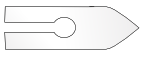
Make a boat (flat as in the one shown in the picture above). Make sure to not to make the slit too big.
Cut a small piece of a bar of soap (enough to fit in the slit shown in the picture above).
Place the piece of soap in the slit of your boat.
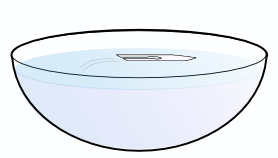
Now, get a large bowl of water (or anything that collects water that has a large space for your boat to move around). (Use ordinary water).
Place your boat on the surface of the water and watch your boat move itself forward!
What causes this?
Water is made up of tiny particles smaller than dust called molecules. These molecules are really close to each other at the water’s surface and so cause a sort of tension. (You see this tension when insects or leaves float on the surface of the water. This tension looks like if the water is covered with a clear plastic).
When the soap touches the surface of the water, it breaks this tension by moving the molecules away from each other. This causes large spaces between the molecules near the soap.
Water molecules from under the water’s surface rush upwards to fill the spaces to recreate the tension. This causes a push from the area of the boat where the soap is. Since the soap is at the back of your boat, it causes a push from there (like someone pushing a car from the back).
(This is also the principle of how soap gets your hands cleaner than when you wash them with water alone. When you wash your dirty hands with water alone, the water’s surface tension blocks any more water from touching your hands. This causes only a little bit of dirt to be washed away. When you add soap, the soap breaks this surface tension and allows water to continue to touch your hands and so more dirt gets washed away easily.)
Written for younger readers
Soap powered boat, in simpler words
This version comes from Wikijunior, a set of books written for children aged 8 to 11. It is shorter and uses plainer language than the article above.
From Wikijunior: Big Book of Fun Science Experiments
Make a boat (flat as in the one shown in the picture above). Make sure to not to make the slit too big.
Cut a small piece of a bar of soap (enough to fit in the slit shown in the picture above).
Place the piece of soap in the slit of your boat.
Now, get a large bowl of water (or anything that collects water that has a large space for your boat to move around). (Use ordinary water).
Place your boat on the surface of the water and watch your boat move itself forward!
Water is made up of tiny particles smaller than dust called molecules. These molecules are really close to each other at the water’s surface and so cause a sort of tension. (You see this tension when insects or leaves float on the surface of the water. This tension looks like if the water is covered with a clear plastic).
When the soap touches the surface of the water, it breaks this tension by moving the molecules away from each other. This causes large spaces between the molecules near the soap.
Water molecules from under the water’s surface rush upwards to fill the spaces to recreate the tension. This causes a push from the area of the boat where the soap is. Since the soap is at the back of your boat, it causes a push from there (like someone pushing a car from the back).
(This is also the principle of how soap gets your hands cleaner than when you wash them with water alone. When you wash your dirty hands with water alone, the water’s surface tension blocks any more water from touching your hands. This causes only a little bit of dirt to be washed away. When you add soap, the soap breaks this surface tension and allows water to continue to touch your hands and so more dirt gets washed away easily.)
Where this page comes from
The article above is adapted from “Soap powered boat” on Simple English Wikipedia, by its contributors. We removed reference markers, navigation boxes and tables, expanded measurement templates into readable numbers, and kept the prose otherwise intact. The simpler version is adapted from Wikijunior on Wikibooks.
Both sources are published under CC BY-SA 4.0, so this page is published under the same licence. You may share and adapt it, including commercially, as long as you credit the original and keep the same licence.
Worksheets, answer keys and printable layouts elsewhere on K5Print are our own work and are not covered by this licence.