Strontium
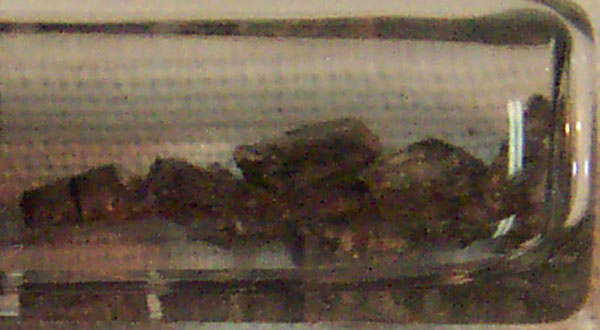

Strontium is a chemical element. It has the chemical symbol Sr. It has the atomic number 38. It is a metal. The color of the metal is silver-white or yellow-silver. The metal is soft, and highly reactive chemically.
In chemistry it is placed in a group of metal elements named the alkaline earth metals. Strontium has a high chemical reactivity. The metal turns yellow when exposed to air. Strontium has properties similar to those of its two vertical neighbors in the periodic table, calcium and barium.
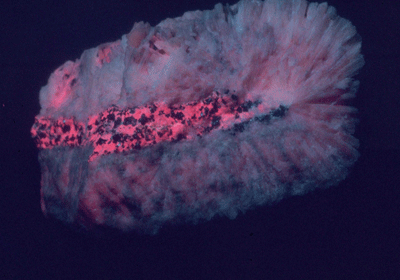
It is found naturally in the minerals celestite and strontianite. The 90 Sr isotope is present in radioactive fallout and has a half-life of 28.9 years.
Strontium forms salts which make a red flame when they burn. They are used in flares for signalling the position of survivors or shipwrecks and to make the red color in fireworks. It is named after the village of Strontian, Scotland.
Written for younger readers
Strontium, in simpler words
This version comes from Wikijunior, a set of books written for children aged 8 to 11. It is shorter and uses plainer language than the article above.
From Wikijunior: The Elements
NOTOC
General: Strontium is classified as an alkaline earth metal on the periodic table. The periodic table arranges chemical elements in periods (rows) and groups (columns). The element Strontium is in period 5 and group 2. Its atomic number is 38 and its symbol is Sr.
In addition to strontium, there are 5 other alkaline earth metals: calcium, magnesium, beryllium, barium, and radium. These elements share similar properties. They react with other elements to form useful compounds. They are good conductors of electricity.
Pure strontium itself does not have a distinct smell. Compounds like strontium oxide might have a slight metallic odor.
In 1790, Adair Crawford in Ireland was studying the mineral witherite. He mixed the witherite with hydrochloric acid. The results were not what he expected. He thought there was contamination from an unknown substance which he called “strontianite”.
In 1793, Martin Klaproth in Germany analyzed the mineral strontanite. He confirmed it was a new, distinct element. In 1808, Sir Humphrey Davy in England successfully isolated strontium metal.
Strontium is named after the Scottish village of Strontian, where it was discovered in the ores of the lead mines. Did You Know?
- Strontium has silvery white color, and it turns into yellow when exposed to air
- It is softer than calcium and harder than barium.
- Primary use for strontium was in glass for colour television cathode-ray tubes, where it prevented X-ray emission.
Strontium is primarily extracted (separated) from the minerals celestite and strontianite. Significant deposits of these minerals are found in Mexico, Turkey, Spain, and China. In the United States there are celestite and strontianite deposits in California and Texas.
Strontium occurs in seawater and in igneous rocks.
Strontium compounds are used in electronics, fireworks, and medicine. Strontium ferrite is used for making small magnets for electric motors. The bright, red color in fireworks and emergency flares comes from strontium compounds. The radioactive isotope Strontium-89 is used to relieve pain caused by bone cancer. Strontium compounds are used in medical imaging.
Strontium can conduct electricity but metals like copper and aluminum are more widely used in industry. Strontium is often used in special alloys for automobile engine blocks and wheels.
Strontium hydroxide is used to extract sugar from sugar beets and remove molasses from raw sugar. Strontium metal is used in the refining of zinc to remove trace levels of lead impurities. Strontium aluminate is commonly used in glow-in-the-dark paints, ceramic glazes, and occasionally in toothpaste.
Strontium is generally considered safe in its natural, non-radioactive form.
Non-Radioactive strontium is not harmful in typical dietary amounts. Radioactive strontium is dangerous. Excessive intake of either form of strontium can interfere with calcium levels and bone health, leading to health problems.
Where this page comes from
The article above is adapted from “Strontium” on Simple English Wikipedia, by its contributors. We removed reference markers, navigation boxes and tables, expanded measurement templates into readable numbers, and kept the prose otherwise intact. The simpler version is adapted from Wikijunior on Wikibooks.
Both sources are published under CC BY-SA 4.0, so this page is published under the same licence. You may share and adapt it, including commercially, as long as you credit the original and keep the same licence.
Worksheets, answer keys and printable layouts elsewhere on K5Print are our own work and are not covered by this licence.