Torque
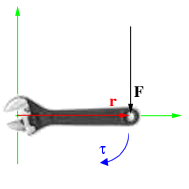

In physics, torque is the tendency of a force to turn or twist. If a force is used to begin to spin an object, or to stop an object from spinning, a torque is made.
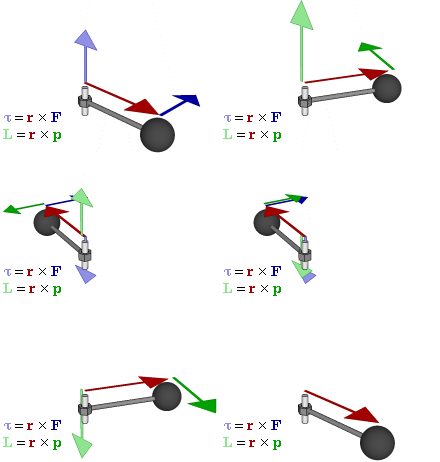
The force applied to a lever, multiplied by the distance from the lever’s fulcrum, multiplied again by the sine of the angle created, is described as torque. This is also known as “r cross f,” or “force times fulcrum distance times sine theta.”
Torque is the measure of how much a force causes an object to rotate. When you use a wrench, the force you apply at the handle makes the bolt turn around its center. The farther you apply that force from the bolt, the greater the torque. This is why a longer wrench makes it easier to loosen a tight bolt because the same force creates more rotational effect.
Fulcrum
Fulcrum is the axis of rotation or point of support on which a lever turns in raising or moving something.
Equation
The equation for torque is: where F is the net force vector and r is the vector from the axis of rotation to the point where the force is acting. The Greek letter Tau is used to represent torque.
The units of torque are force multiplied by distance. The SI unit of torque is the newton-metre. The most common English unit is the foot-pound.
Torque with Angled Forces
When the force is applied at an angle, only the part of the force that aligns with the sine theta component of “r cross f” contributes to torque.
The closer the angle is to 90 degrees, the larger the sine theta value, and the greater the torque generated.
Torque In Gears
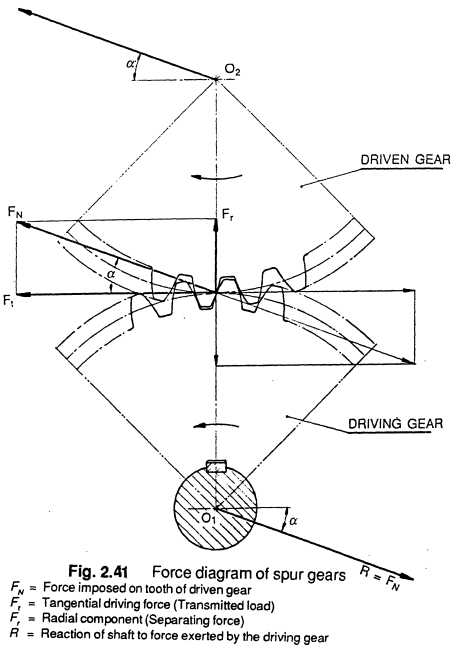
Angled force affects how much torque actually gets into a gear system. If less torque is created at the start (because the force isn’t at 90 degrees), then the gear has less to work with.
Angled forces reduce gear efficiency because not all of the force goes into turning the gear.
Where this page comes from
The article above is adapted from “Torque” on Simple English Wikipedia, by its contributors. We removed reference markers, navigation boxes and tables, expanded measurement templates into readable numbers, and kept the prose otherwise intact.
Both sources are published under CC BY-SA 4.0, so this page is published under the same licence. You may share and adapt it, including commercially, as long as you credit the original and keep the same licence.
Worksheets, answer keys and printable layouts elsewhere on K5Print are our own work and are not covered by this licence.