What's a molecule?
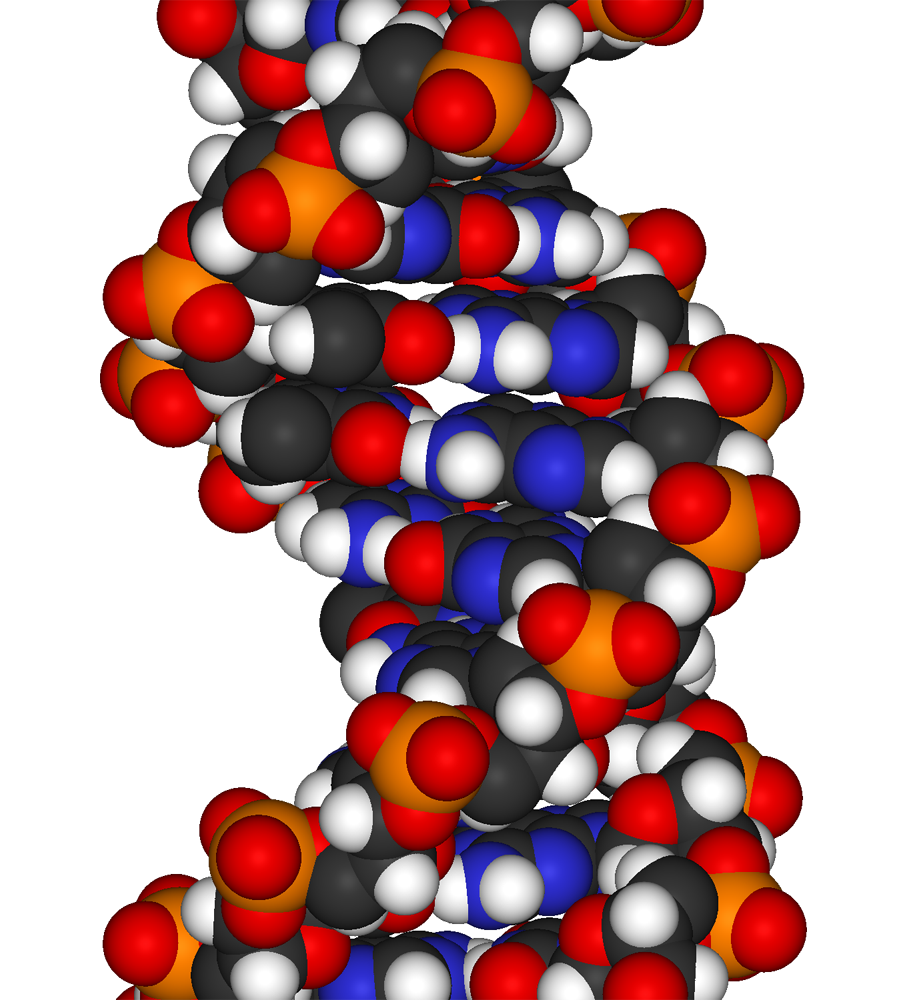

What is a molecule?
A molecule is the smallest thing that a substance can be divided up into, while remaining the same substance. It is made up of two or more atoms held together by chemical bonding. These atoms can be the same kind, or different kinds. This is slightly different to a compound, where it has to be two or more atoms of different elements. This does mean that all compounds are molecules, but not all molecules are compounds.
Where do we find molecules?
Almost everything is made up of molecules, including the air you breathe, the food you eat, and even the water you drink! In the air, oxygen atoms usually travel with a partner (2 x O = O 2 ), as does hydrogen (2 x H = H 2 ) and nitrogen (N 2 ). Water (H 2 O) is made of two hydrogen atoms (H 2 ) and one oxygen atom (O). Even regular table salt that you eat is a combination of molecules! Would it surprise you to know that the molecules in table salt are made up of dangerous atoms? You may eat salt every day, but it is made up of an explosive atom (sodium) and a toxic one (chlorine)! The reason salt is safe to eat is that molecules are very different from the atoms that make them up.
How do the atoms join together?
Atoms come together to form molecules because of their electrons. Electrons can join (or bond) atoms together in two main ways. When two atoms share electrons between them, they are locked together (bonded) by that sharing. These are called covalent bonds. Bonds like this are in oxygen gas, nitrogen gas, and hydrogen gas. But when an atom gives one of its electrons to another atom, they are held together by electric forces. These sorts of bonds are called ionic, because once an atom loses or gains an electron, it becomes something called an ion, which has a positive or negative charge. These sorts of bonds are in acids, like vinegar, and bases, like ammonia. Salt is also held together by ionic bonds. The sodium, usually explosive, loses an electron to the chlorine, which is also dangerous in its natural state, but when this reaction happens, both become harmless and even tasty!
Written for younger readers
What's a molecule?, in simpler words
This version comes from Wikijunior, a set of books written for children aged 8 to 11. It is shorter and uses plainer language than the article above.
From Wikijunior: The Elements
A molecule is the smallest thing that a substance can be divided up into, while remaining the same substance. It is made up of two or more atoms held together by chemical bonding. These atoms can be the same kind, or different kinds. This is slightly different to a compound, where it has to be two or more atoms of different elements. This does mean that all compounds are molecules, but not all molecules are compounds.
Almost everything is made up of molecules, including the air you breathe, the food you eat, and even the water you drink! In the air, oxygen atoms usually travel with a partner (2 x O = O 2 ), as does hydrogen (2 x H = H 2 ) and nitrogen (N 2 ). Water (H 2 O) is made of two hydrogen atoms (H 2 ) and one oxygen atom (O). Even regular table salt that you eat is a combination of molecules! Would it surprise you to know that the molecules in table salt are made up of dangerous atoms? You may eat salt every day, but it is made up of an explosive atom (sodium) and a toxic one (chlorine)! The reason salt is safe to eat is that molecules are very different from the atoms that make them up.
Atoms come together to form molecules because of their electrons. Electrons can join (or bond) atoms together in two main ways. When two atoms share electrons between them, they are locked together (bonded) by that sharing. These are called covalent bonds. Bonds like this are in oxygen gas, nitrogen gas, and hydrogen gas. But when an atom gives one of its electrons to another atom, they are held together by electric forces. These sorts of bonds are called ionic, because once an atom loses or gains an electron, it becomes something called an ion, which has a positive or negative charge. These sorts of bonds are in acids, like vinegar, and bases, like ammonia. Salt is also held together by ionic bonds. The sodium, usually explosive, loses an electron to the chlorine, which is also dangerous in its natural state, but when this reaction happens, both become harmless and even tasty!
Where this page comes from
The article above is adapted from “What's a molecule?” on Simple English Wikipedia, by its contributors. We removed reference markers, navigation boxes and tables, expanded measurement templates into readable numbers, and kept the prose otherwise intact. The simpler version is adapted from Wikijunior on Wikibooks.
Both sources are published under CC BY-SA 4.0, so this page is published under the same licence. You may share and adapt it, including commercially, as long as you credit the original and keep the same licence.
Worksheets, answer keys and printable layouts elsewhere on K5Print are our own work and are not covered by this licence.