Enceladus

Quick facts
- Discovered by
- William Herschel
- Discovered
- August 28, 1789
- Goes around
- Saturn
- Radius
- 252 km (157 mi)
- One trip around takes
- 1.37 Earth days
Facts from Wikipedia’s “Enceladus” page (CC BY-SA 4.0).
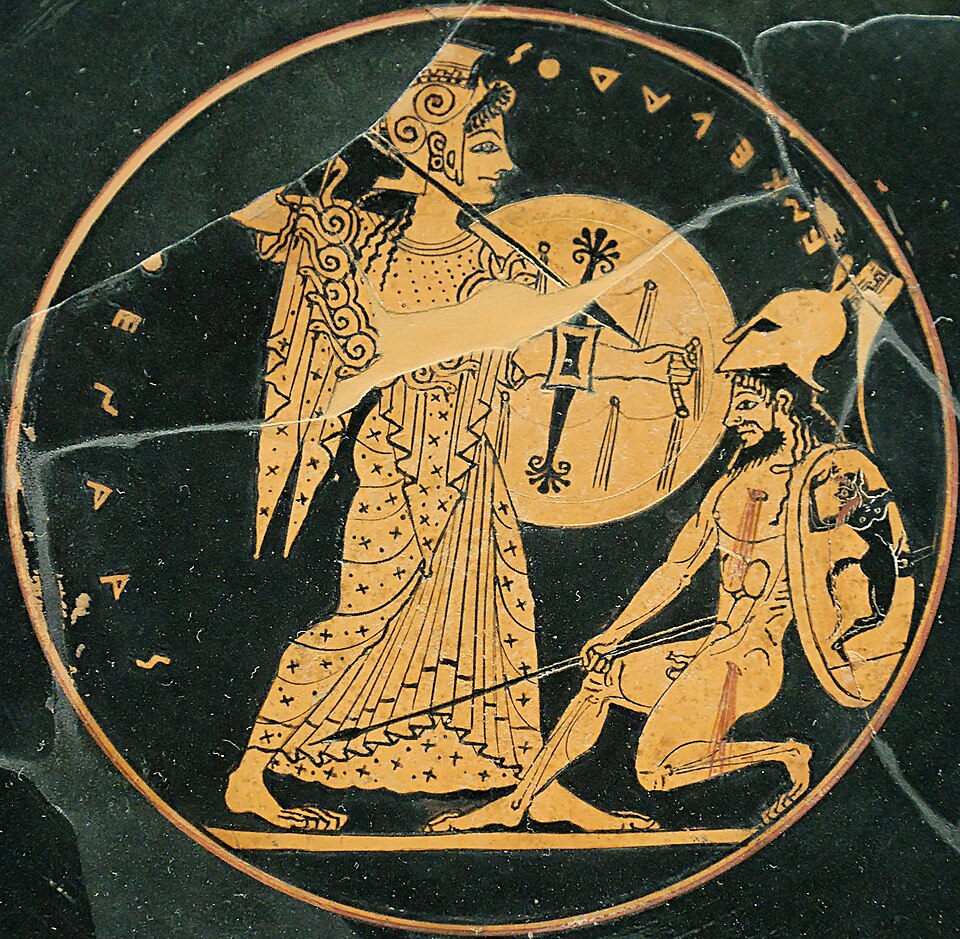
Enceladus is one of the Giants of Greek mythology.
Written for younger readers
Enceladus, in simpler words
This version comes from Wikijunior, a set of books written for children aged 8 to 11. It is shorter and uses plainer language than the article above.
From Wikijunior: Solar System
Enceladus is a moon of Saturn.
Enceladus measures 498.82 km across.
The surface of Enceladus has a great deal of variety. Pictures taken by Voyager 2 revealed at least five different types of terrain, including several regions of cratered terrain, regions of smooth, young terrain, and lanes of ridged terrain that often border the smooth terrain. The picture also revealed cracks that crossed the cratered and smooth terrain.
The smooth plains have very few craters, indicating that they are very young. This means that there are cryovolcanoes on the surface, or something else that renews the surface.
When the Cassini spacecraft flew by on February 17 and March 9, 2005, it revealed even more detail about the surface of Enceladus. The smooth regions that Voyager 2 saw now had many small ridges and scarps, while the old cratered regions had many fractures.
One day on Enceladus is equal to 1.37 Earth days, or one day, 8 hours, and 53 minutes. This is the same amount of time it takes to complete an orbit around Saturn. As a result the same side of Enceladus is always facing toward Saturn. When the orbit and the rotation times match like this, it is called synchronous rotation: Earth’s Moon is another example.
If you stood on the surface, you would only weigh about 1/10 of what you do on Earth. This is because, although you have the same mass in either place, Enceladus has much less mass than the Earth.
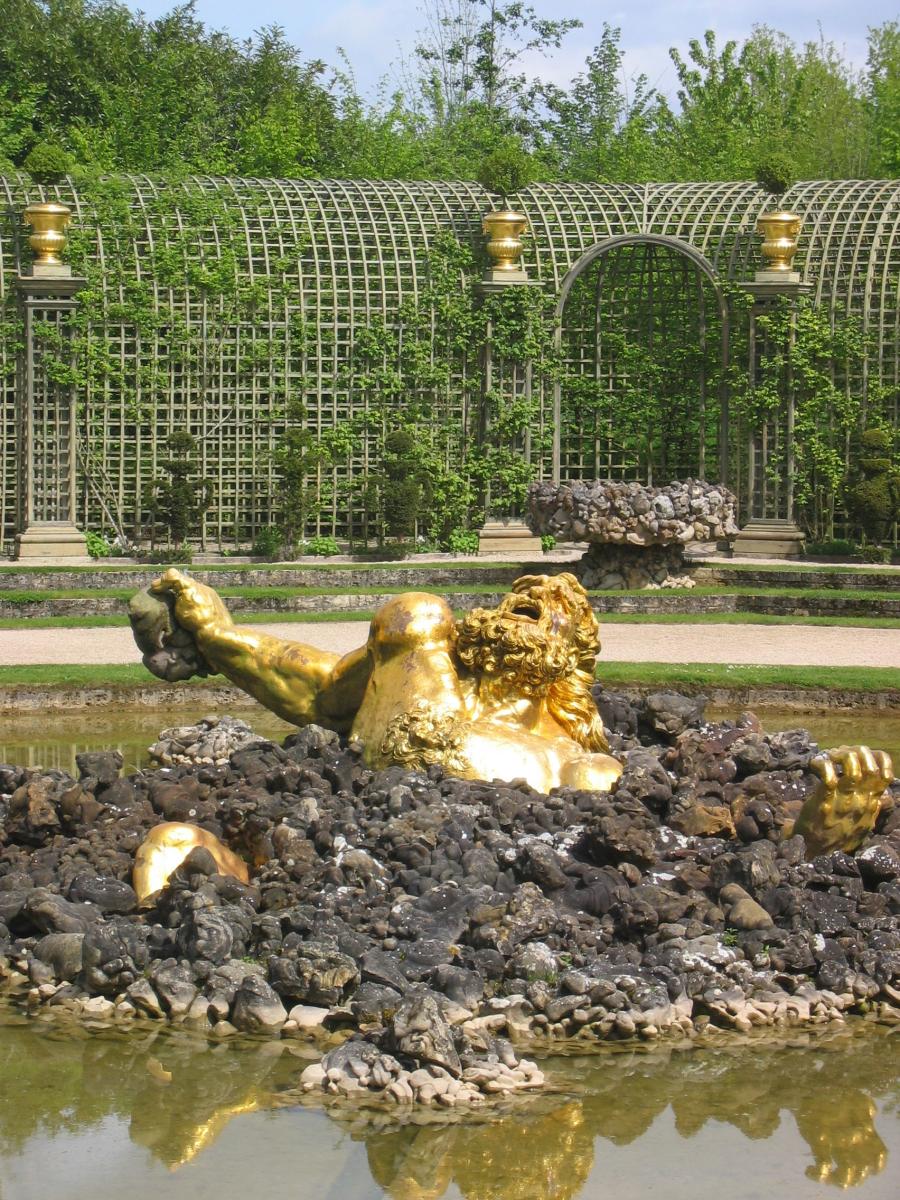
Enceladus is named after a Gigantes in Greek mythology. He was defeated by one of Zeus’ thunderbolts, and placed under Mt. Etna. The fire from the mountains is said to be his breath, and the rumbling of the mountain is said to be from him rolling around inside.
The name, as well as the names of the other moons of Saturn, was suggested by John Herschel, son of William Herschel, in his 1847 publication Results of Astronomical Observations made at the Cape of Good Hope.
Enceladus was discovered in 1789 by the English astronomer William Herschel.
de:Wikijunior Sonnensystem/ Saturn/ Enceladus
Where this page comes from
The article above is adapted from “Enceladus” on Simple English Wikipedia, by its contributors. We removed reference markers, navigation boxes and tables, expanded measurement templates into readable numbers, and kept the prose otherwise intact. The simpler version is adapted from Wikijunior on Wikibooks.
Both sources are published under CC BY-SA 4.0, so this page is published under the same licence. You may share and adapt it, including commercially, as long as you credit the original and keep the same licence.
Worksheets, answer keys and printable layouts elsewhere on K5Print are our own work and are not covered by this licence.