Test
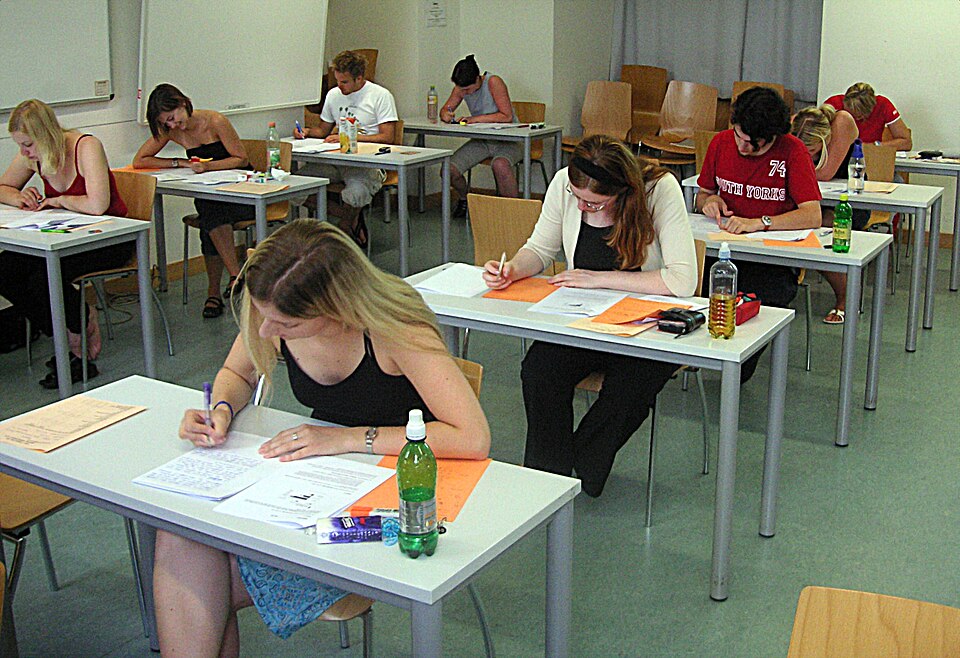

A test is a structured procedure designed to evaluate whether a subject, claim, or system meets specified criteria. The Concise Oxford English Dictionary defines a test as: “a procedure intended to establish the quality, performance, or reliability of something”.
Tests can serve multiple purposes. For example, tests can be used to determine what someone knows, or can do, for example through multiple choice questions in an exam, or written assignments. Medical tests assess whether or how parts of the body are functioning via medical procedures, such as blood tests that determine the presence or absence of substances. In product testing, tests are used to establish whether products function as intended.
Types of tests
In science, researchers perform tests to identify, quantify, or characterize substances. They also perform statistical hypothesis tests to examine of predictions are corroborated or falsified. In product testing a product’s performance, safety, quality, and compliance is examined to help ensure that what consumers buy is reliable, and safe. Assessment testing refers to the systematic gathering of information—through standardized tests, measurements, and evaluation procedures—to understand individual differences in abilities, traits, behaviors, or psychological characteristics. In psychological and educational contexts, assessments are designed to be standardized, reliable, and valid, ensuring that results provide meaningful information for decision‑making. These tests may measure cognitive skills, social traits, motives, adjustment, or other aspects of human functioning. Personality tests, a specialized subset of psychological assessments, measure personal characteristics known as traits, which are thought to explain variability in behavior and experience. Personality assessment seeks to define and quantify traits in an objective way so they can be compared across individuals or groups.
Written for younger readers
Test, in simpler words
This version comes from Wikijunior, a set of books written for children aged 8 to 11. It is shorter and uses plainer language than the article above.
From Wikijunior: Solar System
Below are the eight planets of our solar system, each with a description. Fill in the blanks in the descriptions.
- First you have to fill in which planet it is from the sun. For example: if you think Jupiter is the seventh planet, fill in 7th.
- Secondly you have to fill in if the planet is bigger or smaller than Earth. The bigger/smaller question for Earth is about the moon!
8 points can be earned with this task. Every wrong sentence reduces the score by 1.
8 points can be earned with this task. Every right answer gives 1 point.
Dependent on the previous question:
Dependent on the previous question:
8 points can be earned with this task. Every right answer gives 1 point.
Define these terms.
8 points can be earned with this task. A wrong or bad description gives 0 points, a reasonable description gives 1 point, a good description gives 2 points.
8 points can be earned with this task.
nl:Wikijunior:Zonnestelsel/Eindtoets
Where this page comes from
The article above is adapted from “Test” on Simple English Wikipedia, by its contributors. We removed reference markers, navigation boxes and tables, expanded measurement templates into readable numbers, and kept the prose otherwise intact. The simpler version is adapted from Wikijunior on Wikibooks.
Both sources are published under CC BY-SA 4.0, so this page is published under the same licence. You may share and adapt it, including commercially, as long as you credit the original and keep the same licence.
Worksheets, answer keys and printable layouts elsewhere on K5Print are our own work and are not covered by this licence.