AI

Artificial intelligence (AI or A.I.) is a computer program or a machine that is able to learn and mimic human thinking. Sometimes the word AI is used to talk about neural networks or deep learning.
Artificial intelligence is a system’s ability to understand external data, to learn from that data, and to use what it has learned to achieve specific goals or tasks through adaptation.
Artificial intelligence is widely applied in speech recognition, image recognition, robotics, autonomous systems, natural language processing, machine translation, predictive analytics, medical diagnostics, fraud detection, and the control of physical processes.
Origin of name
John McCarthy came up with the name, “artificial intelligence” in 1956. Intelligence allows an organism to act in a meaningful way in its environment. It includes the ability to get sensory inputs, and to react to these.
Laws
The European Union made a law (2024’s second quarter) about artificial intelligence. It is the world’s first law that regulates AI.
Connecticut and Colorado tried to pass laws (in 2024) regarding use of AI.
History
AI research started with a conference at Dartmouth College in 1956. It was a month-long brainstorming session many people who like AI came to. At the conference, they wrote programs which were able to beat humans at checkers or solving word problems. The Department of Defense started giving a lot of money to AI research, and labs were created all over the world.
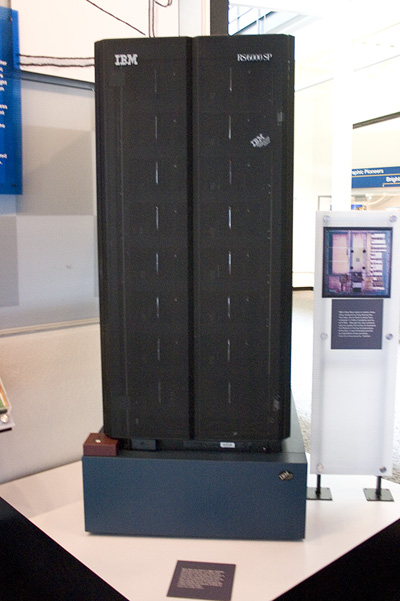
In a paper on AI, mathematician James Lighthill wrote “no aspect of the discipline has so far seen discoveries generated the huge influence that was previously anticipated. In no part of the field have the discoveries made so far produced the major impact that was then promised.”. The governments of the US and UK decided to spend money on other projects which caused little new research to be done. This was known as an “AI winter.” In the 90s and early 2000s, AI became important again in data mining and medical diagnosis. This was possible because of faster computers and focusing on solving more specific problems. In 1997, the chess computer Deep Blue became the first computer program to beat chess world champion Garry Kasparov. In 2011, IBM Watson beat the top two Jeopardy! players Brad Rutter and Ken Jennings. In 2016, Google’s AlphaGo beat top Go player Lee Sedol 4 out of 5 times.
The idea is perhaps much older. Julien Offray de La Mettrie (1709-1751) was a materialist thinker of the Enlightenment. In his work of 1748, L’Homme Machine, he had the idea that both matter and life organized themselves. He is seen as one of the precursors of Darwin’s theory of evolution. Today, one field of artificial intelligence, called strong artificial intelligence wants to build a machine that can think like a person. However, weak artificial intelligence is about building a system that can support a human. One of the key problems is to make systems that can model wikt:uncertainity. Most of the time, this is done with probability theory and statistics.
Future of AI
Someday, AI researchers hope to create computer programs that can learn, solve problems, and think logically. A great intelligent machine is flexible and perceives what is around it. It would use what it learns to make its chance of success at some goal better. Researchers hope to make a “Artificial general intelligence” which can solve many problems instead of focusing on just one. Researchers are also trying to make creative and emotional AI which could create art.
Uses
Artificial intelligence is used in many different areas today.
Healthcare (see Artificial intelligence in healthcare) AI helps doctors diagnose diseases and find treatments for patients.
Industry-specific tasks; AI applications are used to solve problems in a workplace, industry, or institutions.
Finance: Banks use AI to find fraud and make trading decisions.
Customer service: Many companies use AI chatbots to answer customer questions and provide support.
Personal assistants: AI assistants like Siri and Alexa help people manage their daily tasks.
Entertainment: AI is used in video games to create smart, responsive characters and stories that change in fun ways based on what the player does. AI is used to create videos now-a-days by using different models like Sora. Those subjects are part of Game artificial intelligence.
Military (Military artificial intelligence)
Generative AI (or Generative artificial intelligence)
Some software has become well-known, such as ChatGPT (a chatbot and virtual assistant).
Faster computers, deep learning, and more data have made AI popular throughout the world. AI has been successful with decoding human speech, playing games (like chess and Go), self-driving cars, and understanding complex data. AI and machine learning technology is used in applications including: search engines, recommendation systems, virtual assistants, autonomous vehicles, automatic language translation, facial recognition, image labeling, advertising, and driving internet traffic.
Domains
There are different domains of artificial intelligence.
- Pattern recognition like speech, writing, and handwriting
- Knowledge engineering like logic programming and inference engines
- Expert systems for question answering and Chatbots
- Machine learning
- Artificial neural networks and deep learning
- Computer vision
- Robotics
- General game playing
- Artificial life
Types and classes
Researchers Kaplan and Haenlein say there are three types of AI system: analytical, human-inspired, and humanized artificial intelligence.
- Analytical A.I. has similarities with cognitive intelligence which tries to understand the world and make decisions based on that.
- Human-inspired A.I. which tries to be more “human” with cognitive intelligence with emotional intelligence.
- Humanized A.I. is able to understand human social activity and is able to be self aware
Controversies
In 2025, a municipality in Norway made a report in regard to permanently closing down (some) schools; The report used ghost source (or fictitious sources); Those sources were claimed to be the works of two (named) professors; The municipality admitted that the report was made [partly] by A.I.; The process of closing down schools, has stopped (as of March). An official that was involved, resigned (or left her job) one month later. (See Hallucination, artificial intelligence)
Other information
Glossary:
Agentic A.I. “is an autonomous AI system that can act independently to [finish or] achieve pre-determined goals”, according to media. A.I. agents “are small, specialised pieces of [computer programs or] software that can make decisions and
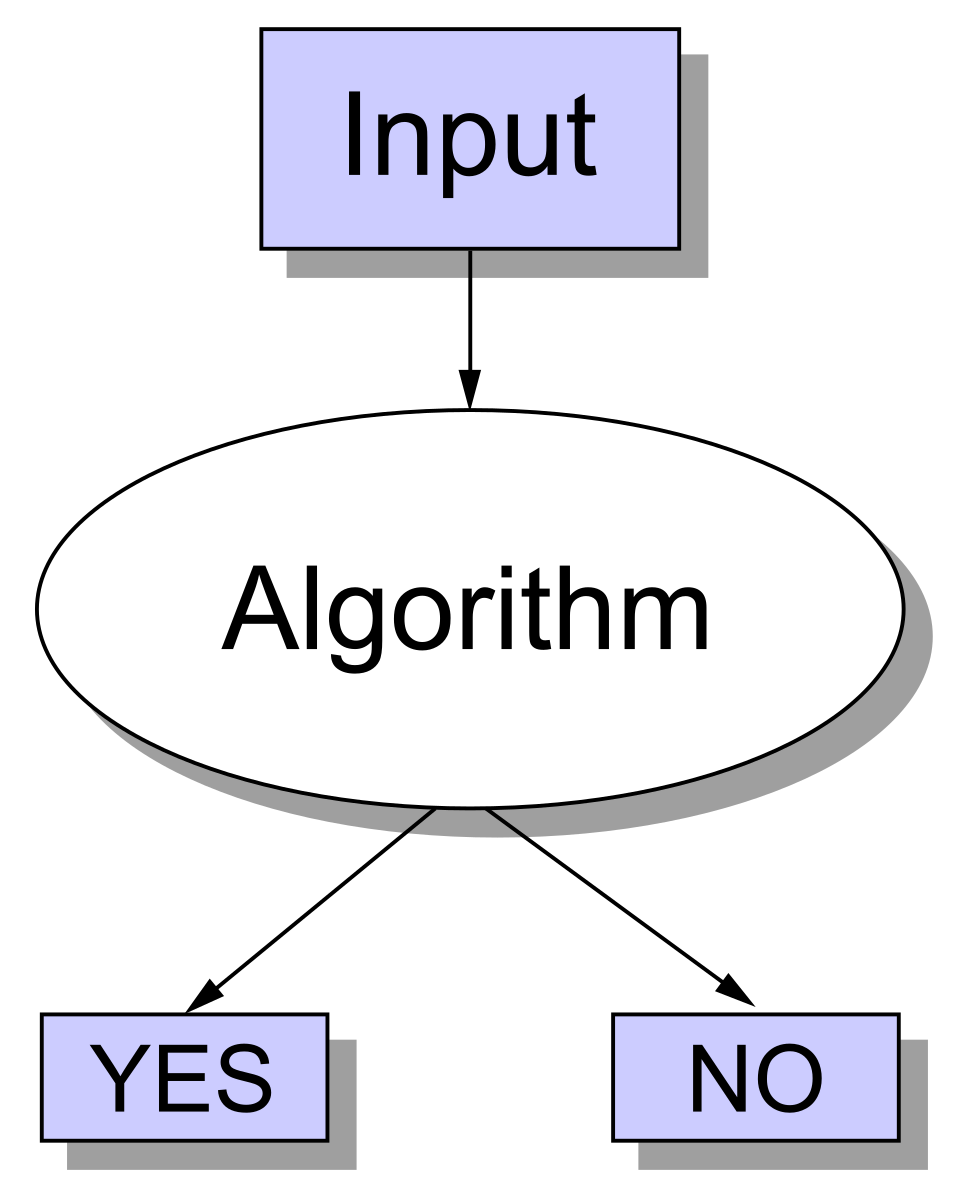
[work or] operate cooperatively or independently” to [… reach goals that are called] system objectives", according to media.(A decision, in a decision problem within computer science, “[is supposed to give or] requires a yes or no answer”, according to media.)
A.I. chips are a kind of computer chip, according to media.
Limits of AI
Researchers didn’t know how difficult several issues were. They still couldn’t offer computers things like emotions or common sense. So far, most AI programs only do what computers can do well like searching databases or doing calculations. AI is not able to sense and understand what is happening around itself because of problems with what computers can do. Computers can do some things like learning and problem solving, but not in the same way as people do.
Written for younger readers
AI, in simpler words
This version comes from Wikijunior, a set of books written for children aged 8 to 11. It is shorter and uses plainer language than the article above.
From Wikijunior: How Things Work
AI or Artificial intelligence is a way to make machines learn and think like humans, basically letting the computer learn, reason and automate. AI is used on the computer side that can play games, chat, translate and more.
Alan Turing (1950)
Marvin Minsky, John McCarthy, Frank Rosenblatt (1950-1960)
AI runs on a computer which requires electricity
varying from coded input to neural networks.
some people think AI is dangerous, but that’s not true, AI is a tool that can help us with a lot of tasks. Compared with a car which can transport a lot of people, it doesn’t mean that the car is dangerous, it’s the person who drives it who decides if the car is driving safely or not.
The same goes for AI, if people use it to help sick people or complex problems, then AI isn’t dangerous, but if they use it to steal secrets or do harm, then AI can be dangerous.
So AI isn’t dangerous on itself. It’s the way we use it if it is good or bad, and that’s why it’s important we all learn about AI and how we can use it to make the world a better place.
Learn, reason and automate.
From assistance in different tasks as chatting, translating, or being a opponent in a game to self driving vehicles such as autopilot, self driving cars, autonomous drones and robots.
AI playing games such as chess and Go versus the human world champion and managing to win.
Self driving vehicles
computer technology: computers with a lot of memory and calculation power for complex calculations and data analysis.
algorithms: neural networks and machine learning for learning and reasoning
Data: A lot of data to learn to AI systems
Math: linear algebra and statistics to develop AI algorithms
programming languages: Programming languages such as Python and Java were needed to create and implement AI systems
Inventions:
Transistor: a component that allows making computers small, fast and efficient
Internet: collecting data worldwide
Neural networks: making it possible for computers to learn and reason
Where this page comes from
The article above is adapted from “AI” on Simple English Wikipedia, by its contributors. We removed reference markers, navigation boxes and tables, expanded measurement templates into readable numbers, and kept the prose otherwise intact. The simpler version is adapted from Wikijunior on Wikibooks.
Both sources are published under CC BY-SA 4.0, so this page is published under the same licence. You may share and adapt it, including commercially, as long as you credit the original and keep the same licence.
Worksheets, answer keys and printable layouts elsewhere on K5Print are our own work and are not covered by this licence.