Archaeologist
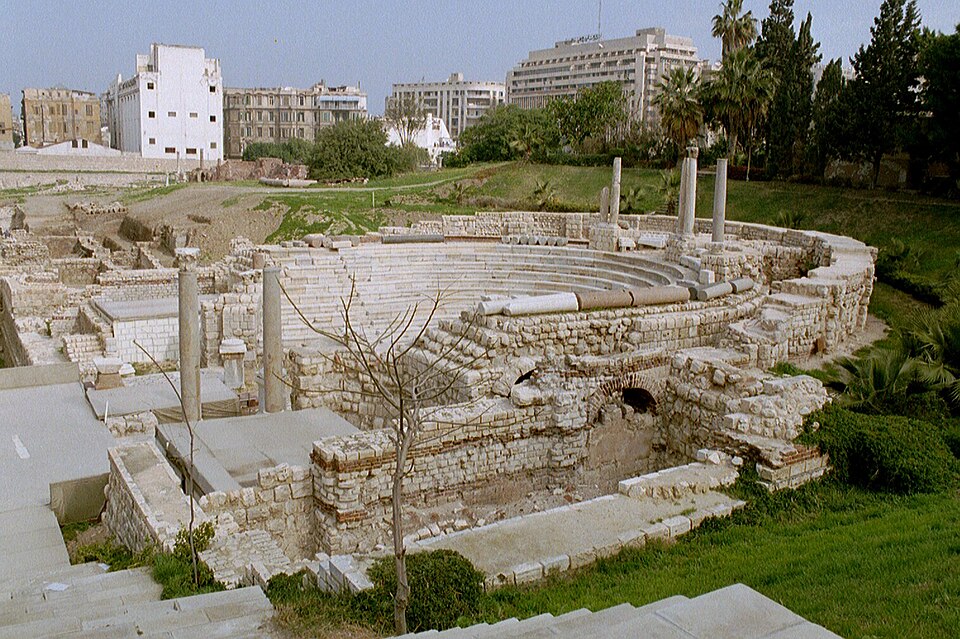

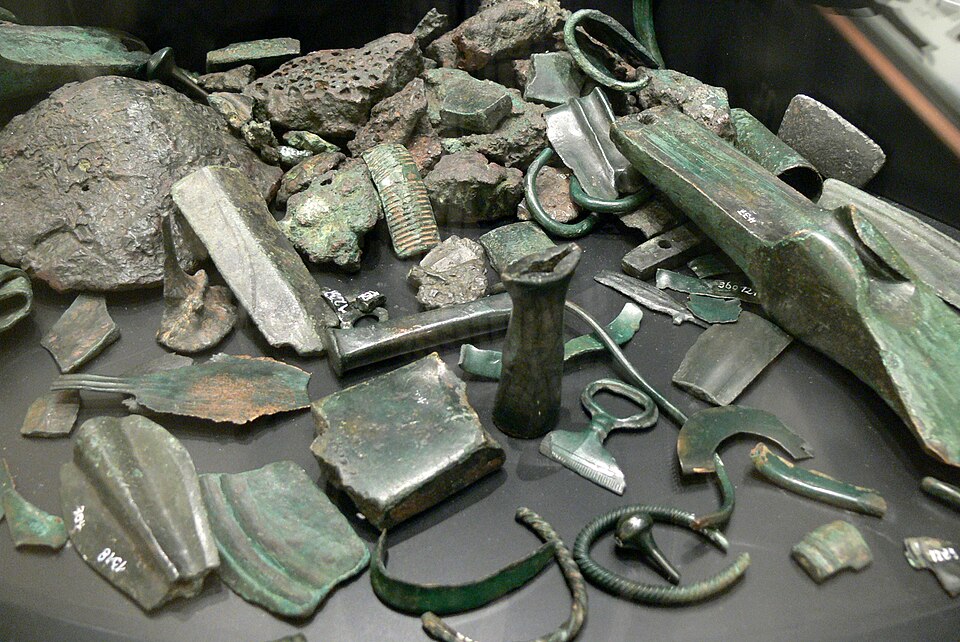
Archaeology, or archeology, is the study of the human past. It looks at remains and objects left by the people who lived long ago. These remains may include old coins, tools, buildings, and inscriptions. Archaeologists, the people who study archaeology, use these remains to understand how people lived.
Fieldwork
When archaeologists do fieldwork, they look for remains, often by digging in the ground. As settlements (places where people lived in groups) change and grow, old buildings get buried. Usually, this is a natural process. A typical student project is to leave an object in a place where there is nothing going on. It will get covered rather quickly, because wind, water and plants will bury it. Sometimes buildings are deliberately buried to make way for new buildings. Ancient Rome, for example, is now up to 40 feet (12 metres) below the present city. This process of natural or man-made burial is why archaeological fieldwork involves digging, and is expensive and takes a long time.
When things are found, or even when nothing is found, the results of the fieldwork are taken back to a base. Short term, the base is often on or near the site. Longer term, the results will usually go to a university or museum. Everything is written down on paper or entered into a computer. Gradually, they build up a picture of what happened long ago. Archaeologists publish their research so others can understand what they learned.
Fields of interest
Archaeologists do not all study the same topics. They have specialties. Some fields of interest include Ancient Egypt (these specialists are called Egyptologists), Ancient China, or the Vikings. Archaeologist s study every civilization that is known, especially the ones where there is no written history. They can study any time period. For example, one might study the beginning of human life in Africa, or study World War II. Marine archaeologists study things that are now underwater. They search for sunken ships or cities that have been lost under the sea.
Subdisciplines
There are many different ways of doing archaeology. these depend on the methods used, the things studied, and the environment. Some of these subdisciplines overlap with each other.
Marine archaeology
Archaeology relating to ocean s, sea s and lake s is usually done underwater. It includes the study of sunken ships and submerged coastlines. “Maritime archaeology” is a part of this subdivision. It refers to the archaeological investigation of past ships and seafaring. A famous example of maritime archaeology is the recovery and restoration of the ship Vasa.
Ice-patch archaeology
When a glacier melts, things that were captured in it can be seen. The recovery and study of these objects is called “ice-patch archaeology” or “glacial archaeology.” A famous example is Ötzi the Iceman.
Historical archaeology
Historical archaeology deals with places, things, and issues from the past or present at or related to sites with written records or oral tradition s. Or it can be defined as “the archaeological investigation of any past culture that has developed a literate tradition.” A prominent example of historical archaeology is the work done at Colonial Williamsburg.
Industrial archaeology
This relatively new branch of archaeology consists of “the systematic study of structures and artefacts as a means of enlarging our understanding of the industrial past.” An early example of industrial archaeology is the work done on the Ironbridge Gorge in Britain.
Archaeozoology
Archaeozoology, or zooarchaeology, is the study of the relationships between humans and animals in the archaeological record. This includes the study of bones, feathers, teeth and other body parts as well as their interpretation.
Paleoethnobotany
Paleoethnobotany (also spelled palaeoethnobotany), or archaeobotany, is the study of past human-plant relations through the recovery and analysis of plant remains from the past, usually from archaeological sites. People who do this can be archaeologists, botanists, or chemists.
Extraterrestrial archaeology
Any archaeology done outside of Earth is extraterrestrial archaeology. For example, people do archaeological work on satellites and on the Moon. The first extraterrestrial archaeology was done by a NASA astronaut, Kayla Barron, on the International Space Station: “On 14 January 2022, she used bright yellow adhesive tape to mark out the corners of 1 sq m (10.7 sq ft) on a science rack in a module of the ISS – like an archaeological trench – and repeated the process in five other locations, ranging from the galley to the toilet.”
A related term is space archaeology, described as being about studying human interaction with space through the artifacts that have been left behind. It “provides insight into technological innovation of the past and can help us chart future space missions and engineering projects. But it also preserves human history and what scientists call ‘space heritage.’”
Experimental archaeology
This field involves attempts at replicating the actions and conditions of ancient culture s. Good examples are Butser Ancient Farm and Overton Down.
Sites
In many countries, governments and other groups of people protect important archaeological sites so they will not be destroyed and so that visitors can always come and see them.
Sometimes archaeological sites are found when foundations are dug for new buildings. Archaeologists have to work quickly when this happens, because people who are building often don’t have a lot of time. As soon as the archaeologists are done with their work, the remains that they have found will be covered over, unless they are very important.
Glossary
absolute dating - “A variety of methods for determining an actual date for an archeological site, such as radiocarbon dating or historical documents”
adze - A (usually) ground-stone cutting tool used in woodworking, having a thin arched blade set at right angles to the handle.
anthrosol - “Soil formed or modified by human activity”
artifact (also spelled ‘artefact’) - “Objects humans made or modified” “A portable object manufactured, modified, or used by humans”
assemblage - “Any collection of artifacts that forms a single analytical unit, perhaps used for a particular activity”
backdirt - “Soil that has been excavated and sifted for artifacts, after which it is presumed to be of no further archeological significance”
biface - “A piece of stone, often a natural pebble, which has been worked from both sides to create sharp chopping edges”
BP (also B.P.) - “Before Present; . . . ‘Present’ is academically defined as the year 1950 (the year when this term was invented).” For example, a radiocarbon date of AD 1066 is given as 884 BP (1950−1066=884) and 333 BC = 2283 BP (1950+333=2283).
bulb of percussion - “a cone-shaped bulge on a fractured surface of flint that is made by a blow applied at an angle”
burin - “A specialized engraving tool with a chipped flint or stone shaft that is cut or ground diagonally downward to form a diamond-shaped point at the tip.”
calibrated radiocarbon date
calibration
chert
cortex
core
dendrochronology
deposit
dig
dolmen
ecofact
excavation
feature
find
findspot
flotation
geofact
geoglyph
in situ
potsherd (also “sherd” and “shard”)
provenience
radiocarbon dating
reference collection (also “comparative collection”)
relative dating
screening (also “sieving”)
seriation
site
spokeshave
stratigraphy
stratum (pl.: strata)
taphonomy
type
type artifact
type site
typology
uniface
Written for younger readers
Archaeologist, in simpler words
This version comes from Wikijunior, a set of books written for children aged 8 to 11. It is shorter and uses plainer language than the article above.
From Wikijunior: World at Work
fr:Wikijunior:Le monde au travail/Archéologue
Where this page comes from
The article above is adapted from “Archaeologist” on Simple English Wikipedia, by its contributors. We removed reference markers, navigation boxes and tables, expanded measurement templates into readable numbers, and kept the prose otherwise intact. The simpler version is adapted from Wikijunior on Wikibooks.
Both sources are published under CC BY-SA 4.0, so this page is published under the same licence. You may share and adapt it, including commercially, as long as you credit the original and keep the same licence.
Worksheets, answer keys and printable layouts elsewhere on K5Print are our own work and are not covered by this licence.