Comic Books
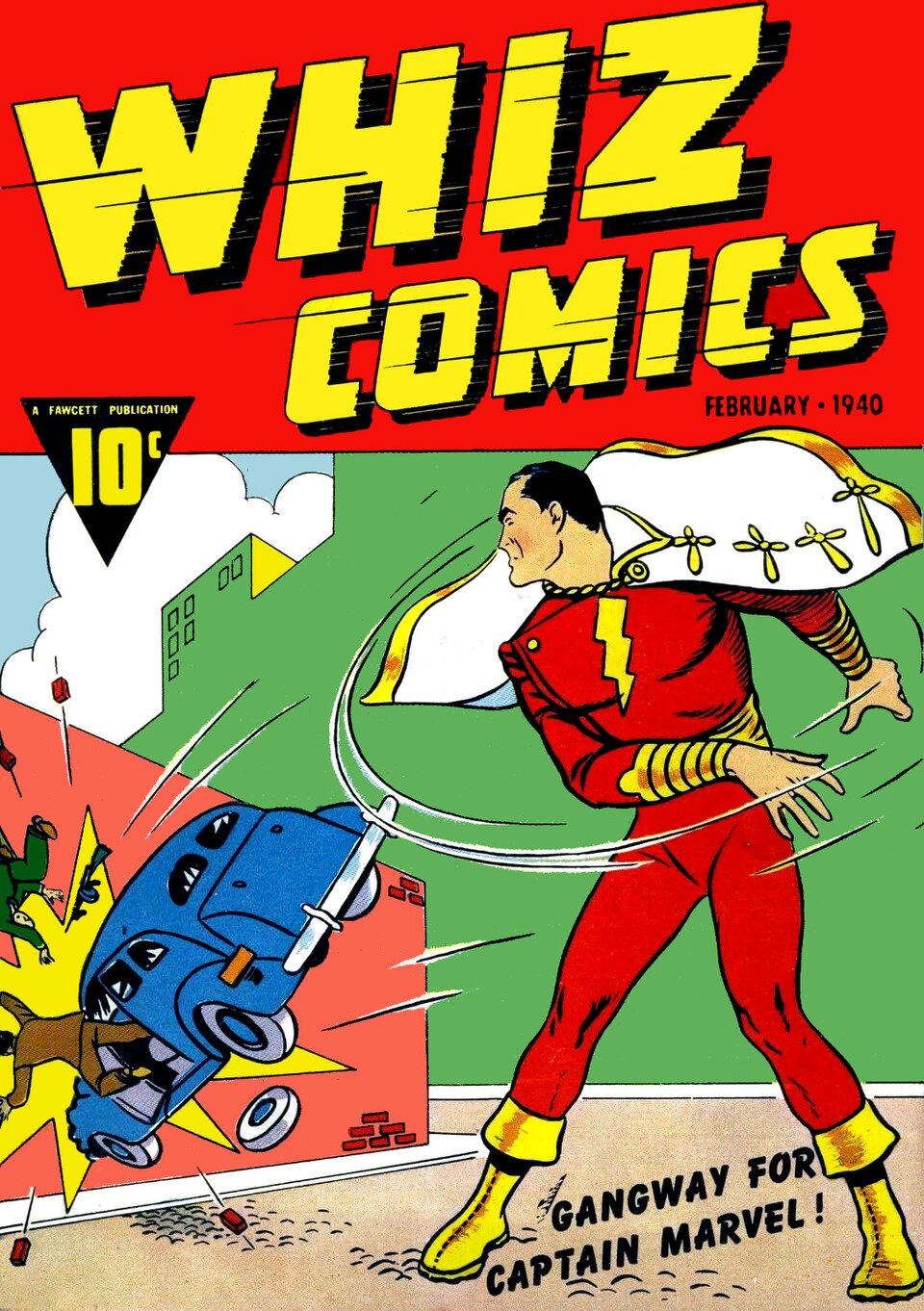

Comic books are books with comics, using pictures to tell a story.
19th century
Comics were first made in the 19th century after the development of modern colour printing and many other inventions. Woodcut engraving was a cheaper type of illustration widely used in the 19th century.
These are important because they created an understanding that illustrations are sometimes just as important as words. The first comic strip appeared in France in 1889, and in the United States in 1897.
20th century
Since the middle 20th century, DC Comics and Marvel Comics have introduced superheroes such as Superman, Batman, Wonder Woman, Spider-Man, the Incredible Hulk and the X-Men. Very often, characters in books, video games, movies and television appear in comics, and sometimes comic book characters are used in movies, TV shows or video games.
Comic books are published in three different forms.
- Single issues that are usually 32 pages long are called comic books. These are printed and bound like a magazine, with the pages folded and stapled together through the centerfold.
- Several comics may be put together in a trade paperback. These have spines like a book and are glued together.
- A bigger comic book that is bound like a trade paperback but is all new, instead of collecting older comics, is called a graphic novel.
American comics
American comics are usually about superheroes. The first American comic book was made in 1933. The first major superhero comic book was Superman, who first appeared in Action Comics #1 in 1939.
Japanese manga
Japanese comics are called manga (漫画) and they are read from right to left.
Korean manhwa
Manhwa (만화) are comic books or graphic novels originating from Korea.
Examples
The list of famous superhero comics are:
- Superman
- Batman
- Spider-Man
- Wonder Woman
- Supergirl
- Batgirl
- Hulk
- Thor
- Captain America
- Green Lantern
- Aquaman
- Fantastic Four
- X-Men
- The Flash
- Captain Marvel
- Iron Man
Some famous manga are:
- Naruto
- Dragon Ball
- Astro Boy
- Sailor Moon
- Death Note
- Chainsaw Man
- My Hero Academia
Written for younger readers
Comic Books, in simpler words
This version comes from Wikijunior, a set of books written for children aged 8 to 11. It is shorter and uses plainer language than the article above.
From Wikijunior: How Things Are Made
The comic books is as dynamic as some of its superhero characters. Comic books offer a visual portal into a world of humor, action, and adventure that can stimulate a reader’s imagination.
During the preparation of a comic book, a variety of art materials may be used to create the original hand-drawn page masters and color guides.
These materials include various sizes, weights, and finishes of paper, as well as several different drawing mediums including pencils, inks, markers, and paints. After the master pages have been scanned and colored on a computer, the computer uses the color guides as a reference to generate four pieces of plastic film that are used in the printing process.
The actual comic book itself is printed on a variety of papers using four colored inks : cyan (a shade of blue), magenta, yellow, and black. These four inks are printed in an interlocking pattern of tiny dots, which our eyes perceive as various colors. The printed comic pages are then bound together with staples or glue to form a comic book.
Step by step (Preferable in bullet point list)
Step 1: Although most people think of a comic book as a series of pictures, it is the written plot that gives the story its direction. The writer and artist discuss the proposed story and exchange ideas. At this stage, they may use a number of formal or informal techniques for developing ideas. They may make notes on small index cards arranged on a table or they may outline the flow of the story on a display board. During the course of their discussion, they decide on the situations, locations, characters, and other details of the story. This helps define the overall plot from beginning to end.
Step 2: Because most comics have a fixed number of pages, the writer and artist must then decide how to break up the story to fit each page. They discuss which scenes and dialogue are critical to keep the story flowing and how the characters and action should be depicted to have the greatest impact. Sometimes they follow general industry practices, which define such things as the optimal number of action scenes per page or the amount of dialogue per word balloon, but other times they rely on their own personal style. Once the story has been refined, the writer creates a script. This includes general descriptions of the scenes and characters in the order they appear, the accompanying dialogue or descriptive text, and general instructions to the artist. The result is very much like a script written for a movie or play.
Step 3: The artist reads the script and makes a rough sketch of each page, called a storyboard. The thumbnail helps the artist decide how each scene should be depicted, and how the different scenes should be arranged on the page. Some artists sketch each scene on a small piece of adhesive backed note paper and then move them around on a larger piece of paper to achieve the desired effect.
Step 4: An editor may review the pencil drawings and make changes. Sometimes the editor may ask the artist to redraw a portion of a scene to correct an error or clarify an item. In other cases, the editor may have to shorten the dialogue or narrative to fit in the space left by the artist.
Step 5: The final step in the drawing process is adding the lettering for the dialogue, sound effects, and narratives that appear in the script. This can be done using hand lettering, adhesive labels, or computer-generated digital type. The letterer selects a typeface that not only conveys the actual words or sounds, but also conveys the action or emphasis of the scene with its size, style,and placement.
Step 6: The finished pages, including the front and back covers, are sent to the colorists who add the colors and prepare the four-color separation films required for printing. The original artwork is first photocopied and then scanned into a computer. The photocopy is hand-colored using colored markers, pencils, and paints to become a guide when coloring the pages on the computer. The scanned copy becomes an electronic file that forms a digital outline of the page to be colored.
Step 7: When all the pages have been colored, a proof copy of the entire comic book is printed from the computer for final review and approval. The computer then prints a piece of plastic film for each of the four component colors on each page. Each piece of film has hundreds of thousands of tiny dots to represent the location and concentration of that color component across the page.
Step 8: The individual pages are arranged so they will appear in the proper order when the comic book is assembled. Usually, two or more pages are printed on each side of a single sheet of paper. When the sheets of paper are stacked on top of each other and folded in the middle, the pages appear in the proper order. On some printing presses, as many as eight pages can be printed on each side of a large sheet, then cut and folded as required.
Storyboard example.jpg|Step 3: Summary of comics flows is called storyboarding Manga technique - Drawing - Belgotaku 02.jpg | Step 3: rtist sketching on the papers for comics Adult Coloring program.jpg| SarahJColeman.png|Step 4: Lettering details in comic
Where this page comes from
The article above is adapted from “Comic Books” on Simple English Wikipedia, by its contributors. We removed reference markers, navigation boxes and tables, expanded measurement templates into readable numbers, and kept the prose otherwise intact. The simpler version is adapted from Wikijunior on Wikibooks.
Both sources are published under CC BY-SA 4.0, so this page is published under the same licence. You may share and adapt it, including commercially, as long as you credit the original and keep the same licence.
Worksheets, answer keys and printable layouts elsewhere on K5Print are our own work and are not covered by this licence.