Dice
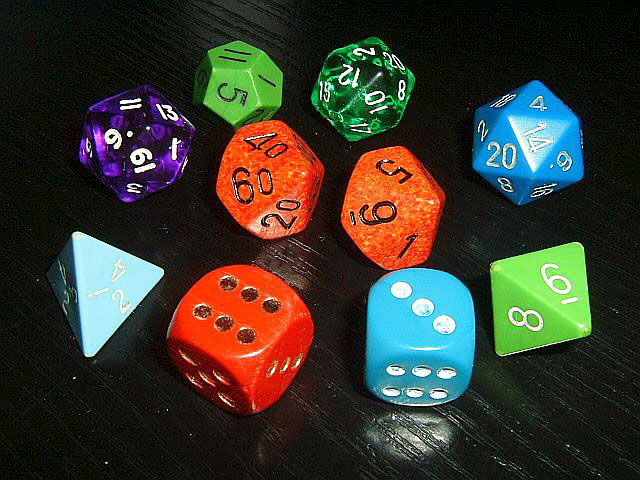

Dice are objects used in games when something random needs to be done, such as moving a game piece a random number of places on a board. Most dice are cubes that have the numbers 1, 2, 3, 4, 5 and 6 on the faces. Dice are sometimes made in other polyhedral shapes than cubes, but the six-sided die (die is the singular of “dice”) is the most common. A die is usually rolled by the player’s hand. When adding together opposite sides of typical cubical dice, the sum is always 7.
Some games are played with two or more dice and some use only one. Some games that use dice are Monopoly, Yahtzee, Risk, and many more.
Weights can be put inside a die to make it only land on a certain number once it is rolled. This is sometimes used as a way of cheating.
Types of dice
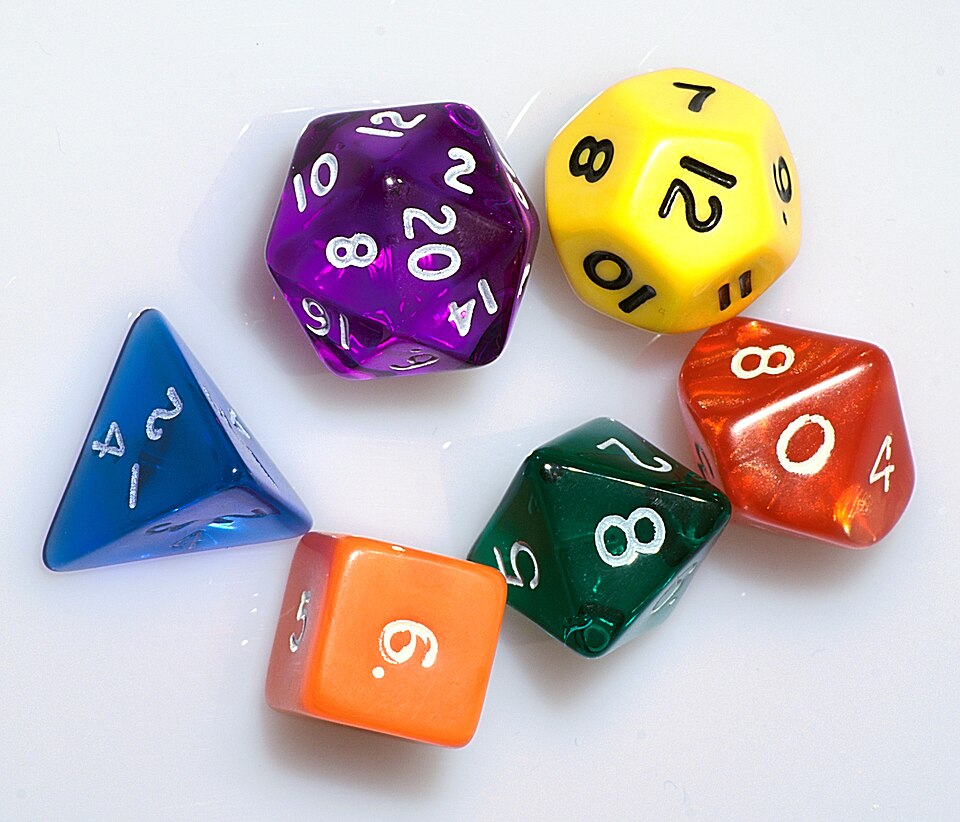
There are many different types of dice. Some dice have different numbers of sides. These are called polyhedral dice. They are used in some games like Dungeons & Dragons.
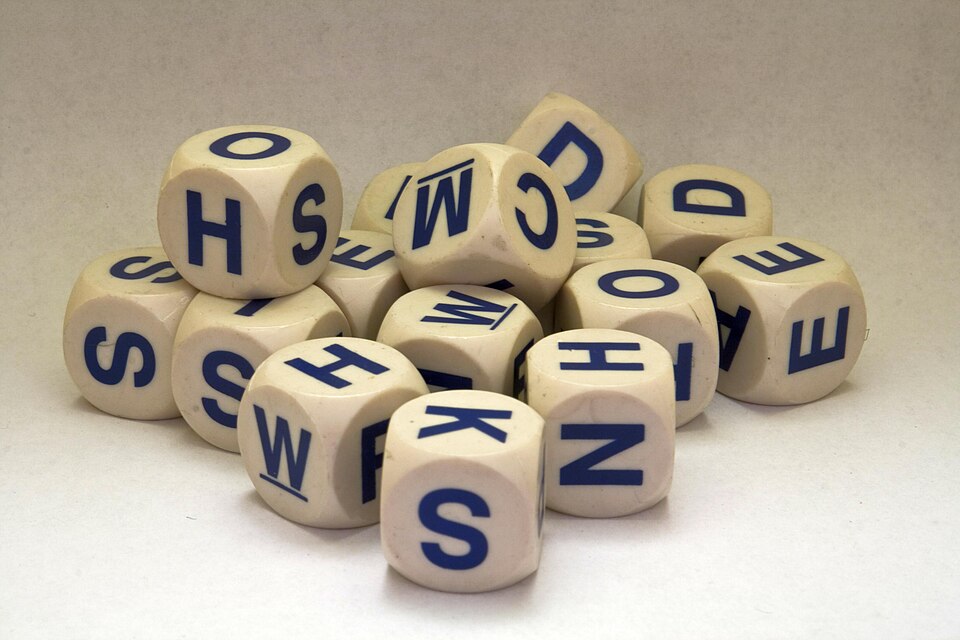
Some dice do not have numbers on them at all. Instead, they have letters, pictures, or other symbols on them. Some games use these when they need something random that is not a number. For example, some word games use dice with letters to give the players random letters they have to use in the game.
Written for younger readers
Dice, in simpler words
This version comes from Wikijunior, a set of books written for children aged 8 to 11. It is shorter and uses plainer language than the article above.
From Wikijunior: How Things Are Made
Dices.png|The variety type of dices Dice are tools used for generating random numbers in a variety of social and gambling games.
Today, the most widely used base material for dice manufacture is plastic. Plastics are high molecular weight polymers that are produced through a variety of chemical reactions. For a plastic to be suitable in dice manufacture it must have good impact strength, low moisture absorption rate, easily coloured, and heat stable. It is also desirable that it must be thermoset (The shape is fixed once it is exposed to heat for first time) plastic.
The plastic that meets all of these requirements is poly-methyl-meth-acrylate (PMMA).
- Step 1: Plastic pellets are transformed into dice via injection molding. The pellets are plastic beads that have all the colorants and fillers already added. They are placed into a large bin known as a hopper and passed through a hydraulically controlled screw. As they travel through the screw, they are heated and melted. At the end of this screw is a spreader which injects the molten material into a cool, closed two-piece mold.
- Step 2: The mold is made up of several chambers, which create multiple plastic parts. Inside the mold, the plastic is held under pressure and then allowed to cool. As it cools, the plastic pieces harden. The mold is then opened. When the mold is opened, the individual pieces are forced together to form a single solid cube. Because the mold was appropriately designed, this cube has indentations that will become the dots on each side. The cube is then ejected from the mold, coated and passed to the next phase of production via conveyor.
- Step 3: To complete the production of the die, they may be washed and dried before the final decorations are applied. First, the spots are appropriately painted by machine. Nowadays, the machine are equipped with sensors and camera and accurately to dispense the paint over the indentation only.
- Step 4: For board games, the dice are packed up into boxes and shipped to game manufacturers just like any other component material. When they are sold directly to consumers, dice are typically put into plastic blister packs with a cardboard backing.
Red Dice Painting Automation.gif| Step 3: An automated painting machines that paint over the indentation of dice
Where this page comes from
The article above is adapted from “Dice” on Simple English Wikipedia, by its contributors. We removed reference markers, navigation boxes and tables, expanded measurement templates into readable numbers, and kept the prose otherwise intact. The simpler version is adapted from Wikijunior on Wikibooks.
Both sources are published under CC BY-SA 4.0, so this page is published under the same licence. You may share and adapt it, including commercially, as long as you credit the original and keep the same licence.
Worksheets, answer keys and printable layouts elsewhere on K5Print are our own work and are not covered by this licence.