Firefighter
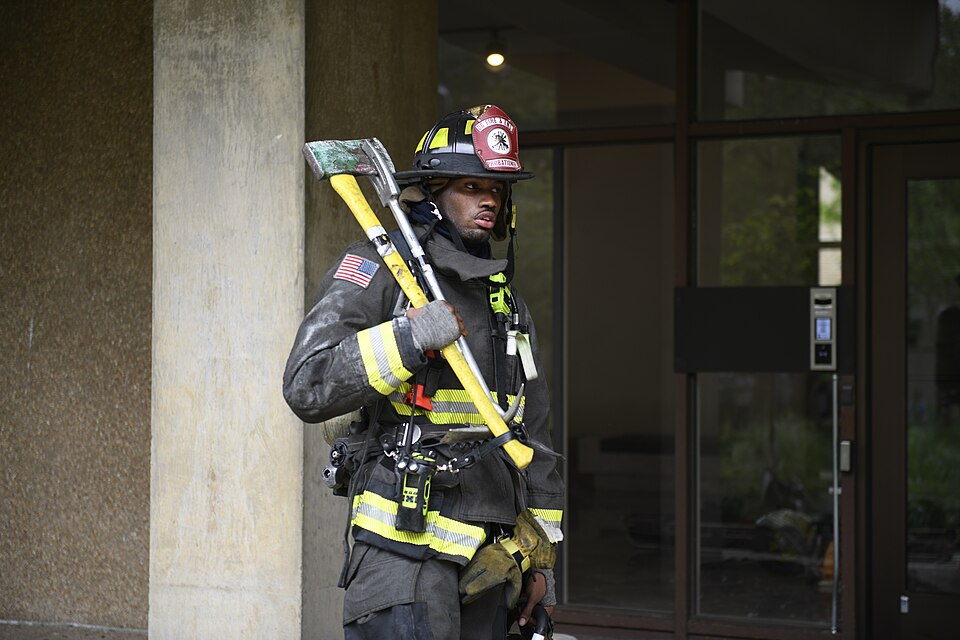

Firefighters are people who help put out fires. However, they can also help with many other emergencies. Firefighters use different types of equipment to deal with each type of emergency they are called to. They work for the fire service, which is one of the three main emergency services.
Firefighters are based in and respond to emergency situations from a fire station (also known as a fire house or fire hall).
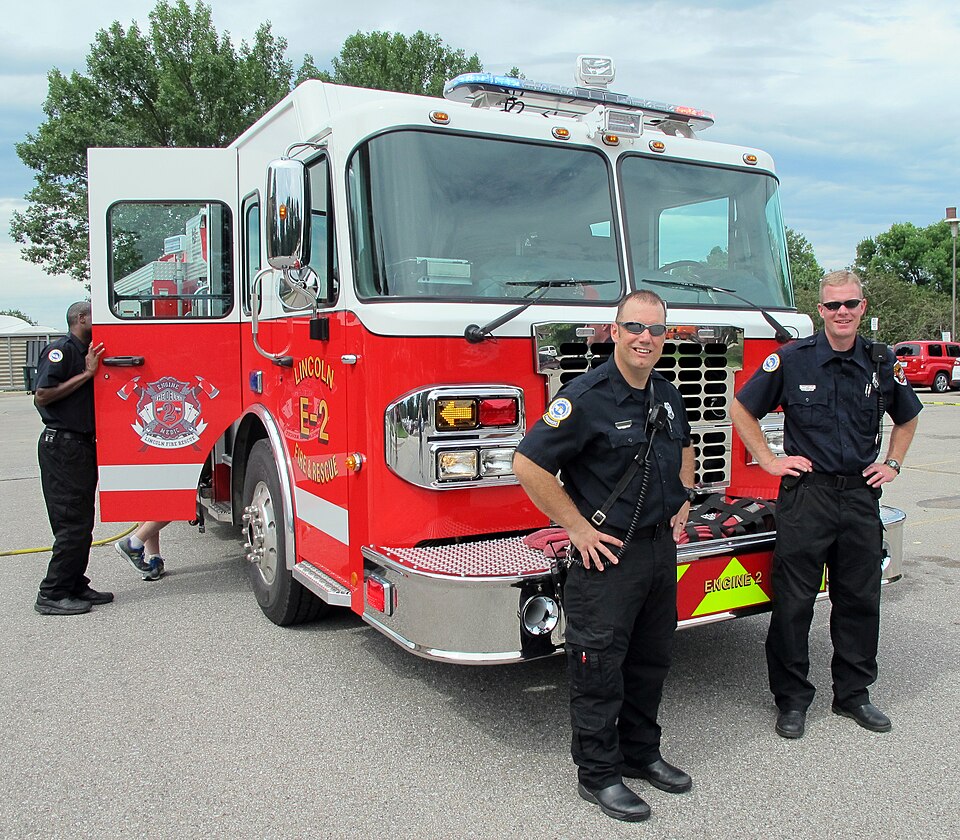
Firefighters deal with many different emergencies. When somebody needs their help, the firefighters will drive to the location of the emergency on a vehicle called a fire engine (also known as a fire truck).
Fire engines have lots of equipment to deal with different emergency situations. They have water hoses, water pumps, ventilation, fans, and many other items that help them put out fires.
Fire engines also carry equipment for medical incidents, hazardous material incidents, and equipment that can help firefighters rescue people. To help with medical emergencies, fire engines have cardiac monitors, defibrillators, intubation and airway management supplies, emergency medicines, and other medical items on board. To help the firefighters rescue people, fire engines have many rescue tools such as spreaders, cutters, and rams. Their rescue equipment also includes air bags, electric and battery powered breaching, special rescue saws, torches, ropes, and other specialized rescue tools and equipment on board. In response to hazardous material incidents, fire engines have protection equipment to keep the firefighters safe from the hazards. Fire engines also carry non-sparking tools, generators, and other hazardous material tools and equipment on board.
Modern fire engines have flashing emergency lights, as well as loud sirens and horns. This helps to warn people that a fire engine is coming down the road to an emergency.
Radios, computers, and other devices are used by firefighters on fire engines to talk with their dispatchers and other emergency service vehicles, including mutual aid, Fire and Rescue units, police units, and Emergency Medical Services units.
Firefighters wear heavy clothing to protect them from the heat of a fire, known as bunker gear or turnout gear. They wear equipment to help them breathe in areas that are filled with smoke. They may also wear a mask to protect themselves from breathing in smoke and/or hot air. This helps them to protect themselves and those that they rescue.
Fire departments
The name of the agency that firefighters work for can be different in each country. Common names include a fire department, fire service, fire and rescue service or fire brigade. Fire departments are usually government agencies that are funded by taxes. Some place, such as airports, have their own firefighters.
At some fire departments, the firefighters work full-time. They stay at the fire station and wait to be called out to an emergency. They work during both the daytime and at night. Villages and small towns normally have part-time firefighters. They have other jobs outside of the fire service. These firefighters will drive from their home or workplace to the fire station when their help is needed. They may be volunteers, or they may be paid for doing this job. In the United Kingdom, these paid firemen are known as “retained firefighters”.
Written for younger readers
Firefighter, in simpler words
This version comes from Wikijunior, a set of books written for children aged 8 to 11. It is shorter and uses plainer language than the article above.
From Wikijunior: World at Work
fr:Wikijunior:Le monde au travail/Pompier
Where this page comes from
The article above is adapted from “Firefighter” on Simple English Wikipedia, by its contributors. We removed reference markers, navigation boxes and tables, expanded measurement templates into readable numbers, and kept the prose otherwise intact. The simpler version is adapted from Wikijunior on Wikibooks.
Both sources are published under CC BY-SA 4.0, so this page is published under the same licence. You may share and adapt it, including commercially, as long as you credit the original and keep the same licence.
Worksheets, answer keys and printable layouts elsewhere on K5Print are our own work and are not covered by this licence.