Mobile Phone
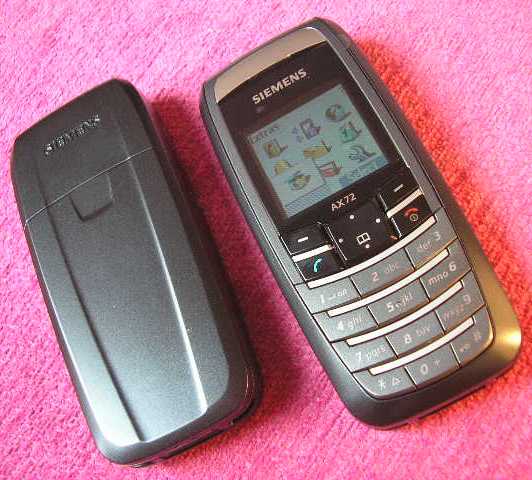

A mobile phone (also known as a hand phone, cell phone, or cellular telephone) is a small portable radio telephone.
The mobile phone can be used to communicate over long distances without wires. It works by radio wave connection to a nearby base station (also called a “mobile tower”), which links the phone to the main telecommunications network. When moving, if the mobile phone gets too far away from the cell it is connected to, that cell sends a message to another cell to tell the new cell to take over the call. This is called a “hand off,” and the call continues with the new cell. The hand-off is done so smoothly that the user will usually not know that the call was transferred to another cell.
As mobile phones became more popular, they began to cost less money, and more people could afford them. Mobile service providers started offering monthly plans for as low as US$30 or US$40. Cell phones have become so cheap to own that they have mostly replaced pay phones and phone booths except for urban areas with many people.
In the 21st century, a new type of mobile phone, called smartphones, have become popular. Since the 2010s, smartphones have become more widely used than traditional feature phones.
History
Mobile phones in the 1950s through 1970s were large and heavy, and most were built into cars. In the late 20th century technology improved so people could carry their phones with ease.
Although Dr. Martin Cooper from Motorola made the first call using a mobile phone in 1973 (using a handset weighing 2 kilograms), it did not use the type of cellular mobile phone network that we use today.
The first cellular mobile phone networks were created in 1979 in Japan. Now almost all urban areas, and many country areas, are covered by mobile phone networks.
Technology
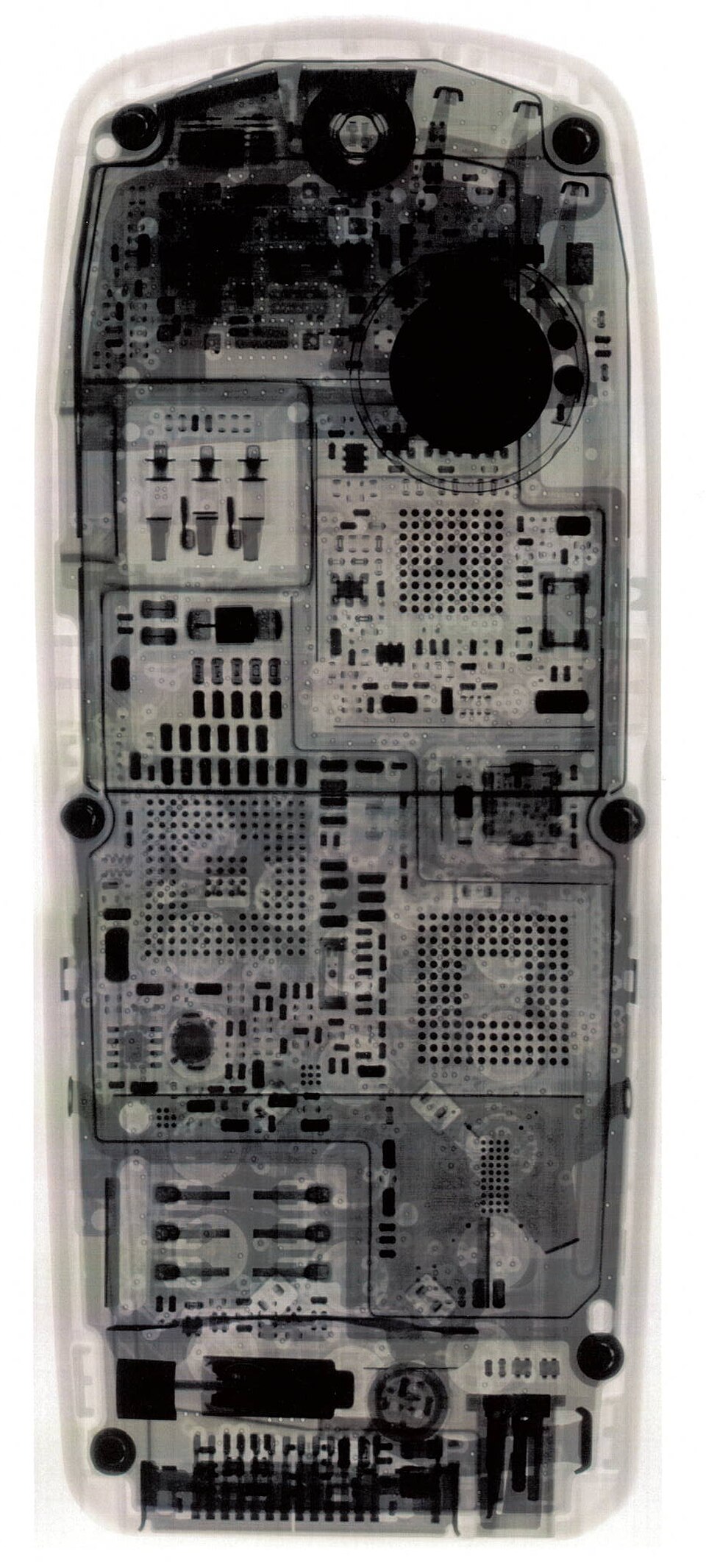
A cell phone combines technologies, mainly telephone, radio, and computer. Most also have a digital camera inside.
Cell phones work as two-way radios. They send electromagnetic microwaves from base station to base station. The waves are sent through antennas. This is called wireless communication.
Early cell telephones used analog networks. They became rare late in the 20th century. Modern phones use digital networks.
The first digital networks are also known as second generation, or 2G, technologies. The most used digital network is GSM (Global System for Mobile communication). It is used mainly in Europe and Asia, while CDMA (Code-Division Multiple Access) networks are mainly used in North America. The difference is in communication protocol. Other countries like Japan have different 2G protocols. A few 2G and 3G networks are still used. 4G are more common, and many places have 5G.
The radio waves that the mobile phone networks use are split into different frequencies. The frequency is measured in Hz. Lower frequencies can send the signal farther. Higher frequencies provide better connections and the voice communications are generally clearer. Four main frequency bands are used around the world: 850, 900, 1800 and 1900 MHz. Europe uses 900 and 1800 MHz and North America uses 850 and 1900 MHz.
Today there are mobile phones that work on two, three or four frequency bands. The most advanced phones work on all frequencies. They are called ‘world’ phones and can be used everywhere.
Shapes
There are different kinds of phones. A flip phone flips open. A bar phone is shaped like a candy bar, and the keys and screen are on one face. A slate phone is a phone that has almost no buttons, and uses a touchscreen. Most smartphones are slates. A slider phone slides on rails. It can slide out number keys or a mini keyboard, and some do both. A swivel spins on an axle.
How mobile phones work
When a mobile phone is switched on, its radio receiver finds a nearby mobile phone network base station, and its transmitter sends a request for service. Computers in the base station check if the phone is allowed to use the network. The base station covers an area called a cell. A phone can move between different cells, but will only communicate with one cell at a time. This is why mobile communications are sometimes called cellular communications.
Once connected to a station, the mobile phone can make calls. Because the network knows that the phone is connected to that particular cell, it can also route calls to the mobile phone. Sometimes the radio connection to the cell is lost, for example when you go underground. The phone cannot make or receive calls until the connection is made again.
Networks and payment
The network is the company that provides the phone service. In most areas there will be more than one mobile network. Customers choose networks based on how well the different networks work in their area, or by price.
There are two main ways to pay for mobile phone calls:
- Contract
- : If you pay by contract you will pay the network money every month so that you can make calls. Usually you can talk for a lot of time for the monthly fee, but if you do not use the phone a lot you still pay the same money.
- Pay as you use
- : If you pay as you use, you will pay for a fixed amount of call time credit which you then use up when phoning people. Once the credit is used up you must buy some more to use the phone. This can be cheaper if you do not use the phone a lot.
Mobile phones use different technical standards. GSM phones use a separate microchip, called a Subscriber Identity Module or SIM card, to work. The SIM has information like the phone number and payment account and this is needed to make or receive calls. The SIM may be supplied by the same company as the phone, or a different one. In unlocked phones you can change the network by using a SIM from another network, but some companies do not want this to happen and they lock the phone so that you have to use their SIM.
Locked phones only makes phone calls when the phone is activated. When someone buys a contract, the network gives them a code, that if they enter it into the phone, the phone will then make calls. It is usually impossible to switch to a different network’s code on this type of phone. The majority of these CDMA phones are used in the United States and nearby countries.
Smartphones
A majority of new mobile phones from the 21st century are smartphones. These phones are basically small computers. Besides calling, they can be used for email, browsing the internet, showing local maps, playing music and games, and many other functions that computers can perform.
Most smartphones run a common mobile operating system. This allows developers to make mobile apps that work on many different phones without needing to change the code. Examples of smartphones include Apple’s iPhone (which uses iOS software) and Samsung’s Galaxy series, one of many phones that use the Android platform made by Google.
Mobile case
Cases are designed to attach to, support, or otherwise hold a smartphone. They are popular accessories. Some have a keyboard (computer) built in. Case measures are based on the display inches (e.g. 5 inch display). There are different types:
- Pouches and sleeves
- Holsters
- Shells
- Skins
- Bumpers
- Flip cases and wallets
- Leather case
- Screen protectors and body films
Holsters are commonly used alone for devices. They have rubberized padding, and/or are made of plastic and without exposed rigid corners. Heavy duty cases are designed to protect from drops and scratches.
Written for younger readers
Mobile Phone, in simpler words
This version comes from Wikijunior, a set of books written for children aged 8 to 11. It is shorter and uses plainer language than the article above.
From Wikijunior: How Things Work
The invention of the mobile phone, or cellphone as it is often called, is credited to Dr. Martin Cooper at Motorola. He made the first successful call over the system on April 3 of 1973.
All portable cellphones use an electrical battery.
The batteries are usually rechargeable, so they can be used over and over again with recharging. To recharge the battery, the cellphone is plugged into a charger that connects to either a car battery or an electrical wall socket. Charging stores electrical energy onto the battery, which is then slowly used up by the cell phone after it has been unplugged.
Most cellphones typically use a 3.6 volt battery. The battery will usually last 2-3 days before it needs to be recharged depending on how much the phone is used.
The cellphone is a combination of a telephone and a radio. Like a telephone, you can listen and talk to someone on the other end, and like a radio, you can do it wirelessly over the air. The signals that come into and go out of a cellphone are like the ones TV and radio are received on, just formatted differently.
Signals are sent back and forth between the cellphone and a base station. The base station is a device that is usually a mile or two away from where the cellphone is being used and has an antenna that is high up on a tower. Since radio signals can bounce around and go through walls and windows, you don’t have to be within sight of the base station in order to communicate with it. Once the signals arrive at the base station, they are converted into regular telephone signals and sent over the public telephone network to whomever you are calling, or sent back out from another base station if you are calling another cellphone.
The reason why it is called a cellphone is that it operates inside a “cell”. A cell is a geographic region in which a base station is located. If you are located in that cell, your cellphone communicates to the base station inside that cell. If you move into a different cell, you are transferred seamlessly to a different base station inside the other cell. By keeping the cells small and having many base stations located every couple of miles, more users can talk at the same time from different places.
Also since there are many cells, one is located close to where you are using the phone, so the phone does not have to transmit with too much power. Less power means the phone can be made smaller and use less battery. Think of it as if you were at a party in a large room with a lot of people talking. If you were talking to a person just 3 feet way, you don’t have to shout for them to hear you. Meanwhile, someone at the other end of the room could be talking to someone else near them and not interfere with what you are saying.
When properly used a cellphone is not dangerous at all. A cellphone uses microwave frequency to communicate over the air to a base station. To do so, it transmits about 1 Watt of power from its antenna. You can compare that with the amount of power a single Christmas light bulb consumes.
Since talking on a mobile phone is distracting, it can be dangerous to use one while driving. Several studies have shown that drivers have more accidents while using cellphones, even when using “hands-free” systems. Many countries and some U.S. states have passed laws to restrict use of mobile phones while driving.
Many gas stations have signs warning people not to use mobile phones while pumping gas. There is a small chance that a broken cellphone can cause a spark that can ignite gas vapors. Although this is very unlikely, it’s best to be safe than sorry, and not use electronic equipment such as mobile phones where explosive gas may be present.
Addiction to mobile phones is a serious thing. It’s when you want to keep playing/using it but it’s time to stop. This happens because when you use a phone to play games, you receive something called dopamine. Your brain wants more and more, so your brain will want to play the phone more for more dopamine. But the brain works against itself.
The brain does something called “desensitization”, which makes it even harder to get the desired dopamine, making the required playtime longer and longer, and longer. We call this addiction “mobile phone addiction”.
A mobile phone allows you to use telephone service from almost anywhere. Most telephones are what is called “land line” or “fixed line” meaning they are physically tied to the land by a wire that plugs into a jack that goes to the phone company. A portable or cordless phone allows you to talk wirelessly but the receiver is still connected to the same land line. The cordless phone can only work within 100 - 200 feet of your receiver that is connected to the land line.
A mobile phone allows you more range and allows you to communicate much further from virtually anywhere in the city, country, or world. You have the ability to make a telephone call or receive one wherever you happen to be with your mobile phone. But only if you have a signal.
Mobile phones or cellphones come in many different configurations. Most are about the size of a candy bar, have a display and a keypad. Some configurations come with a flip that opens up to show the display and the keypad, thereby keeping it protected. More recently, mobile phones come with touchscreens.
Cellphones are available both big and small, simple and complex. Some just make simple phone calls, others have tiny cameras, MP3 players, digital organizers built into them. Some of the newer models, can even allow you to use the internet over them, browse various services such as news, movie listings, or chat using instant messaging services.
New models are always being introduced. New fashions, new technology, more features, cheaper cost, better performance, keep the market place filled with plenty of choices.
The mobile phone has radically changed the world since its introduction in 1973. With each year more and more people are owning one. Most families typically have two or three.
The ability to easily communicate to anyone, anywhere, is a powerful concept. This was true when the telegraph was first invented, and then taken to a new level with the advent of the telephone. The mobile phone is just the next extension of that technology.
Ease of communication, leads to more efficient communication, and thus to an efficient use of time and resources. More efficient communication leads to better collaboration, better ideas, better use of time, more peace of mind. It provides an important lifeline in times of emergency.
But aside from practical applications, it also provides benefits socially and is fun. It allows communications with friends and family regardless of location. Whether you’re calling to say something important, or just to chat about nothing at all.
Many mobile phones now have cameras built into them, allowing you to take a photo anywhere at any time, some people buy mobile phones just for the camera and don’t even use it to phone or text people!
Plenty of important events and controversies have happened because people could organise things quicker with mobile phones. In Britain, a series of strikes by cargo lorry drivers over rising fuel prices was supposedly organised by one man and a mobile phone. Mobile phones with cameras and video are increasingly being used to capture important events when television crews are not available.
Since the mobile phone is a combination of a telephone and a radio, these two devices are the building blocks upon which the mobile phone was developed. In addition, tiny computers (microprocessors) are needed to control the radio and its connection to the nearest base station.
The telephone was invented by Alexander Graham Bell in 1876.
The radio was invented by Guglielmo Marconi in 1896.
The microprocessor was invented by Gary Boone in 1971.
Where this page comes from
The article above is adapted from “Mobile Phone” on Simple English Wikipedia, by its contributors. We removed reference markers, navigation boxes and tables, expanded measurement templates into readable numbers, and kept the prose otherwise intact. The simpler version is adapted from Wikijunior on Wikibooks.
Both sources are published under CC BY-SA 4.0, so this page is published under the same licence. You may share and adapt it, including commercially, as long as you credit the original and keep the same licence.
Worksheets, answer keys and printable layouts elsewhere on K5Print are our own work and are not covered by this licence.