Modes of transport

Air
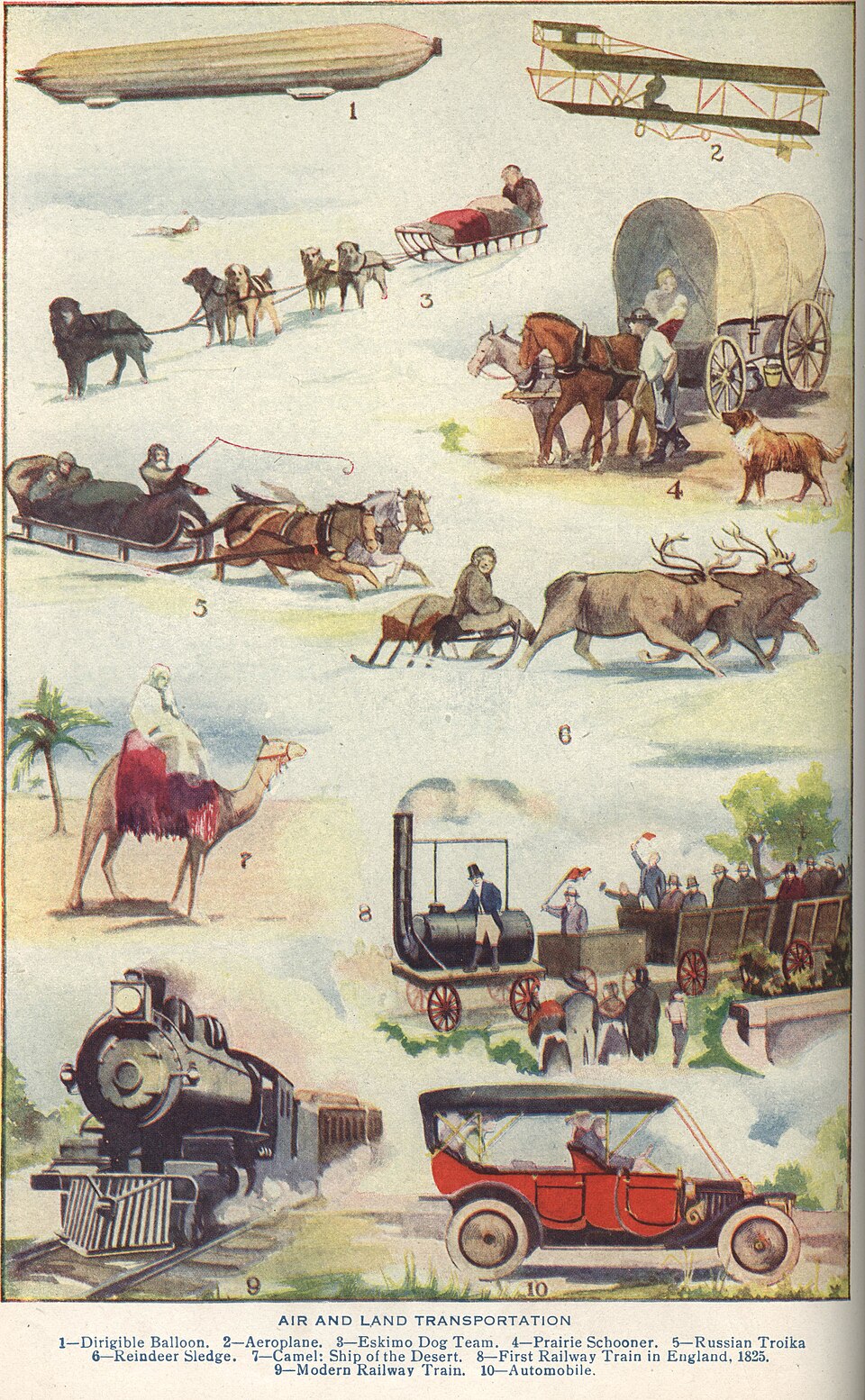
Air transport is the most modern transport. It was the last to be invented, commercially viable and popularised. An early non-commercial example was Chinese lanterns in antiquity. It is divided between lighter-than-air transport and heavier-than-air transport. Since the twentieth century it is known as aviation. Jet aircraft entered commercial use and replaced predecessors in the postwar era. Cable car transport uses land infrastructure but transportation in the air suspended from a cable. Space transport could also be loosely considered a form of air transport.
Water
Water transport is the oldest vehicular transport. For most of history it was the fastest transport mode especially for freight. It involves the oldest artificial man-made infrastructure in the form of canals first constructed for river transport (as opposed to just irrigation) in Ancient China in the 8th to 5th Centuries BCE. But also, it operates on natural rivers and seas as far back as the canoes constructed by the Austronesian peoples in the 6th millenium BCE. Oceans were first reliably crossed in the Middle Ages technology applied to ships. Seaplanes use water infrastructure for air transport.
Land
Land transport is the oldest form of transport as it includes walking. It includes road transport, rail transport and street infrastructure such as steps and rural infrastructure such as trails. Transport by road is generally distinguished between before motorised transport and after its advent and the accompanying rise in standards of road building construction. Transport by rail is generally distinguished between light rail and heavy rail. Hybrid road rail modes exist in the form of vehicles adapted to use both.
Terminology
Modes of transport are where the terms intermodal and modal split or modal share come from to mean comparing usage of different modes of transport.
Written for younger readers
Modes of transport, in simpler words
This version comes from Wikijunior, a set of books written for children aged 8 to 11. It is shorter and uses plainer language than the article above.
From Wikijunior: Transport
Air transport is the most modern transport. It was the last to be invented, commercially viable and popularised. An early non-commercial example was Chinese lanterns in antiquity. It is divided between lighter-than-air transport and heavier-than-air transport. Since the twentieth century it is known as aviation. Jet aircraft entered commercial use and replaced predecessors in the postwar era. Cable car transport uses land infrastructure but transportation in the air suspended from a cable. Space transport could also be loosely considered a form of air transport.
Water transport is the oldest vehicular transport. For most of history it was the fastest transport mode especially for freight. It involves the oldest artificial man-made infrastructure in the form of canals first constructed for river transport (as opposed to just irrigation) in Ancient China in the 8th to 5th Centuries BCE. But also, it operates on natural rivers and seas as far back as the canoes constructed by the Austronesian peoples in the 6th millenium BCE. Oceans were first reliably crossed in the Middle Ages technology applied to ships. Seaplanes use water infrastructure for air transport.
Land transport is the oldest form of transport as it includes walking. It includes road transport, rail transport and street infrastructure such as steps and rural infrastructure such as trails. Transport by road is generally distinguished between before motorised transport and after its advent and the accompanying rise in standards of road building construction. Transport by rail is generally distinguished between light rail and heavy rail. Hybrid road rail modes exist in the form of vehicles adapted to use both.
Modes of transport are where the terms intermodal and modal split or modal share come from to mean comparing usage of different modes of transport.
Where this page comes from
The article above is adapted from “Modes of transport” on Simple English Wikipedia, by its contributors. We removed reference markers, navigation boxes and tables, expanded measurement templates into readable numbers, and kept the prose otherwise intact. The simpler version is adapted from Wikijunior on Wikibooks.
Both sources are published under CC BY-SA 4.0, so this page is published under the same licence. You may share and adapt it, including commercially, as long as you credit the original and keep the same licence.
Worksheets, answer keys and printable layouts elsewhere on K5Print are our own work and are not covered by this licence.