Newspaper
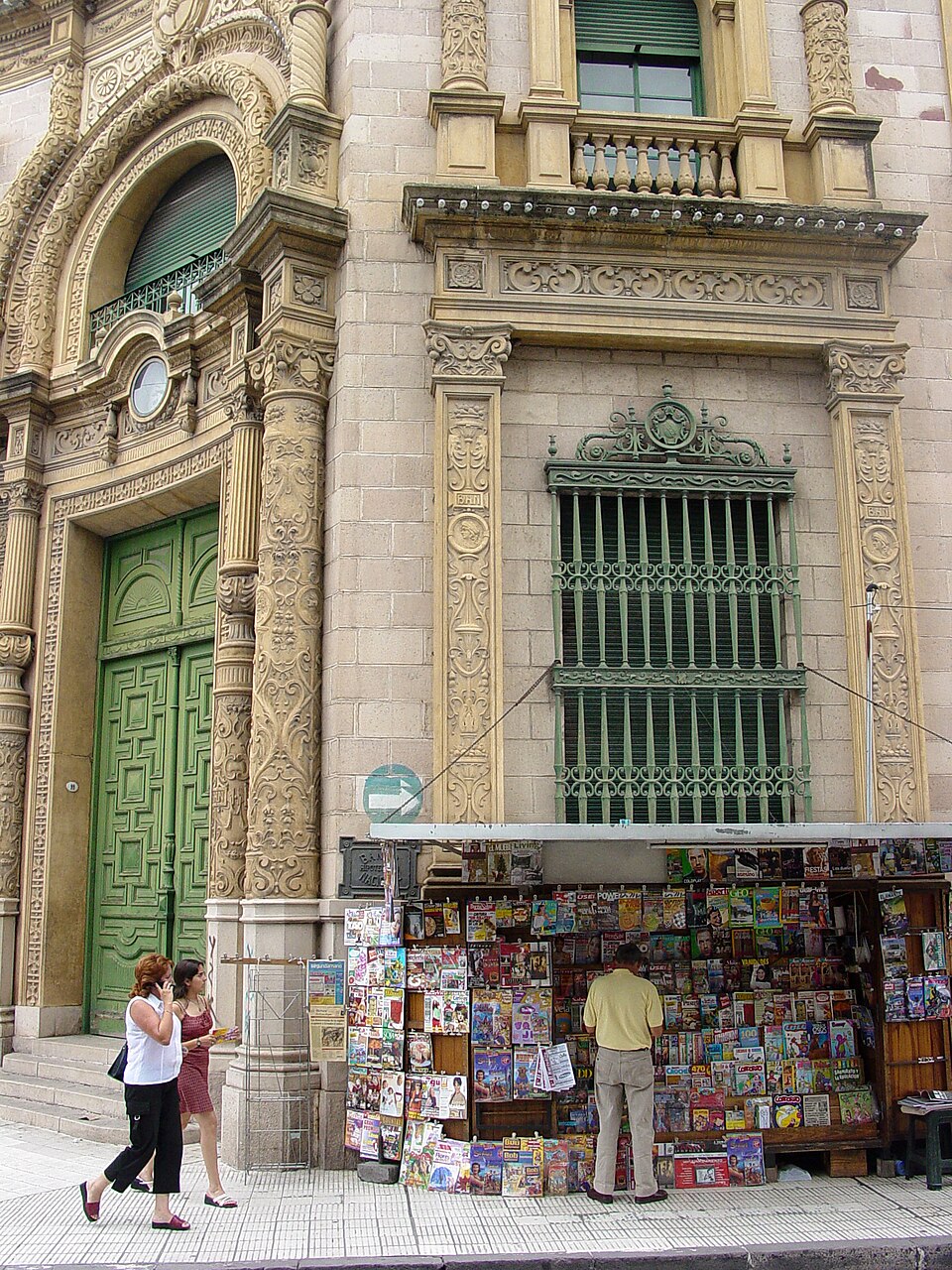

A newspaper is a publication printed on paper and issued regularly, usually once a day or once a week. It gives information and opinions about current events and news. Usually people like to read them to stay informed about their local city, state or country. Newspapers can be delivered to one’s home, by subscription. One also can buy a newspaper at a store or at a newsstand. Recycling of paper is common. It may be converted to new paper, for example.
Newspapers usually have many topics. They usually include political events, crime, business, sports, and weather news. Newspapers use photographs to illustrate stories; and also often include comics and other entertainment, such as crosswords and horoscopes. Many have opinion sections. These sections print the opinions of people who work for the newspaper. The opinions, which are usually on stories in the news, are called editorials. Opinion sections usually also print short letters from people who read the newspaper.
Newspapers started as handwritten newsletter s distributed to a few merchant s. In the 17th century they began being printed and sold to anyone who paid for one.
Written for younger readers
Newspaper, in simpler words
This version comes from Wikijunior, a set of books written for children aged 8 to 11. It is shorter and uses plainer language than the article above.
From Wikijunior: How Things Are Made
Newspaper consists of two main raw materials that are paper and ink.
Step 1 - Phototypesetting is the transfer of the dummy to the page layout section of the newspaper. The composing room receives the story in electronic format, typeset file. In a typeset file,the characters are of the same “type”-style, size, and width - as they appear on the pages of the newspaper. There, an operator transfers the instructions on the dummy into a rough page prototype. A printed version maybe looked over and adjusted several times by one of the reporters whose story is featured as well as by the copy editor. If another breaking story comes in, this page layout can be altered in a matter of minutes. The final version of the page is then approved by the editor on duty. The page is taken in its computer format and transferred via laser beams onto film in an image setter apparatus.
Step 2 - The operator then takes the film to a processor in another section of the paper, who develops it and adjusts it for its final look. Photographs are scanned into another computer terminal and inserted into the page layout.
Step 3 - At the printing center, the pages arrive at the laser room and are put through a laser writer, another scanning device that makes a negative image of them.
Step 4 - The commonly used method of printing newspapers is called web-offset. The “web” refers to the large sheets of blank news print that are inserted in rolls, sometimes weighing over a ton,into the actual printing press. Layout met behulp van een computer, Bestanddeelnr 932-7269.jpg|Step 1:The news composer phototypesetting the news overall contents and layout Web-fed offset press printing newspapers.jpg|Step 4: Web offset printing as seen on below
Where this page comes from
The article above is adapted from “Newspaper” on Simple English Wikipedia, by its contributors. We removed reference markers, navigation boxes and tables, expanded measurement templates into readable numbers, and kept the prose otherwise intact. The simpler version is adapted from Wikijunior on Wikibooks.
Both sources are published under CC BY-SA 4.0, so this page is published under the same licence. You may share and adapt it, including commercially, as long as you credit the original and keep the same licence.
Worksheets, answer keys and printable layouts elsewhere on K5Print are our own work and are not covered by this licence.