Paint
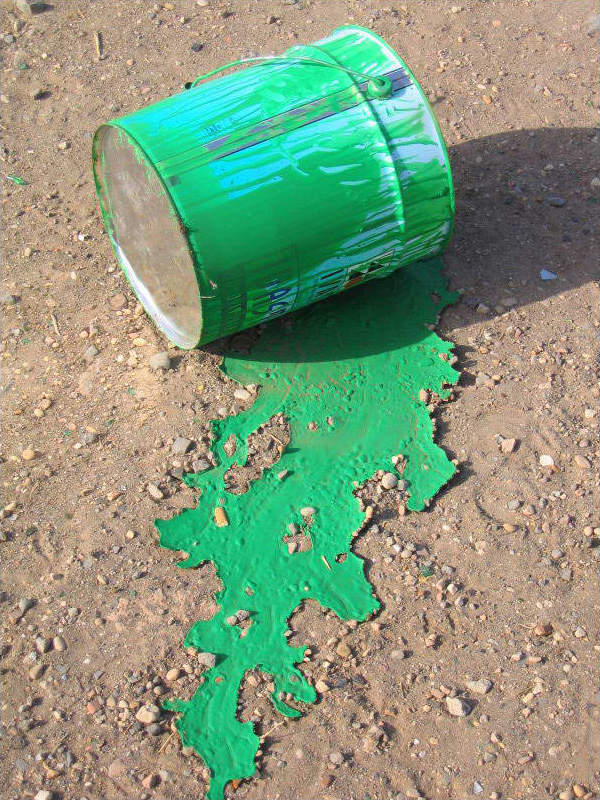

Paint is the general term for liquid that is used to add colour to the surface of an object by covering it with a pigmented (coloured) coating. As a verb, painting means “applying paint” (putting paint onto something). Someone who paints is called a painter.
Paint is made from a coloured pigment which is usually a powder. The powder is made from different chemicals. Some of the pigments come straight from natural things like clay. The pigment must be made wet by mixing it with something that will make it stick onto the surface and not come off easily. The wet stuff is called the “medium” or “vehicle”. Water-based paints are mixed with water. Other paints are mixed with oils or chemicals of different sorts. Most painters buy paint that is already mixed. House-painters use paint already mixed in large cans. Artists buy paint in tubes. Some artists buy dry pigment and mix it for themselves.
The paint is usually put onto the surface with a paint brush. Paint brushes are used by painters of all sorts. House painters also use rollers and spray-guns to put on paint. A modern invention is paint in a pressurized can which can be sprayed on. Some modern artists also use spray paint. Factory paint shops have machines which spray paint onto objects. Cars are usually painted in this way.
Paint must be allowed to dry. Some paints such as watercolour, dries in a few minutes. Other paints, such as artist’s oil paint, can take days or even weeks to dry. Most other types of paints fit between these two. Many types of paint are best if they are put on in several layers. The painter must first prepare the surface so it is smooth, clean and dry. The first layer of paint is often an “undercoat” or “ground” which is smooth and sticks very well. The coloured paints are put on over the top. A house-painter who is using oil paint on a wooden window frame might used three layers of paint to give very good protection from the weather. Other types of modern house paint only need one layer, particularly on the inside. Artists using oil paint and tempera often use many layers to get just the right effect.
Uses of paint
Paint has four important uses.
Protection
Paint is used to protect all sorts of buildings and structures from the effects of water and sun. Wooden buildings such as houses are usually painted because a coat of paint prevents water seeping into the wood and making it rot. The paint also helps to prevent the wood from drying out in the hot sun.
Metal structures and objects of all sorts are painted to stop them from rusting. A very large steel structure such as a bridge must have a team of painters who keep the paint in good condition all the time.
Decoration
Paint is used to decorate all sorts of objects. Since pre-historic times, people have painted the inside walls of their houses to make them look attractive. Painting and decorating the exterior (outside) and interior (inside) of houses is an important industry in many countries. There are many types and colours of paint to chose from.
All sorts of other objects are painted to make them attractive. This includes furniture, toys, tools and utensils, and street fittings. Sometimes things made of wood such as furniture are painted in decorative patterns. In some countries, many people enjoy decorating furniture and other small things like trays and boxes. This is one form of what is often called Folk Art. In other countries such as Japan, painting furniture is a very skilled profession and an antique piece of decorated furniture is very valuable. Other people enjoy the hobby of painting small objects such as model planes or soldiers.
Art
Paintings are pictures that are done in paint. Many different types of paint are used for paintings. They include tempera, oil paint, gouache, watercolours and acrylic paints. The paintings are usually done on board, canvas or paper. Many other famous paintings are done on the walls and ceilings of buildings, such as the Sistine Chapel ceiling which was painted by Michelangelo.
Many artists are famous for their painted pictures. Old, beautiful and famous paintings are very valuable and are sometimes sold for millions of dollars. Famous painters include Giotto, Leonardo da Vinci, Titian and Rembrandt.
Information
Paint is a very good way to give important information to people, using painted signs. Painted signs include lane markings on the road, street signs of all sorts, advertising signs and warning signs.
Written for younger readers
Paint, in simpler words
This version comes from Wikijunior, a set of books written for children aged 8 to 11. It is shorter and uses plainer language than the article above.
From Wikijunior: How Things Are Made
Paint cans in store.jpg|Rows of paint cans at a store
Paint consists of pigments, solvents, resins, and various additives. The pigments is what gives the paint its colour; solvents make it easier to stick to the media (paper) applied ; resins help it dry faster; and additives serve many purposes such as fillers to anti-fungicidal agents.
- Step 1: Pigment is premixed with resin (a wetting agent that assists in moistening the pigment),one or more solvents, and additives to form paste.
- Step 2: The paste mixtures are processed in a high-speed dispersion tank. There, the premixed paste is subjected to high-speed agitation by a circular, toothed blade attached to a rotating shaft. This process blends the pigment into the solvent.
- Step 3: The paste must now be thinned (using roll mill) to produce the paint.
- Step 4: The finished paint product is then pumped into the canning room and canned.
Powder Coatings Premix.JPG |Step1: Premixed base material for paint N0 16 Industrial Colour Mixers.jpg |Step2: High speed dispersion mixer for paint Pleperan Cat di Kilang Buncho.png |Step3: The thinned paste after being rolled milled for thinning Cat Dipam Ke Dalam Tin.png |Step4: The paint mix are dispense into the can

Where this page comes from
The article above is adapted from “Paint” on Simple English Wikipedia, by its contributors. We removed reference markers, navigation boxes and tables, expanded measurement templates into readable numbers, and kept the prose otherwise intact. The simpler version is adapted from Wikijunior on Wikibooks.
Both sources are published under CC BY-SA 4.0, so this page is published under the same licence. You may share and adapt it, including commercially, as long as you credit the original and keep the same licence.
Worksheets, answer keys and printable layouts elsewhere on K5Print are our own work and are not covered by this licence.